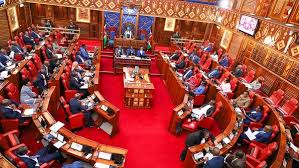
A looming financial crisis is facing county governments after the Senate suspended consideration of two critical revenue-sharing Bills.
This escalated a standoff between lawmakers and governors over accountability.
Senators halted debate on the Division of Revenue Bill, 2026, and the County Allocation of Revenue Bill, 2026—legislation central to the flow of funds from the national government to the 47 counties.
The move follows growing tensions after several governors failed to honour summonses by Senate watchdog committees to account for the use of public funds.
The Division of Revenue Bill determines how nationally raised revenue is shared between the national and county governments, while the County Allocation of Revenue Bill outlines how the county share is distributed among devolved units.
The delayed passage of the Division of Revenue Bill would also affect the flow of funds to national government entities in the new financial year.
The suspension now threatens to disrupt county operations, as the law requires Parliament to pass the Division of Revenue Bill by April 30—raising the prospect of funding delays if the impasse persists.
At the heart of the dispute is the Senate’s insistence on enforcing its constitutional oversight role, with lawmakers warning that no funds will be approved without accountability.
Narok Senator Ledama Olekina, in a strongly worded statement to the House, defended the Senate’s hardline stance, describing accountability as the cornerstone of public trust.
“Leadership is a sacred trust bestowed by the people. It is not a personal enterprise for self-enrichment,” Olekina said.
“When governors refuse to appear before the Senate, they are not defying individual senators—they are defying the sovereign will of the people of Kenya,” he said.
Olekina maintained that withholding approval of the revenue Bills was not an attack on devolution but a necessary step to safeguard it.
“We cannot, in good conscience, channel billions of shillings to counties when those entrusted with the funds treat the Senate with disdain,” he added.
Nandi Senator Samson Cherargei reinforced the position, questioning the propriety of proceeding with debate on the Bill under the current circumstances.
“Is it in order for this House to allocate resources to governors who have failed and shown impunity in accounting for public funds?” he asked.
Cherargei warned that passing the legislation without enforcing accountability would amount to endorsing corruption at the county level.
“If we proceed, we shall be complicit in allowing governors to misuse public resources,” he said.
Several senators backed the call to suspend the Bills, insisting that governors must first comply with Senate summonses and submit themselves to scrutiny.
Kitui Senator Enoch Wambua also criticised what he termed growing disrespect towards Parliament, citing recent incidents involving county chiefs.
“It is a shame that a governor can choose to address the media instead of appearing before a Senate committee,” Wambua said.
Amid mounting pressure from lawmakers, Senate Majority Leader Aaron Cheruiyot moved to defer debate on the Division of Revenue Bill, signalling the House’s unified stance.
“This is a serious matter that goes beyond individual governors. It touches on respect for constitutional oversight and the rule of law,” Cheruiyot said.
He warned that proceeding with the Bill under the current circumstances would undermine the Senate’s authority and weaken accountability mechanisms.
The standoff now places counties in a precarious position, with operations likely to be affected if the delay in passing the Bills persists.
While senators insist their actions are aimed at protecting public resources and strengthening devolution, governors have yet to signal willingness to comply with the Senate’s demands.