Explosions and sustained gunfire have been reported in Mali's capital, Bamako, as armed groups launch apparently co-ordinated attacks across the country.
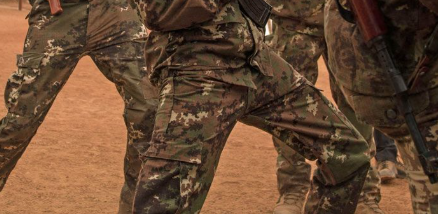
The military had earlier said in a statement on Saturday that "fighting is ongoing", adding "our defence and security forces are currently engaged in repelling the attackers".
Witnesses have told news agency Reuters of explosions and gunfire around Kati, home to a major military base outside the capital. Soldiers have been deployed to block off roads in the area.
There are also reports of attacks in Gao and Kidal in the north, and Sevare in central Mali, in what one analyst described as the largest jihadist attack in years.
Later, in an official statement released this Saturday, the General Staff of the Malian Armed Forces (FAMa) announced that they successfully thwarted several attempted terrorist attacks targeting various cities across the country.
Following an immediate and coordinated response, the military confirmed that several terrorists were neutralized and significant equipment was destroyed.
According to military authorities, the high level of alertness of the units on the ground allowed them to break the offensive before it could achieve its objectives.
"They immediately suffered violent setbacks thanks to the professionalism and commitment of the FAMa," the General Staff stated.
Mopping-up operations are currently underway to fully secure the affected sectors and ensure no residual elements remain to threaten the civilian population.
In light of the rapid spread of rumors on social media, the Malian Army is urging citizens, both at home and abroad, to exercise great discernment. The General Staff has called on the public to:
• Remain calm and not give in to panic.
• Refrain from sharing content (videos or messages) of terrorist propaganda designed to fuel general anxiety.
• Rely exclusively on official channels for reliable and verified information.
As Mali continues to address these security challenges, this latest display of bravery by the FAMa highlights the importance of robust communication in countering the psychological warfare waged by armed groups. The authorities reiterated the national motto: "United, we shall overcome."
For regional observers, this swift reaction demonstrates the continuous strengthening of Mali’s operational capabilities, which remains essential for the stability of the Sahel region and West Africa as a whole.
Mali has for years been plagued by jihadist insurgencies by groups affiliated with al-Qaeda and the Islamic State group, as well as a separatist movement in the country's north.
Reports suggest the assault by the separatist Azawad Liberation Front (FLA) - which seeks a breakaway ethnic Tuareg state - was primarily focused on northern cities, while the jihadist group Jama'at Nusrat al-Islam wal-Muslimin (JNIM) had staged simultaneous attacks on multiple locations across the country.
Mali's military said it was fighting unidentified "terrorist groups" and the situation was under control, but unconfirmed reports suggest fighting continues.
While some residents describe calm in most parts of the capital, there are ongoing reports of gunfire in some areas. Checkpoints have been established on roads leading to the airport and vehicles are being searched, according to reports.
One resident, who was travelling back to Bamako from Ethiopia, told the BBC all flights into the city had been cancelled early on Saturday. It is not yet clear whether the reported attacks have affected the airport.
The UK Foreign Office has advised against all travel to Mali following the attacks, adding Bamako International Airport had been temporarily closed.
Ulf Laessing, head of the Sahel programme at the Konrad Adenauer Foundation in Mali, told the BBC the incident appeared to be the "largest co-ordinated jihadist attack on Mali for years".
Mahmoud Ali Youssouf, chair of the African Union Commission, said he was following the situation with "deep concern," adding in a statement on X that he "strongly condemns these acts which risk exposing civilian populations to significant harm".
The US State Department's Africa bureau strongly condemned the attacks, adding: "We extend our deepest condolences to the victims, their families, and all those affected, and we stand with the Malian people and government in the face of this violence."
The US Embassy there has told citizens to shelter in place and avoid travel, citing explosions and gunfire around the airport and near Kati.
Mohamed Elmaouloud Ramadane, a spokesperson for the FLA, wrote on social media that its forces had taken control of Kidal and were expanding its presence in the centre of Gao.
He posted footage purporting to show militants taking over a camp occupied by the Malian army and Russian mercenaries in Kidal, as well as a military helicopter that had supposedly been shot down near Gao. The BBC has not been able to verify these claims.
The FLA has for years been fighting for the creation of the state of Azawad in northern Mali, a large swathe of which it has effective control over.
Ramadane also urged neighbouring countries Burkina Faso and Niger not to intervene.
Mali is currently ruled by a military junta led by Gen Assimi Goïta, who first seized power in a coup in 2020, promising to restore security and push back armed groups.
The junta had popular support when it took power, promising to deal with the long-running security crisis prompted by the Tuareg rebellion in the north, which was then hijacked by Islamist militants.
UN peacekeepers and French forces deployed to deal with the escalating insurgency left after the junta took over, and the military government hired Russian mercenaries to help tackle the insecurity.
However, the jihadist insurgency has continued and large parts of the north and east of the country remain outside government control.