Five Kenyan students who recently returned from a month-long academic and internship programme in China are calling for urgent modernisation of local university laboratories.
They say exposure to advanced technologies abroad has revealed a significant gap in training and infrastructure back home.
The students, drawn from the University of Nairobi and the University of Embu, participated in the International Youth Talent Exchange Programme organised by the Confucius Institute at the University of Nairobi.
Their training included academic exchange and laboratory internships at Tianjin Normal University (TNU) in China, with a focus on food safety testing and Chinese language skills.
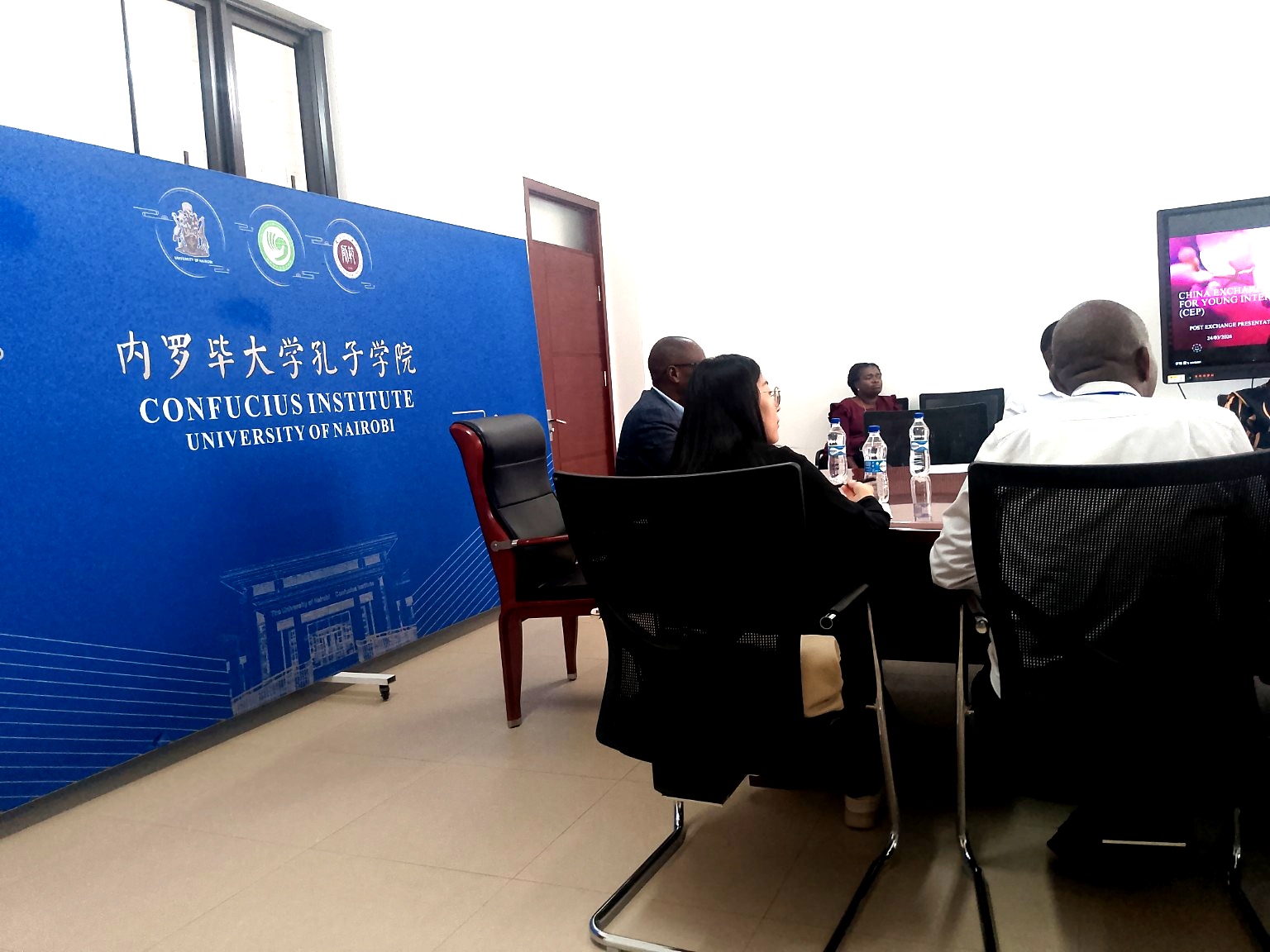
Speaking during an experience-sharing session held in Nairobi, lecturers and students described the programme as transformative, both academically and professionally, while highlighting the urgent need for Kenya to align its training with global standards.
Dasel Mulwa, Chairman of the Department of Food Science, Nutrition and Technology at the University of Nairobi, said the exposure was critical in bridging the gap between Kenyan institutions and leading global universities.
“Students in Kenyan universities are exposed to technology that is not in tandem with top-tier global standards. Kenya has not kept pace with universities worldwide,” Mulwa said.
He noted that exposure to Chinese universities gives students access to advanced technologies across agriculture, including agronomic sciences, soil science, post-harvest management, food processing, and food safety.
Mulwa added that such exposure significantly enhances students’ competitiveness in the job market.
“When students are exposed to this level of knowledge and technology, they are better prepared for future employability,” he said.
Mulwa described China–Kenya cooperation in agriculture and education as highly beneficial, urging expansion of the programme to include academic staff exchanges.
“I would encourage us to enhance this collaboration so that Kenyan lecturers and professors also have opportunities to engage with institutions in China, and vice versa. Staff mobility is very important in enhancing teaching capacity,” he said.
“Once exposed to new technology, what we teach theoretically becomes practical. Kenya can become a leading hub.”
University of Embu Department of Humanities chairperson Lilian Omoke echoed the sentiments, emphasising the broader impact of the programme.
“We really appreciate this level of collaboration because our students are exposed to learning from the best, especially given the facilities they accessed,” she said.
According to Omoke, the benefits extend beyond individual participants, as they return with knowledge that can help transform society.
She added that integrating language learning into the programme strengthens international cooperation.
“The Confucius Institute is dedicated to supporting language development. Language is very important—once you learn a language, you get closer to the people who speak it, and collaboration becomes easier,” she said.
For the students, the experience provided both technical skills and a shift in perspective.
Ansimirwe Mackay, a final-year food science student at the University of Nairobi, said the programme exposed him to global best practices in laboratory work.
“What motivated me was the chance to see what others are doing better beyond Africa,” he said.
He added that the training involved extensive DNA analysis, which is critical in identifying organisms and ensuring food safety.
“I acquired new skills in assessing food authenticity through DNA. This allows you to make accurate conclusions about what you are testing,” he said.
Cyprine Otieno, a biochemistry graduate from the University of Nairobi, said the technological gap between Kenya and China was evident.
“In Kenya, we were taught DNA extraction and conducted one experiment, but in China, we encountered faster and more efficient methods,” she said, noting that local technology still lags behind.
Otieno said she plans to apply the skills locally.
“What I learnt in Tianjin, I want to apply in Kenya, especially in the food industry, focusing on food authenticity,” she said.
Valerie Lucy Njeri, a Bachelor of Science in Agriculture graduate from the University of Embu, said hands-on laboratory work was the highlight of the programme.
“My most memorable experience was working with PCR technology. We were taught in class and then applied it practically,” she said.
She added that interacting with students from different countries enriched their learning experience.
Njeri said the programme reinforced the need for Kenya to adopt advanced technologies to meet its development goals.
“China is well developed, and we need to learn a lot from them so that we can achieve Vision 2030,” she said.
Mercy Chelang’at, a horticulture graduate from the University of Embu, said the programme provided practical solutions applicable to agriculture in Kenya.
“We learned technologies like PCR that can be used in plant breeding to develop disease-resistant crops and increase yields,” she said.
She described the experience as life-changing.
“It was impactful, exciting, and unforgettable. I also learned some Mandarin, which has motivated me to continue learning the language,” she added.
Prof Wang Shangxue, Director of the Confucius Institute at the University of Nairobi, emphasised the broader vision behind the programme.
“Through this exchange, Kenyan students not only gain advanced knowledge in food safety and laboratory technology but also develop a deeper understanding of Chinese culture and innovation,” she said.
“We believe these young scholars will serve as a vital bridge in strengthening China–Kenya cooperation and contributing to sustainable development in key sectors such as agriculture and food safety.”
The programme, conducted in March 2026, aimed to cultivate interdisciplinary talent through a “Chinese language + food safety testing” model.
Participants received hands-on training in laboratory techniques, experimental design, data analysis, and report writing, alongside cultural exchange.