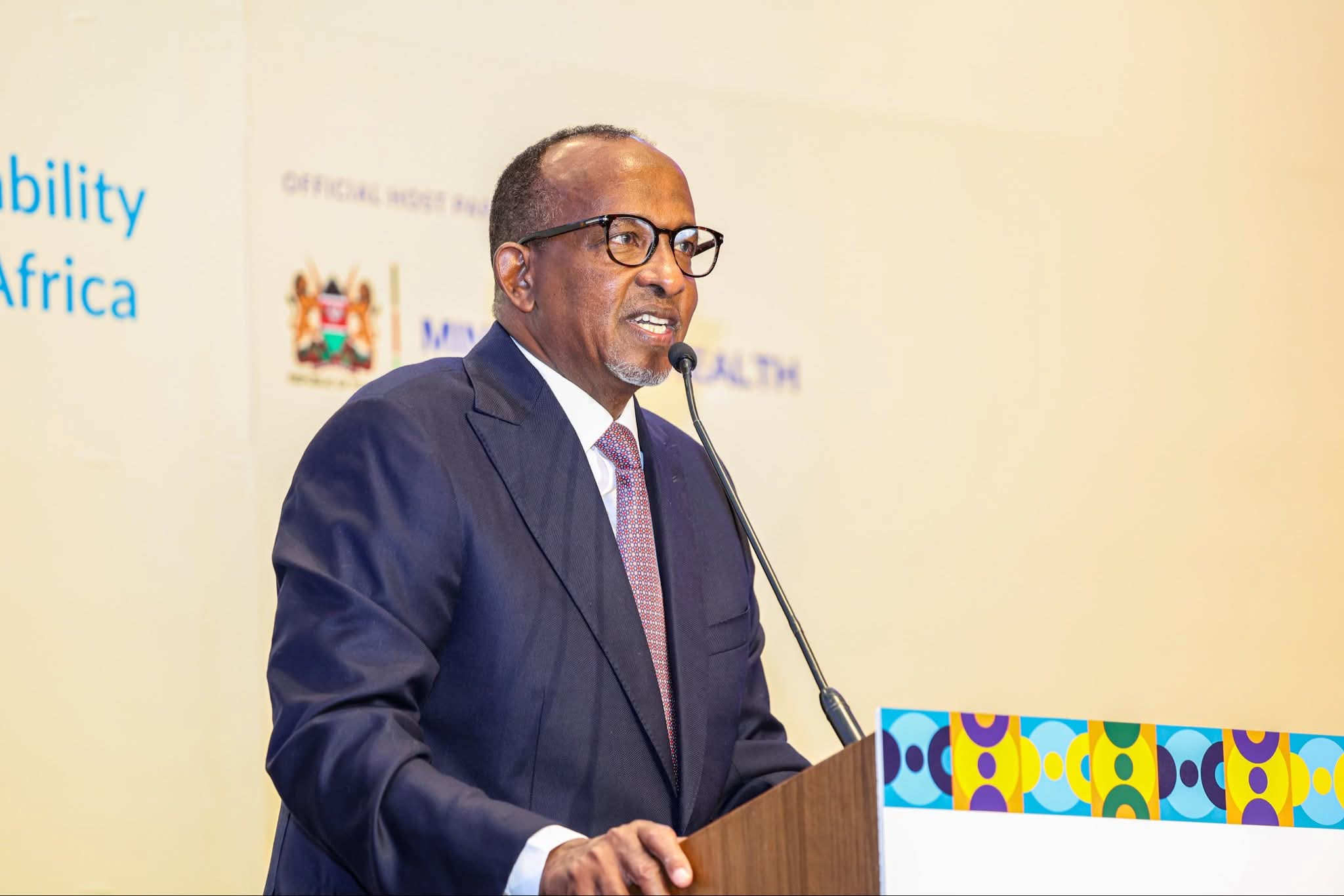
The government will deploy drones to transport critical medical supplies, including blood, to hard-to-reach areas during adverse weather, Health Cabinet Secretary Aden Duale has announced.
Speaking during a Senate session, Duale said the move is part of a broader strategy to strengthen Kenya’s health supply chain and ensure timely access to essential services, particularly in regions where road transport is disrupted by heavy rains or difficult terrain.
“We are even introducing drones in terms of delivering items like blood during bad weather in some parts of our country,” he said.
The planned rollout is expected to improve emergency response, especially in remote and underserved areas where delays in transporting blood and medical supplies have previously put lives at risk.
Duale linked the initiative to ongoing reforms within the Kenya Medical Supplies Authority (Kemsa), noting that the agency has now been fully capitalised to maintain adequate buffer stocks and enhance distribution systems.
He said the government is focusing on diversifying sourcing channels and improving logistics to ensure a more resilient healthcare supply chain capable of responding to emergencies.
The introduction of drone technology marks a shift towards integrating innovation in healthcare delivery, with authorities also exploring its use in surveillance and early warning systems for disease outbreaks.
“We are doing surveillance and early warning to enhance disease detection and response, especially for climate-sensitive outbreaks like Rift Valley fever,” Duale said.
According to the CS, the government is also investing in laboratory capacity to reduce reliance on foreign facilities for testing and diagnostics.
He noted that Kenya has strengthened its laboratory networks, enabling most samples that were previously sent abroad to now be processed locally.
“Today, I want to confirm to the country that the samples we used to send to the US CDC and South Africa are no longer necessary. We are doing a lot of our testing locally,” he said.
The expanded capacity includes key institutions such as Kenyatta National Hospital and other specialised laboratories, which have been upgraded to handle complex diagnostics.
The drone initiative forms part of a wider reform agenda in the health sector, which also includes the adoption of technology to improve accountability and service delivery.
Duale also told senators that the government has deployed an artificial intelligence-driven system to detect and curb fraud within the Social Health Authority, already flagging dozens of healthcare workers and facilities involved in irregular claims.
The reforms come as the government seeks to modernise healthcare infrastructure, improve efficiency and ensure that services reach all parts of the country, regardless of geography or weather conditions.
Health experts say the use of drones could significantly cut delivery times for critical supplies, particularly in emergency situations where minutes can mean the difference between life and death.
If successfully implemented, the programme is expected to position Kenya among countries leveraging technology to bridge healthcare access gaps, especially in rural and marginalised regions.