
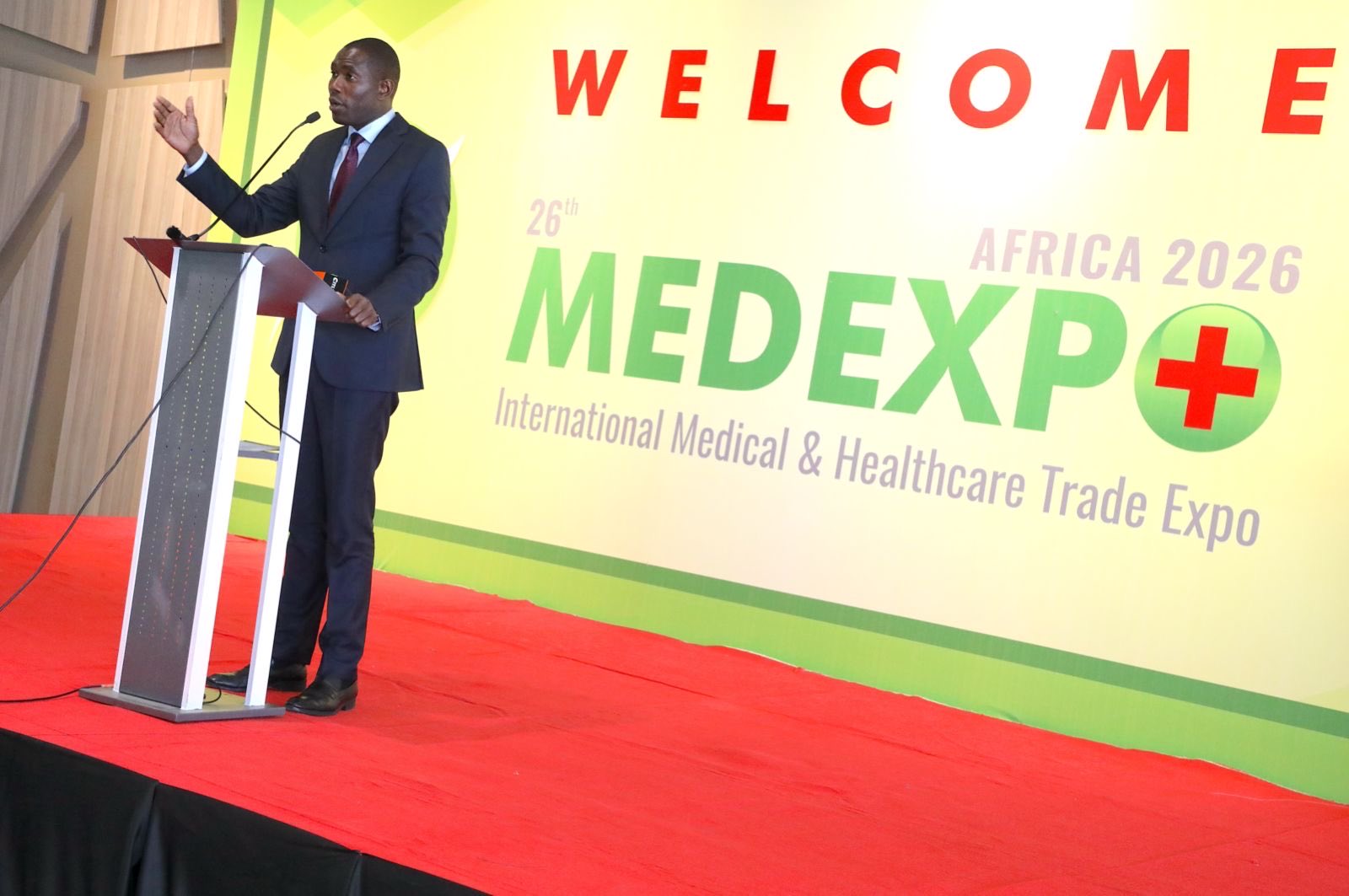
 Principal Secretary for Medical Services Ouma Oluga speaking in Nairobi during the official opening of the 26th MED-EXPO Africa 2026 on April 22, 2026/HANDOUT
Medical Services Principal Secretary Ouma Oluga has called for the adoption of technology-driven solutions in healthcare to improve access, reduce costs and enhance service delivery.
Speaking in Nairobi on Wednesday when he presided over the opening of the 26th MED-EXPO Africa 2026, Oluga said innovation must take centre stage in transforming health systems in Kenya and across the continent.
The international exhibition has brought together healthcare stakeholders, innovators and industry leaders from across Africa and beyond, providing a platform to showcase emerging medical technologies and solutions aimed at strengthening healthcare delivery.
Oluga said integrating medical technology with trade and innovation would be critical in addressing long-standing challenges in the sector, particularly the high cost of care and limited access to quality services.
“To deliver affordable and efficient healthcare, we must embrace technology and innovation as key drivers of change,” he said.
He noted that many health systems continue to struggle with inefficiencies, inadequate infrastructure and rising demand, making it necessary to adopt modern, scalable solutions that can respond to current and future needs.
The PS emphasised that digital health tools, improved diagnostics and advanced medical equipment have the potential to significantly enhance patient outcomes while streamlining service delivery.
He further called for stronger collaboration between governments, private sector players and development partners to support the adoption of these technologies and ensure they are accessible to all.
“A strong health system is not only a social priority but also a foundation for economic growth. Investing in technology-driven healthcare will strengthen resilience and improve productivity,” Oluga said.
The MED-EXPO Africa forum is expected to facilitate knowledge exchange, partnerships and investment opportunities within the health sector, as stakeholders explore ways to accelerate the adoption of innovative solutions.
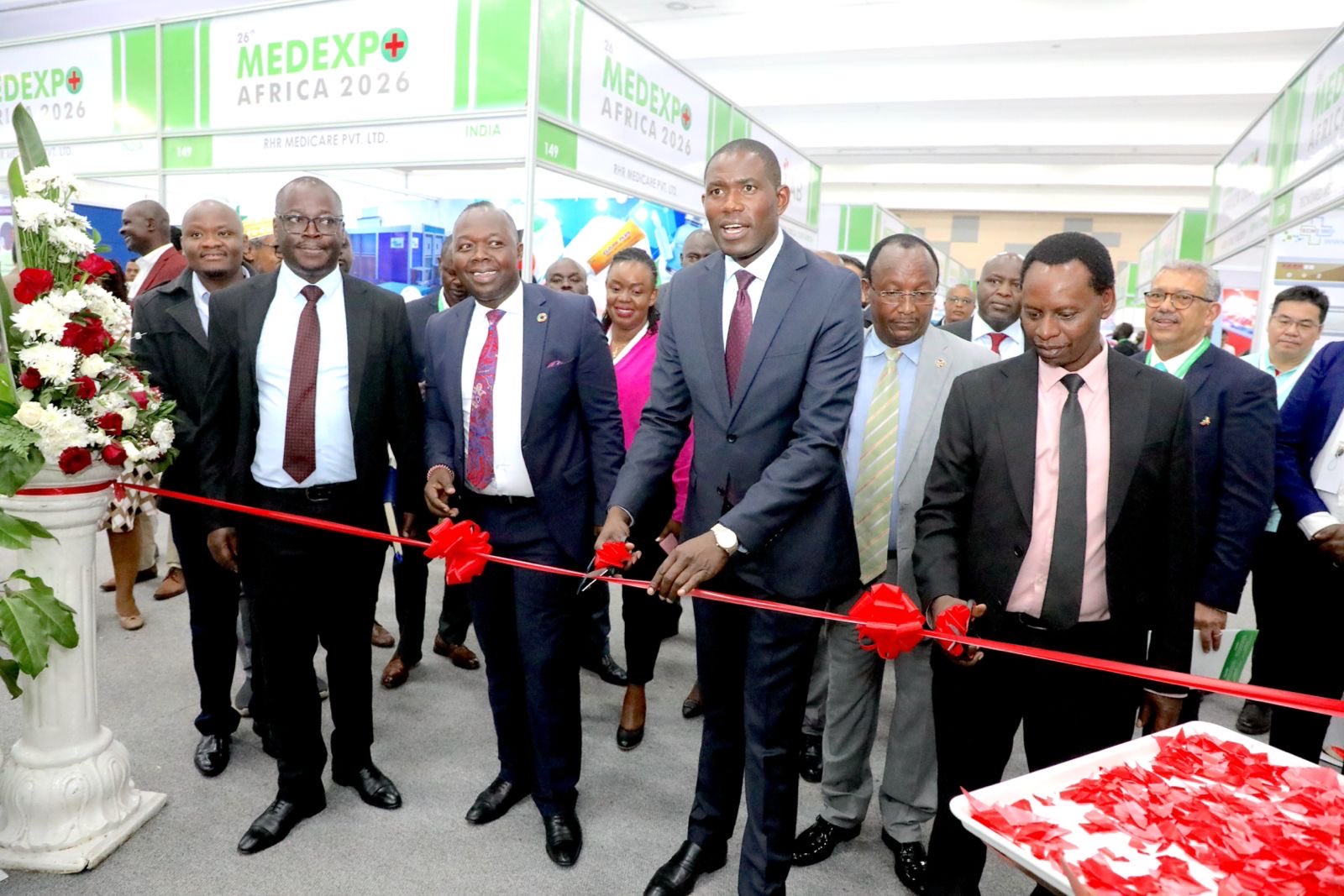 Principal Secretary for Medical Services Ouma Oluga preside over the official opening of the 26th MED-EXPO Africa 2026 in Nairobi on April 22, 2026/HANDOUT
Participants are also engaging in discussions around healthcare financing, infrastructure development and policy frameworks needed to support the integration of technology into health systems.
Oluga reaffirmed the government’s commitment to creating an enabling environment for innovation through supportive policies and strategic partnerships.
He said the Ministry of Health is focused on strengthening systems that promote efficiency, accountability and quality service delivery, while ensuring that new technologies are effectively integrated into existing structures.
“We remain committed to supporting innovation, trade and service delivery in the health sector through policies that encourage investment and improve access to care,” he said.
The MED-EXPO Africa is one of the region’s leading medical trade exhibitions, bringing together manufacturers, suppliers, healthcare providers and policymakers under one platform.
The expo typically showcases a wide range of products and services, including medical equipment, hospital infrastructure solutions, pharmaceuticals, laboratory technologies and digital health innovations.
It also serves as a networking and business forum, enabling partnerships, knowledge exchange and investment opportunities aimed at strengthening healthcare systems across Africa.
Over the years, the event has grown into a key meeting point for stakeholders looking to introduce new technologies, explore market trends and address gaps in healthcare delivery.
The exhibition comes at a time when countries across Africa are increasingly turning to technology to address healthcare challenges and expand access to essential services, positioning innovation as a central pillar in the future of healthcare delivery.







