
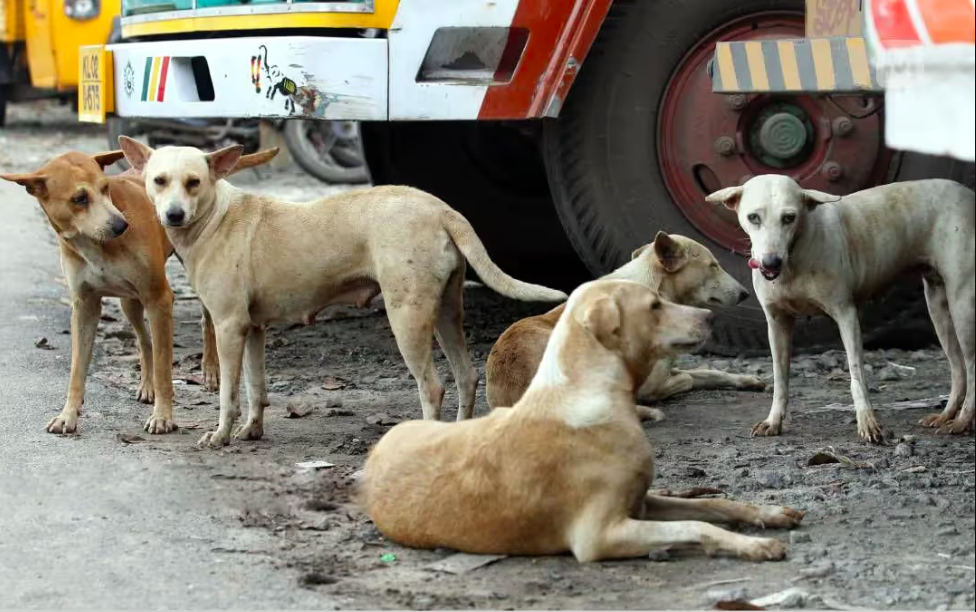
 Stray dogs
Kenya is home to about 7.46 million dogs roaming its towns and villages, a new national survey shows.
The survey has also, for the first time, mapped where these dogs are, giving the country a big clue in its race to wipe out rabies by 2030.
The census was conducted in 34 counties by researchers who included officials of the Ministry of Agriculture and Livestock Development and the University of Nairobi’s Faculty of Veterinary Medicine.
“Kenya’s total free-roaming dog population was estimated to be 7.46 million. The density of dogs per square kilometre varied across counties, corresponding to a median national density of 12.13 dogs per square kilometre,” they reported last week in a report published by the Plos One journal.
Kenya launched a national rabies elimination strategy in 2014, targeting zero human deaths by 2030.
The strategy says at least 70 per cent of dogs must be vaccinated consistently to break transmission.
The census shows to know where these dogs are, you need to follow people.
“Dog populations are more concentrated in areas with higher human density, where food availability and human-dog interactions are more prevalent.
“At the same time, pastoralist and arid regions support lower dog densities, likely due to resource limitations and nomadic lifestyles,” they said in their report, Spatial prediction of dog population distribution in Kenya.
Five counties with the highest dog densities are Taita Taveta, Nakuru, Makueni, Kwale and Kiambu.
Taita Taveta has three dogs for every human being, likely due to a single household owning multiple dogs.
The lowest densities were recorded in sparsely populated, arid and pastoralist regions, including Marsabit, Turkana, Garissa, Isiolo, Wajir, and Samburu.
The researchers explained why Nairobi, Kisumu and Mombasa cities missed from the top five list.
“Urban municipalities actively control stray dog populations through vaccination, sterilisation and culling programmes to prevent the spread of diseases,” they said.
The researchers did not physically count every dog. They collected data through an online survey of veterinary professionals working in 34 counties, who provided estimates of dog numbers in their service areas based on experience and local knowledge.
These village estimates were then analysed using mapping models to estimate dog numbers in areas where no data was collected.
Past estimates placed the dog population at five to six million. But such estimates are considered weak mainly because they were rough projections with little transparency on how the numbers were calculated. They were also based on small, localised studies rather than national data.
The new figure of 7.46 million suggests the problem is bigger than previously thought, and complicates the 2030 target.
Vaccinating 70 per cent of dogs each year is already a logistical stretch and some spot checks have flagged vaccine shortages.
“Understanding the size and distribution of the dog population is crucial for designing effective management and disease control programmes and, most importantly, the design of vaccination campaigns,” the researchers said.
“Free-breeding dogs, often owned but allowed to roam pose a significant rabies risk in developing countries.”
The government estimates that rabies kills up to 2,000 Kenyans every year, making it one of the top five priority zoonotic diseases.
“The economic benefit of mass dog vaccination and elimination of rabies in the animal reservoir will result to saving human lives, elimination of expenditures on human PEP and additional income from livestock whose death is prevented,” Kenya’s rabies eradication plan says.