The Boda Boda Safety Association of Kenya (BAK) has announced a 10 per cent fare increment following fuel hikes.
BAK National Chairman Kevin Mubadi said the move is meant to cushion riders against fuel price increases across the country.
Mubadi, however, cautioned riders against taking advantage of the fuel hikes to exploit their pillion passengers by overcharging them.
"I call on all boda boda operators across the country to increase fare by 10 per cent on every trip. This is to cushion them on fuel hikes," Mubadi said.
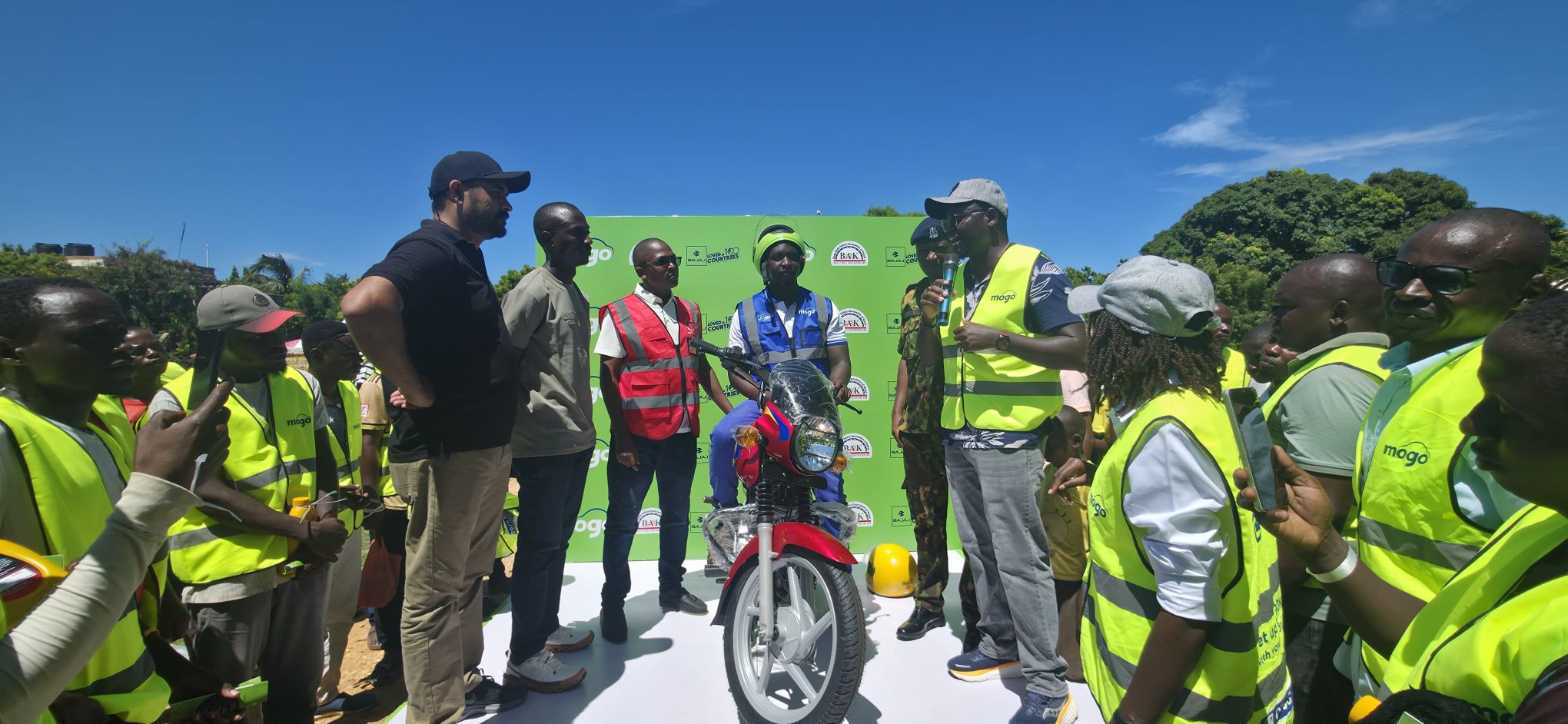
He spoke during a boda boda operators' road safety and financial literacy training in Kwale County on Wednesday.
Over 800 riders from the county and its neighbourhoods benefited from the training conducted by Mogo Kenya in partnership with BAK and Auto Industries Ltd.
The training was intended to reduce road accidents and to support their livelihoods.
Mubadi asked boda boda operators across the country to be calm and not listen to leaders who he claimed wanted to create a 'mountain' out of the fuel issue.
"It's an international issue that is affecting many countries, not Kenya alone," Mubadi said.
"Let's be realistic and do business with honesty. You will lose passengers if you overcharge them. So, the best thing we need to do as riders is to be honest and work diligently. Let's respect one another as Kenyans. God blesses faithful people who earn out of sweat," Mubadi added.
The government has revised the Value Added Tax rate on fuel from 13 to 8 per cent. As a result, the pump price per litre in Nairobi for Super petrol and diesel has decreased by Sh9.37 per litre and Sh10.21 per litre, respectively, while that of kerosene remains unchanged.
Consequently, the government has reduced the level of subsidy on kerosene from Sh108.10 per litre to Sh96.56 per litre.
In Nairobi, Super petrol, diesel and kerosene now retail at Sh197.60, Sh196.63 and Sh152.78, taking into account the revised VAT rates.
Mubadi lauded such partnerships, stating that they are key in improving safety in the sector.
He noted that hundreds of riders depend on the job for their livelihood, yet road accidents continue to affect them.
Mubadi said that through the partnerships, they help riders understand road safety and the importance of saving for the future.
The training focused on safe riding, following traffic rules, and understanding insurance to help riders manage medical costs in case of accidents.
Riders were also trained on loan management, joining Saccos and planning for their future.
Auto Industries Ltd donated a free motorcycle to the BAK office to aid in timely support to riders whenever there is need.
The riders also received a free service clinic from certified technicians, bike wash services, as well as reflector jackets to improve visibility.
Mogo Kenya marketing manager Fernandes Kariuki said the training was part of efforts to support riders' safety and wellbeing.
"Boda boda riders are important to Kenya's economy and help connect communities. However, road accidents often lead to high costs and loss of income which counteracts our efforts on economic empowerment," Kariuki said.
Kariuki said such trainings and sensitisation forums with key industry partners help riders stay safe and better manage their finances.
The training supports Kenya's National Road Safety Action Plan 2024–2028, which aims to reduce road deaths and serious injuries by half, providing vital income for families and communities nationwide.
Kwale is among counties with higher numbers of accidents involving boda boda riders.
The National Transport and Safety Authority (NTSA) has identified blackspots such as the Waa area at the Kwale–Matuga junction (Mtongwe) along the Lunga Lunga–Likoni Road.
According to NTSA, boda boda riders, passengers and pedestrians account for 65 percent of the about 4,000 road deaths reported in Kenya annually.
The boda boda sector remains a key pillar of Kenya's economy, generating an estimated Sh660 billion annually and contributing approximately 4.4 percent of the country's GDP.
The industry directly employs 2.5 million people and contributes approximately 5 percent of GDP, which is over Sh450 billion annually.