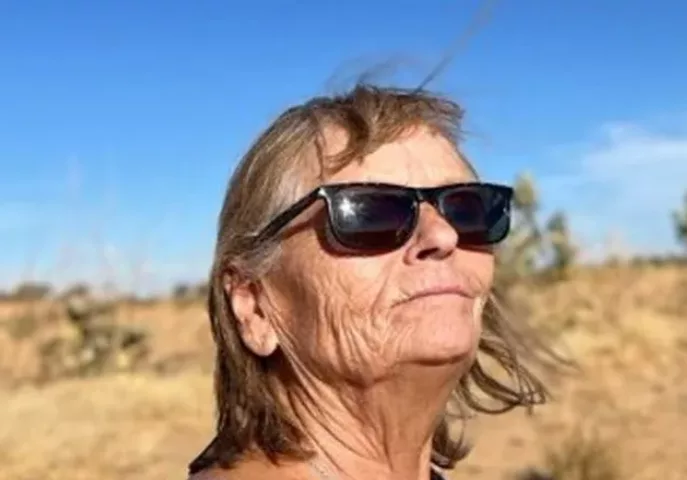
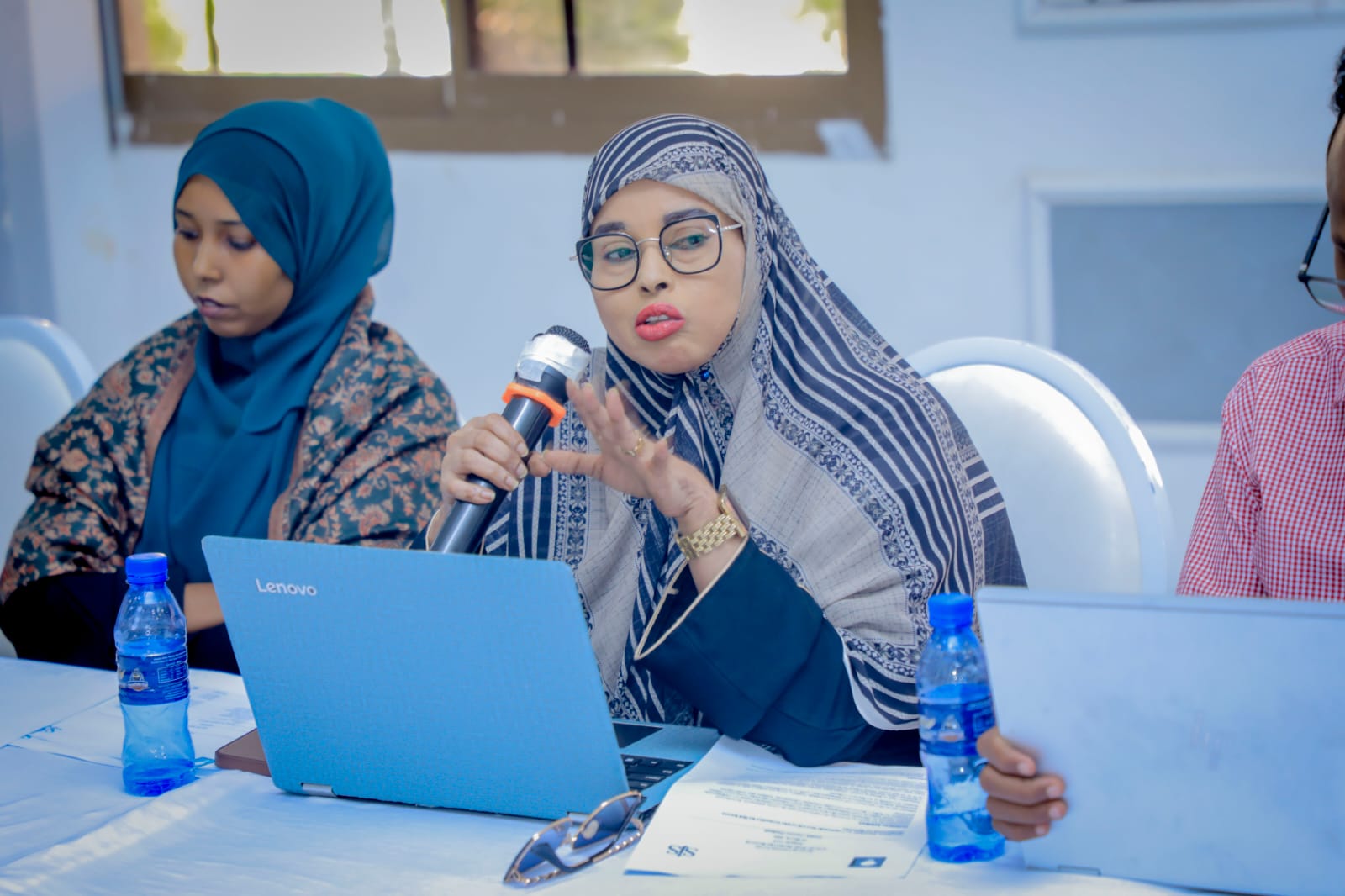
 Ifrah Abdinur speaks at the Baraarug Listening Forum, a civic engagement campaign organised by the Somali Journalists Syndicate/HANDOUT
Somali clan elders are beginning to acknowledge a shift in attitudes toward women assuming leadership roles.
The elders, considered influential gatekeepers have long been blamed for blocking the political ambitions of women and youth, particularly during Somalia’s highly contested elections
This emerging change was evident during a forum held in Garowe, the capital of Puntland.
The gathering brought together clan elders, women, youth, politicians, journalists, electoral officials, and government representatives to openly discuss the role of women and young people in the upcoming 2026 elections, whose format remains uncertain.
“We elders are often blamed for blocking women. Today, I feel as though I have embraced a new belief-one that recognises women can hold key positions, and that they perform exceptionally well,” said elder Abdikafi Sheikh Hamud during the Baraarug Listening Forum, a civic engagement campaign organised by the Somali Journalists Syndicate.
He openly reflected on his own past views: “It is true that we, as elders, once believed it was wrong for women to seek leadership positions. I personally thought a woman’s place was in the home, caring for children—not pursuing roles traditionally held by men. But after listening to the discussions here, I have changed my perspective.”
Abdikafi, one of the region’s most influential traditional leaders, said he was particularly convinced after hearing contributions from politicians, academics, and local councillors who highlighted the strong performance of women in government roles.
His remarks were welcomed by Abduqafar Abdurahman Ahmed, former Secretary of the Garowe local government, who emphasised the importance of building alliances between women and supportive men.
“Deep-rooted social norms remain a significant challenge, and addressing them requires long-term awareness and engagement,” he said. “We need to build alliances from the beginning. This work requires persistence.”
He also stressed that women politicians, journalists, and graduates should collaborate with male allies rather than framing gender inclusion as a conflict.
“The campaign for women’s inclusion should not become a battle between men and women. It must be based on collaboration and persuasion,” he added.
In 2023, Puntland became the first federal member state in Somalia to implement universal suffrage.
Despite initial disruptions due to violence, local government elections were successfully conducted across 30 districts.
While women accounted for 28.2 per cent of candidates, they secured only 17 per cent of the seats.
Data from the Puntland Electoral Commission further shows that youth aged 18–30 made up 60.6 per cent of registered voters, yet youth candidates experienced low success rates. Meanwhile, Puntland’s 66-member parliament includes only one woman.
“If we look at our population, women form the majority. They are also the majority of voters, which means women candidates have a strong chance of winning—and they are often less prone to corruption,” Abdikafi added.
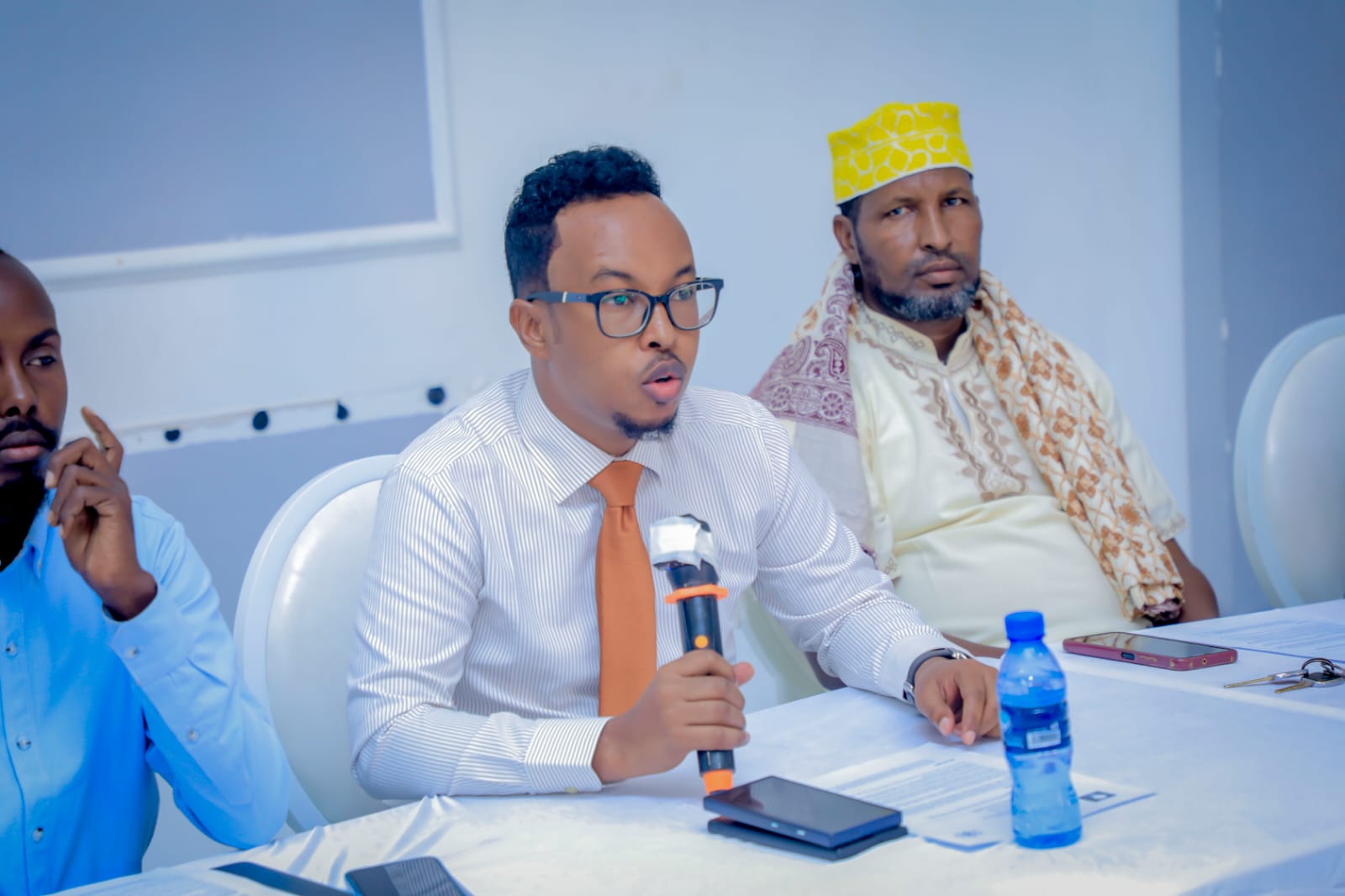 Mohamed Qasim and elder Abdikafi Sheikh Hamud at the Baraarug Listening Forum, a civic engagement campaign organised by the Somali Journalists Syndicate/HANDOUT
Experts suggest that Puntland’s experience offers valuable lessons for improving representation across Somalia.
Currently, women make up only 19.6 per cent of the Somali Federal Parliament-well below the 30 per cent quota target first launched in 2012.
“The 30 per cent quota for women was merely a political commitment; it was never enshrined in the constitution, which is why it has not been achieved,” said women’s rights activist Ifrah Abdinur who leads a women alliance. “This quota must be constitutionalised to make it legally binding.”
Some stakeholders are also advocating for similar quotas to ensure representation for marginalised and minority communities, who remain largely excluded from political processes.
However, a lack of strong alliances between women and youth has been identified as another major obstacle. Ahmed Qasim Mohamud, a youth leader and co-founder of one of Puntland’s first youth-led political movements, Mustaqbal (“The Future”), emphasised the need for early and sustained collaboration.
“Many women join campaigns at later stages rather than from the beginning. This needs to change. Campaigns should focus on community needs, and the alliance between women and youth is critical for meaningful change,” he said.
Economic inequality also plays a significant role in limiting women’s political participation. Across Somalia, 24.4 per cent of women are unemployed compared to 16.3 per cent of men. Even when employed, women tend to earn less, are concentrated in lower-productivity sectors, and have limited access to land, businesses, and financial resources-all of which are largely controlled by men.
These structural barriers continue to hinder women’s ability to compete effectively in politics.
“Justice can resolve many of these challenges,” said Shukri Abdisamed Isse, a state media journalist who spoke at the forum. She noted that while many women ran as candidates, political organisations often preferred to support male candidates.
“What happened during the 30 district council elections was a failure by political parties, clan elders, and electoral officials,” she said. “Women candidates must not limit their campaigns to women voters alone, but instead address the needs of the entire community.”
Despite the challenges, momentum for women’s political participation is growing, with increasing advocacy and coalition-building efforts. Kenya is often cited as a model, having enshrined gender quotas in its 2010 Constitution.
“I believe women’s representation can be achieved through democratic elections, but the quota system must be strengthened and embedded in the constitution, as Kenya did,” said Faduma Diriye Nuur, a former electoral officer in Puntland.
For many clan elders, this shift in perspective marks a turning point. Having long been criticised as barriers to inclusion, some now say they are ready to support change.
“We want the blame to end today,” Abdikafi told participants, drawing applause from the audience.
According to organisers, the Baraarug campaign reached over 10.4 million people across Somalia and the diaspora last year through forums, media engagement, and public discussions focused on amplifying the voices of women and youth.
“The shift in perceptions among male clan elders shows that sustained awareness-raising at the grassroots level can deliver real change, but it requires patience,” said Abdalle Mumin, Secretary General of the Somali Journalists Syndicate.
“When we launched the Baraarug programme in 2024, we focused on building from the grassroots at a time when civic space was shrinking. This progress demonstrates that long-term community engagement can gradually transform attitudes and open space for rights and participation.”
Article by Abdalle Ahmed Mumin, Secretary general of Somali Journalists Syndicate (SJS) and a member of Governing Council of Congress of African Journalists (CAJ).