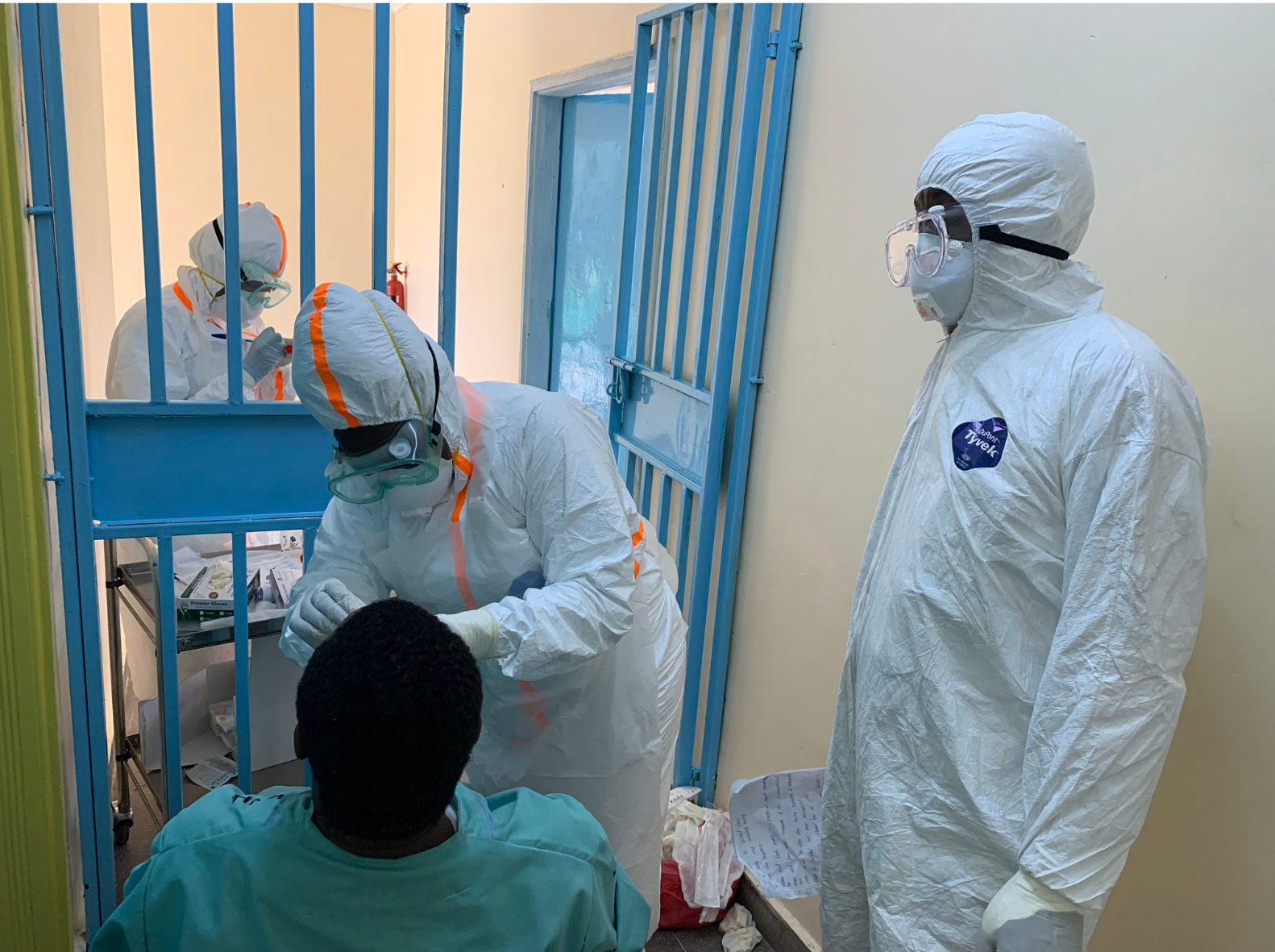
 Covid-19 testing.
Civil society groups have raised fresh concerns over a proposed global pandemic treaty.
They warn it could allow wealthy nations and pharmaceutical companies to benefit from disease samples without fairly compensating countries where outbreaks originate.
One such group, the Aids Healthcare Foundation (AHF), which has offices in Nairobi, warned that the proposed pandemic agreement under the World Health Organisation (WHO) risks repeating the injustices seen during COVID-19.
The dispute centres on a key part of the WHO Pandemic Agreement, known as the Pathogen Access and Benefit Sharing (PABS) annex.
This section seeks to answer a basic question: if a country such as Kenya shares a virus sample that helps scientists develop a vaccine, what does the country receive in return?
AHF criticised the lack of clear provisions, such as technology transfer and non-exclusive licensing.
It said African manufacturers may be locked out of producing vaccines developed using their own pathogen data.
During the Covid-19 pandemic, African scientists were quick to identify and share new variants, including Beta and Omicron, yet the continent received less than three per cent of global vaccine supplies despite having about 17 per cent of the world’s population.
AHF says this imbalance must not be repeated.
“Africa has invested in manufacturing capacity, strengthened its regulators and built the Africa CDC into a credible continental health authority,” said Diana Tibesigwa, Regional Advocacy & Policy Manager, AHF East & West Africa.
“What we need now is a global system that rewards—not punishes—that progress. A PABS Annex without binding equity provisions tells Africa: share your pathogens, but don’t expect fair access to the cures.”
Resilience Action Network Africa (RANA), another civil society group, called for mandatory registration of all users of pathogen data and traceability mechanisms to prevent what they describe as anonymous exploitation.
“The stakes could not be higher,” said Aggrey Aluso, RANA’s executive director.
“We have developed significant expertise in pandemic preparedness and global health governance—yet we have been locked out of the negotiating room. If the PABS Annex fails to deliver, it will be because powerful countries chose extraction over cooperation.”
The WHO said the system is designed to ensure both rapid sharing of disease information and fair access to lifesaving tools.
WHO director general Tedros Adhanom Ghebreyesus said; “The Pathogen Access and Benefit Sharing system lies at the heart of the WHO Pandemic Agreement and I thank WHO member states for their commitment to work to bring it to life.”
He added that countries must trust one another and work together for the common public good, for solidarity and for equity.
Negotiations hit a deadlock at the end of last month and will restart at the end of April.
On March 28, the WHO confirmed that member states had extended talks on the PABS annex, with a new push to finalise it ahead of the World Health Assembly in May.
The broader Pandemic Agreement, adopted in 2025, cannot be signed until the annex is complete.
AHF and other civil society organisations said the delay reflects deep disagreements, especially over how benefits should be shared and whether companies accessing pathogen data should be legally bound to give back.
“At a time when some of the world’s wealthiest countries are stepping back from global health leadership, European leaders at the country and European Union levels have a clear opportunity and responsibility to step forward,” said Daniel Reijer, Bureau Chief, AHF Europe.
“Europe has long championed equity and solidarity. Now is the moment to turn those values into action by supporting a strong, binding PABS Annex that ensures lifesaving tools reach everyone, everywhere.”
The organisation is pushing for strict rules requiring companies and countries benefiting from shared data to provide something in return.
According to AHF, “Benefits must include equitable access to vaccines, diagnostics, and treatments; non-exclusive licences for manufacturers in developing countries during public health emergencies; and annual financial contributions.”
Health advocates are particularly opposed to what they describe as a “dual-track” system, which could allow companies to access pathogen data without binding obligations.
They argue this would let firms develop profitable vaccines and treatments while leaving poorer countries at the back of the queue.
If the global PABS system is weak, experts warn, countries like Kenya could end up sharing valuable data without guaranteed returns, limiting access to vaccines and treatments during future outbreaks.
“Africa holds some of the world’s most important disease reservoirs. If African countries sign away their resources without ensuring fair benefit-sharing already proposed under the multilateral PABS, they undermine the global cooperation system humanity needs for the next pandemic,” said Dr Githinji Gitahi, Amref Health executive director.