

Djibouti heads to the polls on Friday, April 10, in what analysts describe as a defining moment, even as the process is expected to follow a familiar and orderly pattern.
Incumbent President Ismail Omar Guelleh is widely regarded as the clear favourite, extending a leadership that has spanned more than two decades.
As the nation awaits official results, the election reflects both continuity and a measure of public confidence in an administration that has overseen economic growth and relative stability in a strategically important region.
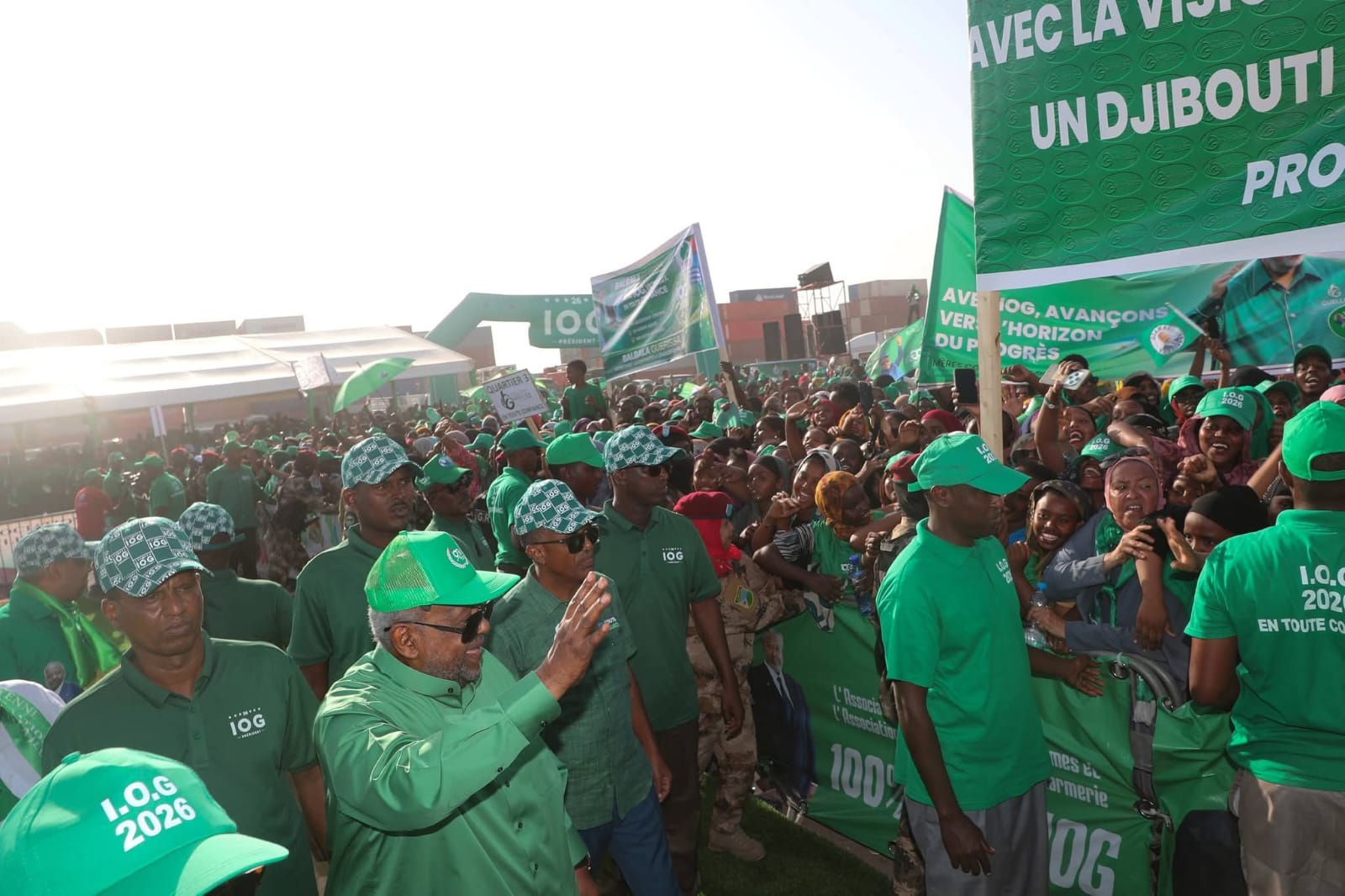
Over the past two weeks, campaigns have traversed the country—from the capital, Djibouti City, to regional centres such as Tadjourah and Obock.
The ruling Union for the Presidential Majority (UMP), led by President Guelleh, demonstrated its national reach through well-attended rallies and coordinated outreach efforts.
President Guelleh, who has been in office since 1999, remains a dominant figure in Djiboutian public life. His tenure has been marked by major infrastructure projects, including the expansion of ports and transport networks that have positioned Djibouti as a vital trade and logistics hub in the Horn of Africa.
Supporters credit his administration with sustaining economic progress, attracting foreign investment, and maintaining stability in a geopolitically sensitive region.
Djibouti’s geographic position has enabled it to serve as a gateway for regional commerce, a factor many voters cite as central to their support for continuity. For some, stability remains the overriding consideration.
However, opposition figures are seeking to challenge the status quo. Mohamed Farah Samatar, leader of the CDU party, has expressed confidence in staging an upset.
“This election represents an opportunity for change and renewal,” he said during a recent campaign stop.
Electoral data further underscores the challenge. Out of a population with just over 243,000 registered voters, turnout has historically averaged around 67 percent, indicating a relatively engaged electorate.
However, participation alone does not necessarily translate into competitiveness.
The presence of 76 international observers, including delegations from the African Union and Intergovernmental Authority on Development, is expected to bolster procedural credibility. Still, observers caution that credibility in process does not always equate to competitiveness in outcome.
As results begin to trickle in after Friday’s vote, few analysts anticipate a major political upset. A victory for President Guelleh would extend a presidency that has already lasted nearly three decades.
For his supporters, such an outcome would reaffirm stability and continuity in a region often marked by volatility.







