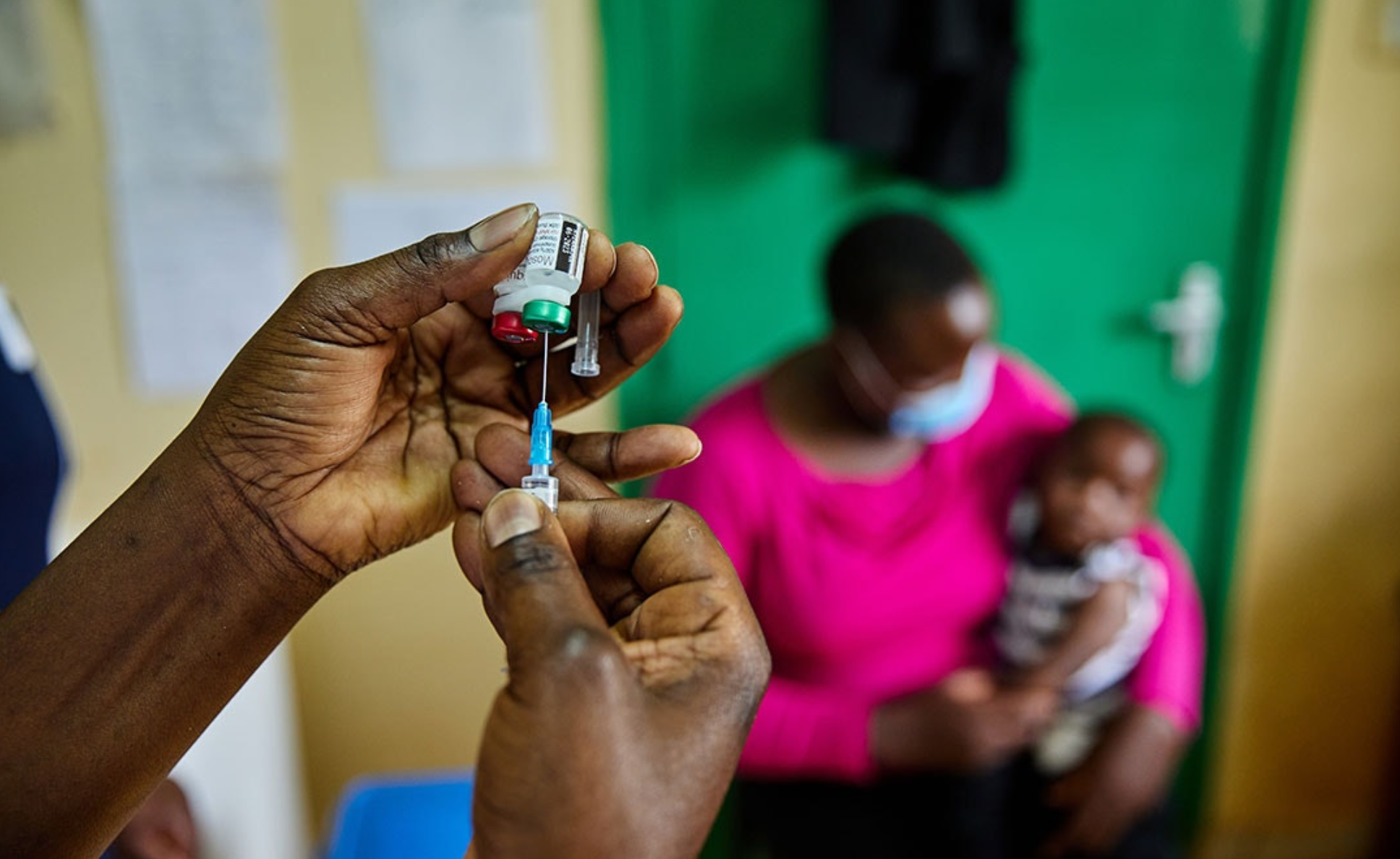
 Nurse Janet Wanyama administers a dose of the RTS,S malaria vaccine for a child at the Malava County Hospital, Kakamega, Kenya. Photo credit: Gavi, the Vaccine Alliance.
Kenya has recorded at least 1,623 adverse events after giving children the malaria vaccine, but an expert review confirmed no serious events or deaths were caused by the jab.
The review covers cases reported between 2019 and 2023 during the pilot rollout of the RTS,S malaria vaccine.
Read Also
The cases were investigated by the Pharmacy and Poisons Board (PPB) and the National Vaccines and Immunization Programme (NVIP) with support from the Kenya Medical Research Institute (Kemri).
“Causality assessment of serious Adverse Event Following Immunization (AEFI) by national expert advisory committees did not reveal any new safety concerns associated with the RTS,S/AS01E vaccine or confirm the safety signals observed in the Phase 3 clinical trials,” the experts said.
They include Dr Fred Siyoi, the immediate head of the PPB and Dr Rose Jalang’o, head of the National Vaccines and Immunization Program.
Others are PPB’s Martha Mandale, Anthony Toroitich, Christabel Khaemba and Pamela Nambwa.
Their verdict is contained in a new report that also covers Ghana and Malawi, the other two countries where the vaccine was piloted.
The report is expected to be published in the Malaria journal.
The verdict now offers strong reassurance about the safety of the world’s first malaria vaccine in real-life conditions.
RTS,S was introduced in Kenya in September 2019 in western Kenya as part of a World Health Organization-coordinated pilot programme.
At least 1,818,572 doses had been administered to Kenyan children by the end of 2023.
Experts say the findings are critical because they go beyond controlled clinical trials and reflect what happens when the vaccine is used in everyday health systems.
The previous Phase 3 trials had raised concerns about the vaccine’s possible links to conditions such as meningitis, cerebral malaria and differences in death rates between boys and girls.
These were considered safety signals that required further investigation.
However, these concerns did not materialise in routine use, according to the report titled “Safety monitoring of the RTS,S/AS01E malaria vaccine: Experiences and lessons from routine pharmacovigilance in Ghana, Kenya and Malawi.”
Researchers monitored safety during the ongoing routine use to see if the safety concerns noted during trials, or new ones, may appear.
“Given the scale of the rollout, which far exceeded the controlled environment of clinical trials, establishing a robust pharmacovigilance system to monitor rare but potentially serious adverse events following immunisation was a critical component of the program's design,” they said.
Adverse events following immunisation are any medical problems that occur after a person receives a vaccine.
These can range from mild reactions like fever or pain at the injection site to more serious conditions requiring hospital care.
Monitoring AEFIs is essential to ensure vaccines are safe, detect rare risks early and maintain public trust.
The study shows that although many adverse events were reported in Kenya, including deaths of some children after vaccination, these events and the deaths were caused by other illnesses or conditions, not the vaccine.
The findings also align with earlier research showing that the RTS,S vaccine is effective in reducing malaria cases.
Previous studies have shown the vaccine can reduce malaria cases by about 30 to 40 per cent in young children. It can also significantly cut severe malaria and hospital admissions when used alongside other measures like mosquito nets.
The real-world pilot programme in Africa has also shown the vaccine can reduce child deaths and severe illness in areas with high malaria transmission.
The authors say the vaccine’s safety monitoring system played a key role in supporting its rollout.
However, the researchers highlighted major weaknesses in Kenya’s health system, especially in reporting and investigating side effects and adverse events.
Underreporting was widespread, meaning many cases may not have been captured.
“The low reporting from routine pharmacovigilance in Kenya was due to the passive, voluntary nature of the reporting, which often leads to underreporting,” they said.
“Other reasons included the perception that only serious or unusual events warrant reporting; high workloads; competing tasks among healthcare professionals; and caregiver health-seeking behaviour.”
Most of the reported cases in Kenya came from hospital-based surveillance systems rather than routine reporting, suggesting gaps in everyday monitoring.
Delays in reporting and poor-quality data further weakened the system.
In many instances, reports were incomplete or lacked sufficient clinical details, making it difficult for experts to determine the cause of the adverse events.
“Common challenges across all countries included delays in submitting reports to the next level of the healthcare system and partially completed reports, both of which hindered timely data analysis and causality assessment,” the study said.
Eventually, only a small proportion of serious cases in Kenya were fully investigated, raising concerns about the country’s ability to quickly detect and respond to potential safety issues.
The authors recommended increased investment in health systems to improve safety monitoring, including better training for healthcare workers, stronger reporting tools and more use of digital systems.
They further stressed the need for public awareness campaigns to counter misinformation and build trust in vaccines.
“Addressing misinformation and misconceptions about vaccines through targeted communication strategies will help build public trust in vaccination programs,” the report says.