 Good Friday/AI ILLUSTRATION
 Good Friday is one of the most significant days in the Christian calendar, observed during Holy Week on the Friday before Easter Sunday.
It commemorates the crucifixion of Jesus Christ and his death at Calvary, events that form the foundation of Christian belief about sacrifice and salvation.
A solemn day
Good Friday is marked by mourning, reflection and reverence rather than celebration.
Christians believe that Jesus willingly suffered and died on the cross for the sins of humanity.
The day is therefore observed in a subdued manner, with church services often conducted in silence or with minimal decoration.
Despite its name, “Good” Friday does not imply joy in the usual sense.
Instead, the term reflects the belief that Jesus’ sacrifice was ultimately “good” because it brought redemption and the promise of eternal life to believers.
What happens on Good Friday
Across the world, Christians mark the day through various religious practices centred on remembrance and reflection.
Many attend special church services that focus on the Passion of Christ, the account of Jesus’ arrest, trial and crucifixion.
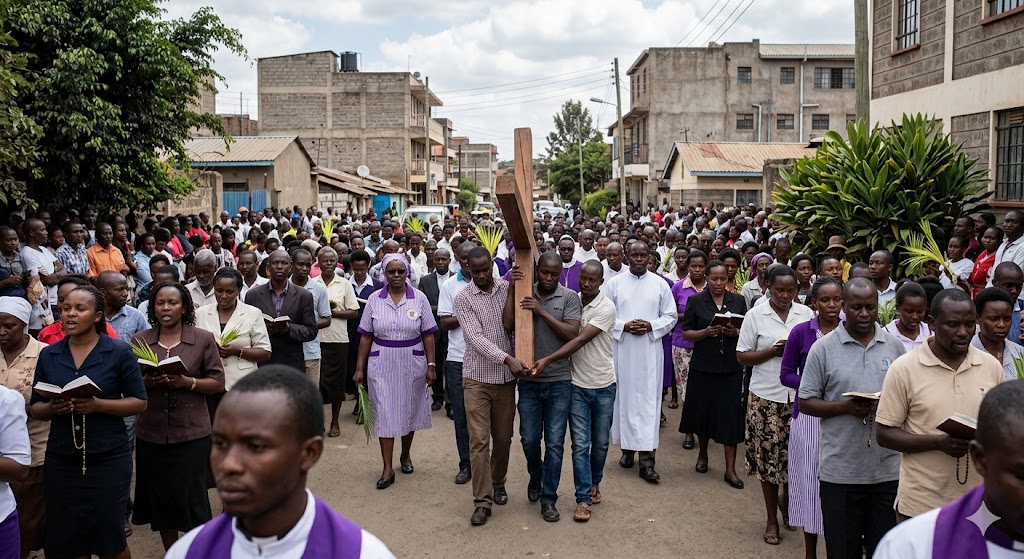
Some churches hold processions or reenactments of the Stations of the Cross, tracing the final hours of Jesus’ journey to the cross.
Others organise readings of biblical passages and sermons that emphasise sacrifice, forgiveness and humility.
Fasting and abstinence are also common observances, although practices vary across denominations and individuals.
Some Christians abstain from eating meat, while others fast partially or fully.
However, not all Christians are required to fast, and traditions differ widely.
Why Good Friday matters
The significance of Good Friday lies in its theological meaning.
Christians believe that Jesus’ death was a sacrifice that atoned for human sin, restoring the relationship between God and humanity.
It represents themes of love, obedience and self-sacrifice.
The day is also part of a broader narrative of Holy Week, which begins with Palm Sunday and culminates in Easter.
Good Friday marks the moment of suffering and sacrifice before the hope of the resurrection.
What follows Good Friday
Good Friday is followed by Holy Saturday, a day of quiet reflection marking the time Jesus lay in the tomb.
This leads to Easter Sunday, which celebrates the resurrection of Jesus Christ, the cornerstone of Christian faith.
While Good Friday focuses on death and sacrifice, Easter Sunday shifts to joy and celebration, symbolising victory over death and the promise of new life.
When it is observed
The date of Good Friday changes each year because it is tied to the lunar-based calculation of Easter.
It always falls on the Friday before Easter Sunday and is recognised by many Christian denominations, including Catholics, Protestants and Orthodox churches.
In Kenya and many other countries, Good Friday is observed as a public holiday, allowing Christians time to attend services and reflect on its meaning.