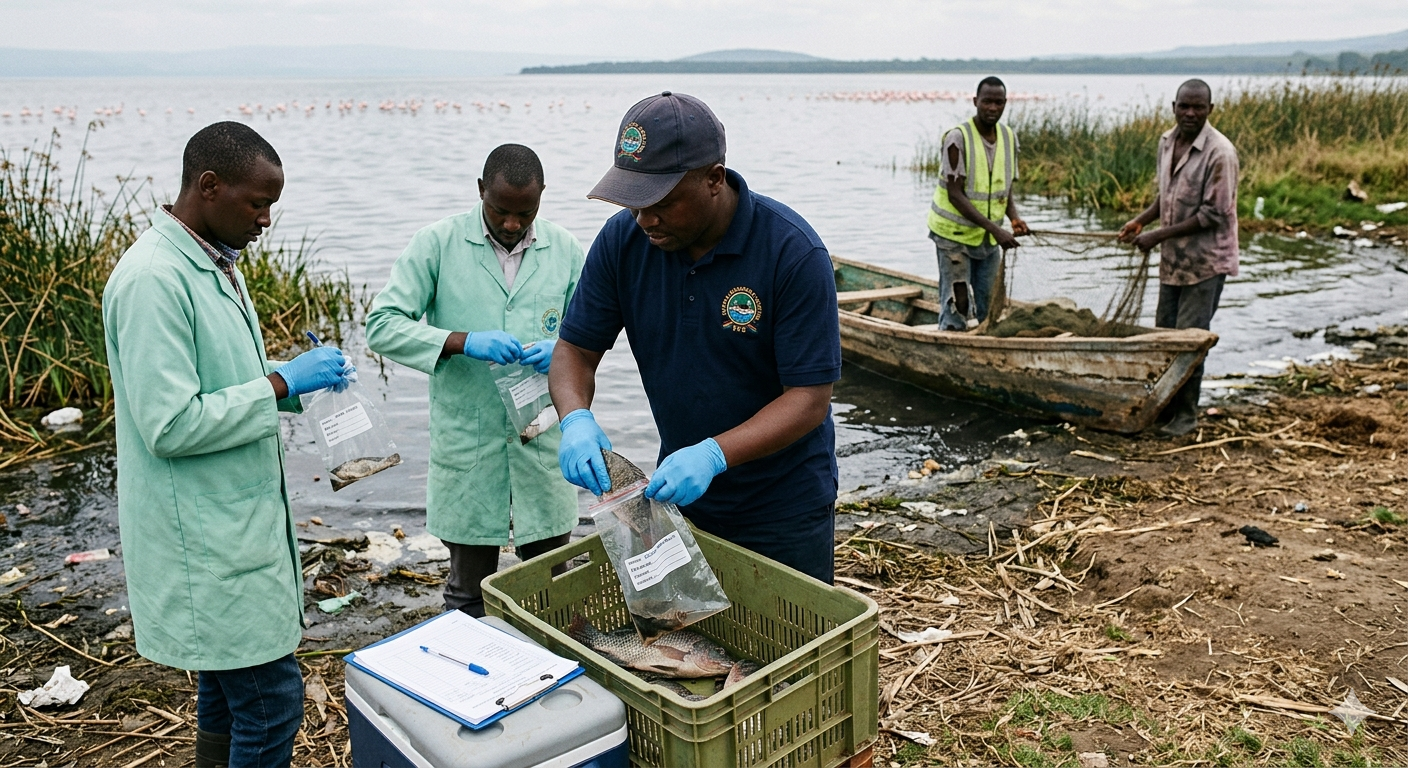
A Senate committee has directed the Fisheries department to urgently conduct fresh research on whether fish from Lake Nakuru are safe for human consumption.
This follows growing concerns over an illegal trade in contaminated fish reaching major markets.
The Senate National Security and Defence Committee, chaired by Fatuma Dullo, ordered the Kenya Fisheries Service to table a comprehensive report within 14 days on tests conducted on fish from the lake.
“We are directing the KFS to conduct research and determine whether fish from Lake Nakuru are fit for human consumption,” Dullo ruled.
The directive follows a petition by Peter Mbae and Tom Mboya, who warned that despite a standing ban on fishing in Lake Nakuru, an underground network continues to harvest and distribute fish from the lake.
The fish, they claimed, are often disguised as fresh tilapia from Lake Victoria and sold in markets as far as Nairobi and Kisumu, posing a serious public health risk.
The petitioners further alleged the existence of a cartel involving powerful individuals who continue to fish illegally with impunity, while ordinary fishermen face arrest and harassment from the Kenya Wildlife Service.
“We are concerned that while ordinary fishermen are being arrested by KWS officers for illegal fishing in Lake Nakuru National Park, influential individuals are carrying out illegal fishing of harmful fish,” Mbae told the committee.
“The fish is then supplied across the country to unsuspecting Kenyans,”
Mboya said their attempts to engage KWS had failed, forcing them to seek the Senate’s intervention.
He appealed for a long-term solution, including regulated fishing and the implementation of environmental restoration measures.
“We are appealing for a lasting solution by ensuring fishing is properly regulated and recommendations to clean the lake are implemented,” he said.
“We do not want our youths to continue disappearing while influential individuals exploit the situation,” he said.
However, environmental regulators painted a grim picture of the lake’s condition, warning that fish from Lake Nakuru may pose significant health risks.
National Environment Management Authority director general Mamo Mamo told the committee that pollution from untreated sewage, industrial discharge and storm water run-off has severely degraded the lake’s ecosystem.
He cited a 2022 study by the Kenya Forestry Research Institute which found that Nile tilapia from Lake Nakuru was unsafe for consumption due to high levels of endosulfan, a toxic pesticide.
Further scientific findings have consistently revealed elevated levels of organochlorine pesticides, nitrates and heavy metals in both the water and fish tissues.
These substances are associated with long-term health complications, including hormonal disruption and other chronic illnesses.
Lake Nakuru’s status as a closed basin, with no natural outlet, worsens the situation as pollutants accumulate over time.
Experts say this has led to oxygen depletion in several sections of the lake, further degrading its ecological health.
“Since the results of the present study indicate that Lake Nakuru fish are not fit for human consumption, an immediate ban on fish harvesting and consumption from the lake is recommended,” Mamo said.
Additional data presented to the committee showed a steady deterioration of the lake’s ecological status, underscoring the need for stricter enforcement and accelerated restoration efforts.
Studies by the Kenya Marine and Fisheries Research Institute have also confirmed the presence of dangerous levels of toxic substances, including arsenic, nitrates and pesticide residues linked to untreated sewage and industrial waste.
Lake Nakuru, a protected Ramsar Wetland and UNESCO World Heritage Site, is a critical ecological zone.
Illegal fishing not only threatens public health but also disrupts the habitat of wildlife such as hippos and crocodiles, while providing cover for poachers operating within the rhino sanctuary.
Appearing before the committee, Daisy Muriuki, acting director general of the Kenya Fisheries Service, said her agency does not license any fishing activities in Lake Nakuru.
She reiterated the lake is not designated as a fishery.
“Fishing in Lake Nakuru National Park is not permitted, and all matters related to activities and security within the park fall under the Kenya Wildlife Service,” she said.
Muriuki further clarified that KFS is not involved in monitoring contaminants in the lake, as it is neither a recognised fishing ground nor under its regulatory scope.
The Senate committee is expected to use the findings of the forthcoming report to determine further action, as pressure mounts to dismantle illegal fishing networks and safeguard public health.
INSTANT ANALYSIS
The Senate has launched a probe into the safety of fish from Lake Nakuru following claims of widespread illegal fishing and the distribution of contaminated fish to major markets. Petitioners allege that powerful individuals are behind the trade, evading enforcement while locals face arrest. Scientific studies show that fish contain toxic chemicals, posing serious health risks. Regulators blame pollution from sewage and industrial waste. The committee’s findings could trigger stricter enforcement and policy action to protect public health and restore the lake’s ecosystem.