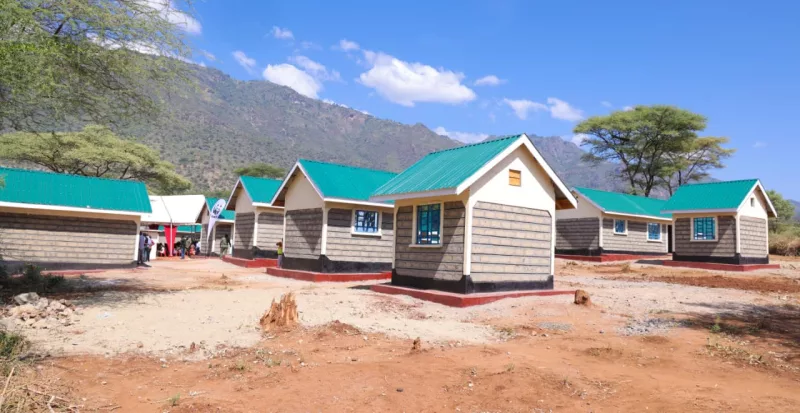
Key projects that would have otherwise have mitigated drought and the current floods failed to be implemented on time, raising concerns over the country’s preparedness to handle the recurring natural disasters.
Drought mitigation programmes and construction of dykes due for completion in June have lagged behind, defeating their purpose in drought and flood mitigation and adaptation.
A new report by the Controller of Budget has highlighted this challenge, listing a number of projects that have stalled despite budget allocations.
The report shows that several high-impact projects under the State Department for ASAL and Regional Development — many of them central to food security, drought response and flood control — are significantly behind schedule despite looming completion deadlines.
According to the findings, at least six projects targeted for completion by June 2026 are at risk of timeline overruns, with some recording alarmingly low levels of progress.
These include the Sustainable Food Systems and Resilience Livelihood Activities project, which is only two per cent complete, and the Integrated Resilience for Sustainable Food Systems project at 12 per cent.
Other delayed initiatives include drought mitigation interventions under the Kerio Valley Development Authority, which is 17 per cent complete, and the Ewaso Ng’iro South Development Authority at 30 per cent.
Also pending are dykes in Muhoroni and Nyando constituencies, which are 33 per cent complete, and the Malindi Integrated Social Health Development Programme at 38 per cent.
This delay exposes a disconnect between the escalating climate shocks and the slow pace of mitigation projects.
The slow pace of implementation also raises queries about the government’s ability to deliver critical interventions designed to cushion vulnerable communities from climate-related shocks.
Mid-March, the Integrated Food Security Phase Classification issued a report on how the drought in northern Kenya had pushed 3.3 million people into acute food insecurity, a 52 per cent increase in one year.
This included 400,000 people experiencing emergency levels of hunger and needing life-saving assistance. The most vulnerable face a compounding burden of insufficient diets and high disease rates.
Now floods have killed at least 70 people, more than 40 of them in Nairobi, and displaced about 50,000 residents.
Key mitigation projects, ranging from food systems resilience to flood control infrastructure, remain significantly behind schedule, suggesting a gap between policy intent and implementation.
In response to the natural disasters, the government has been forced into costly responses rather than long-term solutions to recurring climate shocks.
Deputy President Kithure Kindiki said that as of February, the government had released more than Sh10 billion over several months for drought recovery, citing previous disbursements of Sh2.5 billion, Sh3.5 billion and Sh4.1 billion.
Kenya has in recent years faced increasingly frequent and severe weather extremes, with floods displacing families in parts of western and coastal regions even as arid and semi-arid lands continue to experience prolonged dry spells.
This has been acknowledged by the Rapid Assessment Report of the Auditor General on National Governments Action to Address Climate Change, published in November last year.
The report said climate change has manifested itself in the form of severe droughts, floods and rising lake levels, resulting in damage of properties and loss of lives and livelihoods.
“The drought experienced in 2022-23, the floods of 2024 and the rising lake levels in Lake Victoria and lakes on the Rift Valley are some of the challenges that the country has faced in the wake of climate change,” the report notes.
Projects flagged in the report are intended to break this cycle by strengthening resilience, improving water management and boosting food production systems.
However, the low completion rates show the interventions were not delivered in time to mitigate current and future risks.
Beyond implementation delays, the report also points to gaps in financial reporting, further complicating oversight and planning.
The State Department for ASAL and Regional Development failed to provide cumulative expenditure data for its projects in the first half of the 2025-26 financial year, contrary to requirements under the Public Finance Management Act.
The omission, the Controller of Budget notes, implies incomplete reporting and limits the ability of oversight bodies to assess how funds are being utilised and whether projects are delivering value for money.
The report adds to growing scrutiny over the implementation of development projects across government, with repeated concerns about low absorption of funds and stalled initiatives despite budgetary allocations.