Taxpayers could shoulder an additional Sh4.3 billion annually if a proposed constitutional amendment is implemented.
The amendment seeks to enforce gender balance and guarantee representation of persons with disabilities in Parliament.
A new analysis by the Parliamentary Budget Office shows enforcing the two-thirds gender rule alone would cost about Sh3.87 billion in the first year.
This is driven by the need to nominate additional legislators after every general election to realise the elusive two-thirds gender rule.
A further Sh462.4 million would be required to meet the proposed five per cent threshold for PWD representation.
This pushes the total cost above Sh4.3 billion, with recurrent expenditure remaining high in subsequent years.
Currently, the cost of maintaining one MP is Sh4.4 million per month.
This comprises direct earnings by a member – salaries and allowance (Sh1.2 million), indirect earnings accruing to a member – domestic travel, foreign travel, constituency offices (Sh2.1 million) and indirect cost – consumptions of utilities, maintenance of offices at Sh1.1 million.
An MP also benefits from the one-off cost of a member’s car grant of Sh5 million, with an average annual inflation of five per cent.
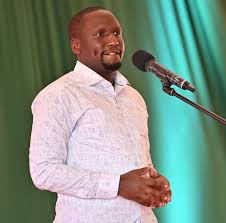
The projections arise from the Constitution of Kenya (Amendment) Bill, 2025, sponsored by Senate Majority leader Aaron Cheruiyot.
The Bill seeks to operationalise long-standing constitutional requirements that have remained unmet since the promulgation of the constitution.
At the centre of the Bill is a proposal to introduce additional special seats in both the National Assembly and the Senate to correct gender imbalances after elections.
Where either House fails to meet the constitutional threshold that no more than two-thirds of members be of the same gender, extra legislators will be nominated to bridge the gap.
Based on trends from the last three elections, the PBO estimates that an average of 67 additional lawmakers—63 in the National Assembly and four in the Senate—would be required to meet the gender threshold.
This would expand the National Assembly to about 412 members and the Senate to 71.
In addition to gender parity, the Bill proposes that at least five per cent of members in both Houses be persons with disabilities.
To achieve this, an extra eight members—six in the National Assembly and two in the Senate—would be nominated through party lists under proportional representation.
The proposed law also tightens rules governing party-list nominations, requiring political parties to adopt more transparent and competitive processes.
Party lists must reflect marginalised groups in line with constitutional provisions, while nominees will be limited to a maximum of two terms to promote rotation and inclusivity.
“By ensuring the adequate representation of PWDs in government, the Bill aims to ensure their voices are heard, and their interests and needs are taken into account in decision-making,” the Bill states.
Amendments to Articles 97, 98 and 90 of the constitution aim to align the legal framework with the new proposals, including clarifying procedures for filling vacancies in nominated positions.
Despite the steep cost implications, proponents of the Bill argue the financial burden should not override the constitutional obligation to ensure equality and inclusivity.
The constitution mandates that no more than two-thirds of members of elective bodies be of the same gender and requires fair representation of marginalised groups, including persons with disabilities.
“Notwithstanding these constitutional provisions, full implementation has not been realised with successive electoral cycles yielding legislative bodies that fall short of the prescribed threshold,” Cheruiyot said.
However, compliance has remained elusive. Women’s representation in the National Assembly has risen gradually from 19.5 per cent in 2013 to 23.2 per cent in 2022—still below the one-third threshold.
The Senate has also fallen short, with women accounting for just over 31 per cent of members.
The representation of PWDs stands at about 3.37 per cent across both Houses, which is below the proposed five per cent target.
The Parliamentary Budget Office warns that without a clear enforcement mechanism, the country is likely to continue failing to meet these constitutional benchmarks.
International comparisons show that countries with strong legal quotas have made greater progress.
Rwanda leads globally in gender representation, while South Africa and Mexico have achieved gains through party quotas and constitutional parity laws.