ODM on Friday escalated its internal purge, kicking out deputy party leader Godfrey Osotsi and restarting the process to remove secretary general Edwin Sifuna.
The development comes even as the party welcomed back former secretary general Ababu Namwamba to the fold, fuelling speculations that he could replace Sifuna.
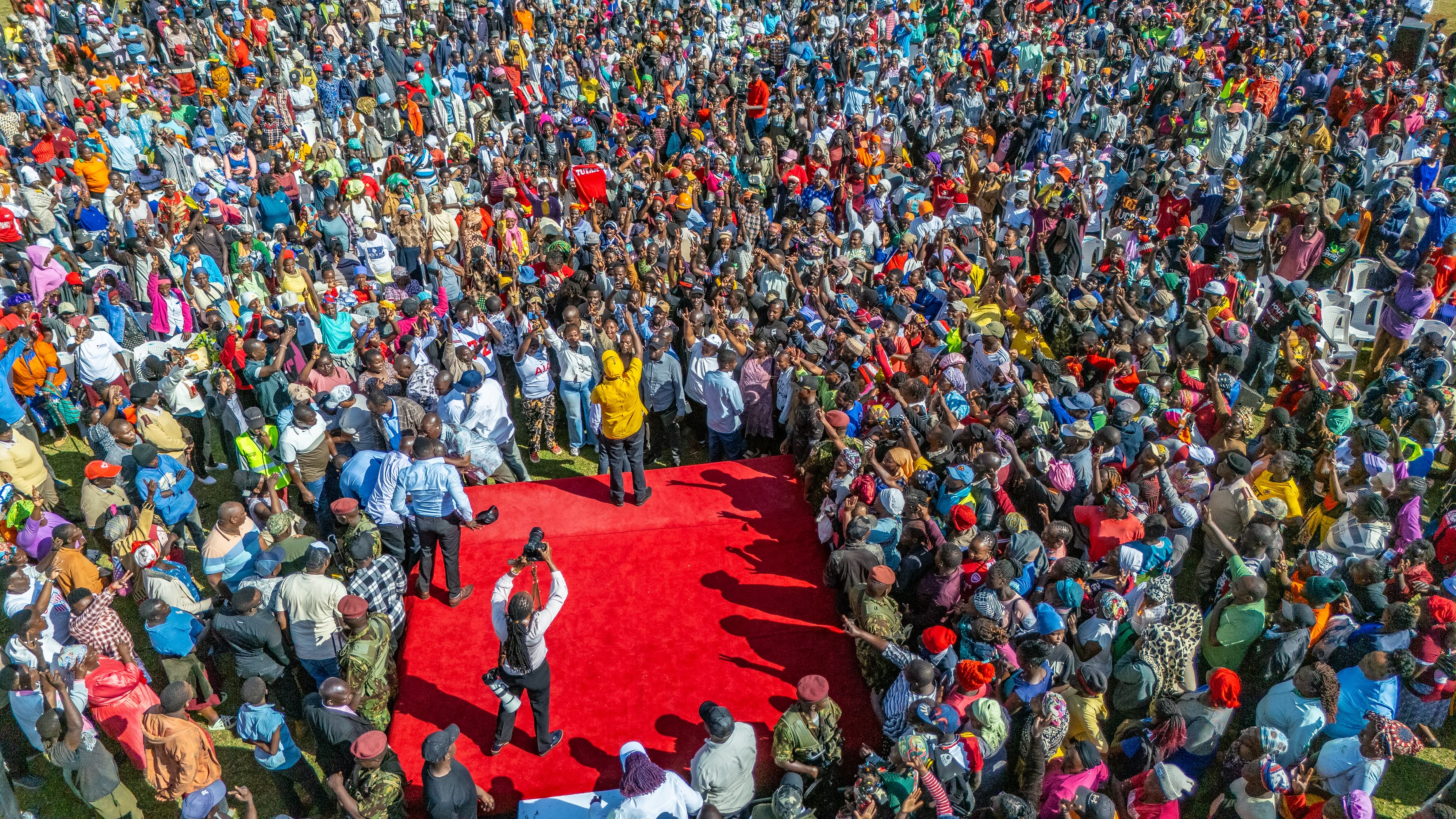
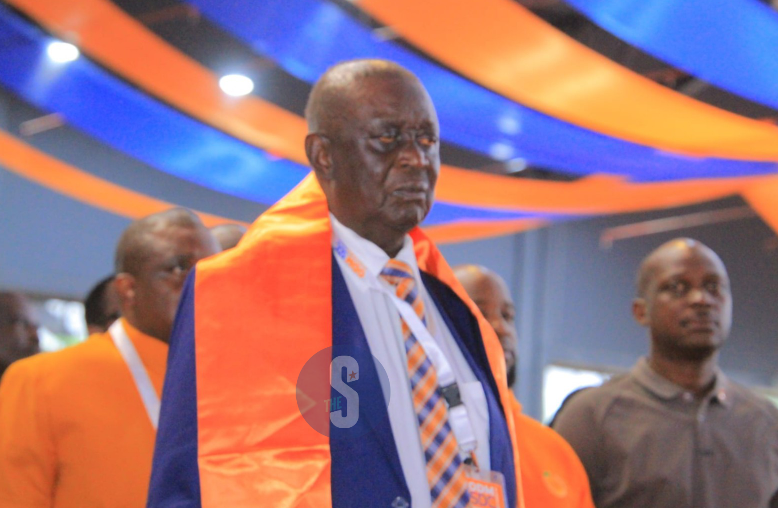
The dramatic developments unfolded during a charged Special National Delegates Convention held at Jamhuri Grounds in Nairobi.
The party formally installed Oburu Oginga as its new leader following the death of his brother, Raila Odinga.
The high-stakes meeting, attended by thousands of delegates from across the country, marked a turning point for the party as it seeks to consolidate power, manage internal divisions and position itself ahead of the 2027 General Election.
In a sweeping reorganisation, the delegates ratified a new lineup of top officials, including Mombasa Governor Abdulswamad Nassir and Kisii Governor Simba Arati as deputy party leaders.
Homa Bay Governor Gladys Wanga was approved as national chairperson, with Turkana South MP John Ariko named her deputy.
Wajir Governor Ahmed Abdullahi was endorsed as the national organising secretary, deputised by Ruth Odinga, further cementing the influence of regional heavyweights in the party’s new power structure.
At the same time, the convention handed Oburu sweeping powers, including a mandate to initiate coalition talks with President William Ruto’s UDA as part of a broader strategy to negotiate ODM’s place in the country’s political future.
But it was the party’s hardline stance on internal dissent that stole the show.
In what insiders described as a “political bloodbath,” delegates rejected Osotsi’s position as deputy party leader and endorsed fresh efforts to remove Sifuna from his influential role as secretary general.
“The SNDC takes note of the Political Parties Disputes Tribunal decision on the matter of Edwin Sifuna, and the relevant party organs will initiate the necessary processes in accordance with the constitution and applicable laws,” Deputy Secretary General Catherine Omanyo announced while reading the resolutions.
The move came just a day after the Political Parties Disputes Tribunal directed ODM and Sifuna to resolve their dispute through the party’s Internal Dispute Resolution Mechanism.
ODM’s decision to restart the removal process, in line with the tribunal’s guidance, signals that Sifuna’s position is increasingly untenable despite the legal reprieve.
The unfolding purge has laid bare deep-seated divisions within the party, with a faction of leaders accusing the current leadership of intolerance and sidelining dissenting voices.
Adding intrigue to the political drama was the re-emergence of Ababu Namwamba, the former ODM secretary general, who made a surprise appearance at the convention to a thunderous reception from delegates.
Namwamba, who previously fell out with ODM and later joined the government, is now widely seen as the frontrunner to replace Sifuna if the removal process is completed.
His return follows recent high-level engagements, including a meeting with Raila Odinga’s widow, Ida Odinga, and consultations with party delegates in Busia—moves that had already fuelled speculation about his political comeback.
“I’m delighted to be among comrades. Twenty years ago, we started a party to pursue power and make Kenya better,” Namwamba told the cheering crowd.
“We have come a long way as a party. We have resisted, we have taken hardline positions, and now we are in close proximity to power. Let us consolidate that power,” he added.
In his maiden address as party leader, Oburu Oginga struck a firm but measured tone, warning that indiscipline would not be tolerated even as he sought to project ODM as a democratic outfit.
“We are not going to have a party of expelling people, but we are going to stick to democracy,” he said.
“One of the cardinal principles of democracy is that the minority will have their say, but the majority will have their way,” he added, in remarks widely interpreted as a warning to dissenting members.
Oburu further outlined ODM’s negotiating position in its anticipated engagement with UDA, stressing that the party would not compromise on its existing political strongholds.
“Where ODM has MCAs, MPs, women representatives, senators and governors, that is non-negotiable. That is ODM. We start from there,” he said.
He also dismissed claims that the party had been compromised by its evolving political alignment.
“ODM is not bought. Bought by who? At my age, can somebody buy me?” he posed, drawing laughter and applause from the delegates.
However, cracks within the party were evident during the convention.
Winnie Odinga, Raila’s daughter, appeared to criticise the leadership’s handling of dissent, warning that the party risked alienating some of its members.
“I feel as a party that we may be leaving some of our members behind. We want a party that opens doors, not closes them—a party that listens to concerns,” she said.
She also called for a renewed focus on youth inclusion, urging ODM to create opportunities and systems that work for young people.
The tensions were further underscored by a fiery warning from National Assembly Minority Leader Junet Mohamed, who declared that ODM would field its own presidential candidate if its demands are not respected in any coalition arrangement.
“If you joke with us, we will also produce a presidential candidate and meet on the ballot,” he said.
“Don’t threaten ODM. Respect ODM. ODM is a big party. We can do anything,” he added.
Abdulswamad and Arati sought to strike a conciliatory tone, pledging to unite the party and expand its support base following the loss of its long-time leader.
They emphasised the need to uphold ODM’s core values, including dialogue, inclusivity and the protection of citizens’ rights and freedoms.
Abdulswamad, in particular, defended the party’s strategy of engagement in the current political climate, pushing back against critics who have branded ODM a “sellout.”
“To talk is not weakness. It takes strength to sit down with those you disagree with and find a way forward,” he said.
“Anyone can stand and insult, but real leadership is knowing when not to use a hammer to kill a fly,” he added.