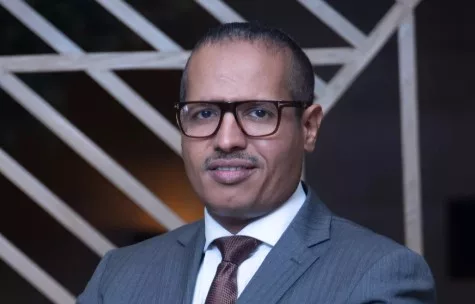
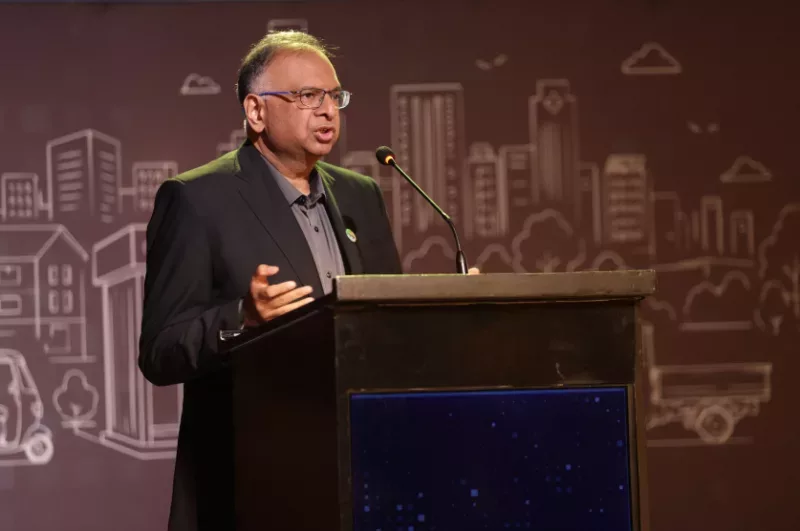
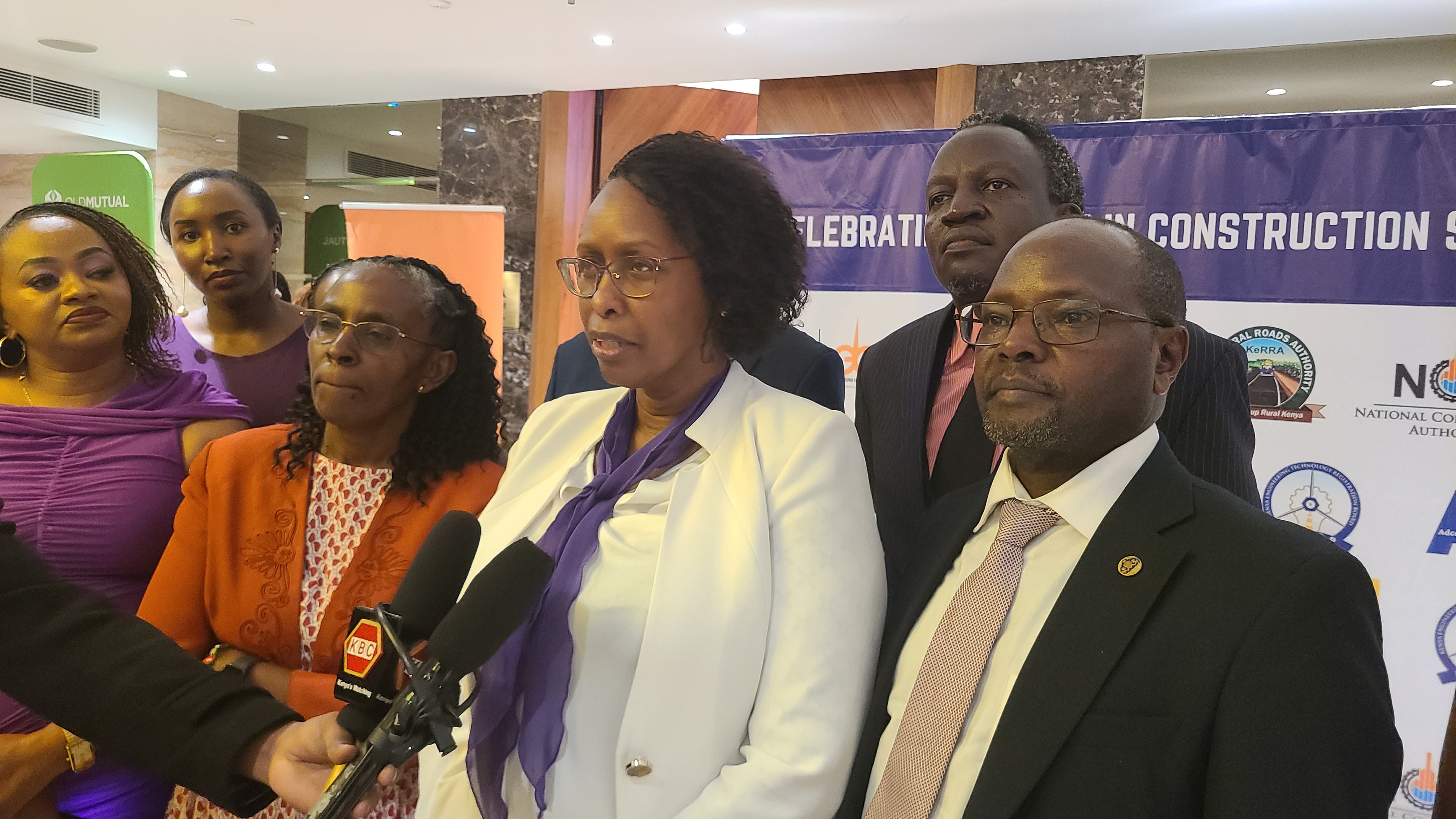
 President of the Association of Consulting Engineers of Kenya Jane Mutulili, Engineers Board of Kenya CEO Margaret Ogai and Kenya Rural Roads Authority, director general Jackson Magondu at the sidelines of the Women in Construction Sector celebrations /JACKTONE LAWI.
Low representation of women in engineering has raised concerns among professionals who are now calling for parity, especially at the leadership level.
This, as it emerges that women representation declines sharply as careers advance, with lack of mentorship and leadership pathways being a major hindrance.
Industry data shows only two out of every 20 accredited engineers are women equivalent which is equivalent to 10 per cent.
On consulting engineers, only 32 out of the 645 are women which is five per cent.
Women account for 12 per cent of professional engineers–439 women out of 3,685 registered.
They account for 15 per cent of graduate engineers which is 3,637 women out of 24,482 nationwide.
Industry leaders are warning that the imbalance could undermine the country’s infrastructure growth and innovation capacity.
Speaking in Nairobi yesterday dueing a forum by the Association of Consulting Engineers of Kenya (ACEK) in partnership with CareerSight, the association’s president Jane Mutulili said the trend reflects systemic barriers rather than a lack of talent.
“Kenya does not have a shortage of talented engineers. What we have is a shortage of structured pathways that convert talent into leadership,” she said.
Mutulili noted that while more women are entering engineering at the graduate level, their representation declines sharply as careers advance into senior technical, consulting and leadership roles.
“This pattern is not accidental. It is systemic. Unless we intervene deliberately, we will continue to lose some of our best minds,” she warned.
The forum brought together stakeholders from across the engineering ecosystem, including regulators, industry leaders and government agencies, to address what many described as a “leaking pipeline” for women engineers.
Limited access to mentorship, lack of structured career support and workplace environments have been cited as key barriers.
Societal expectations and work-life balance challenges, especially around motherhood, also play a role in slowing career progression for women.
Kenya National Highways Authority chairperson Winfrida Ngumi noted that infrastructure projects present a major opportunity to bridge the gender gap if inclusion is made a deliberate priority.
“Every road project and consultancy engagement gives us a chance to ask who is participating, who is leading and who is being left behind,” she said.
National Construction Authority chair, Mercy Okiro, emphasised that increasing women’s participation is not just a matter of equality, but also an economic necessity.
CareerSight founder Phyllis Wakiaga said structured mentorship combined with accountability and measurable outcomes, is key to retaining talent and building a sustainable pipeline of women leaders.
“Engineering is not losing women because they lack capability. It is losing them because the pathway is often unstructured and the environment unsupported,” she said.
Women’s rights advisor in the Office of the President, Hariette Chiggai, reiterated the government’s commitment to gender inclusion, citing policies such as the two-thirds gender rule and procurement opportunities reserved for women, youth and persons with disabilities.
“In addition, national efforts continue to promote fair education among girls, expand scholarship opportunities and strengthen institutional support so that more women can enter and thrive in technical fields,” Chiggai said.
The conversation comes at a time when Kenya is pursuing ambitious infrastructure projects under its economic transformation agenda, creating what stakeholders described as a “once-in-a-generation opportunity” to integrate women into large-scale projects.
Three key areas were identified as critical for change which are scaling women into leadership roles in major infrastructure projects, strengthening local content participation for women-led firms and leveraging technology to break traditional barriers.
To address these challenges, ACEK launched the Women in Consulting and Engineering (WICE) initiative, which aims to institutionalise mentorship and create structured pathways for career progression.
The programme will connect experienced professionals with emerging engineers, provide leadership training, and support women transitioning into senior roles.