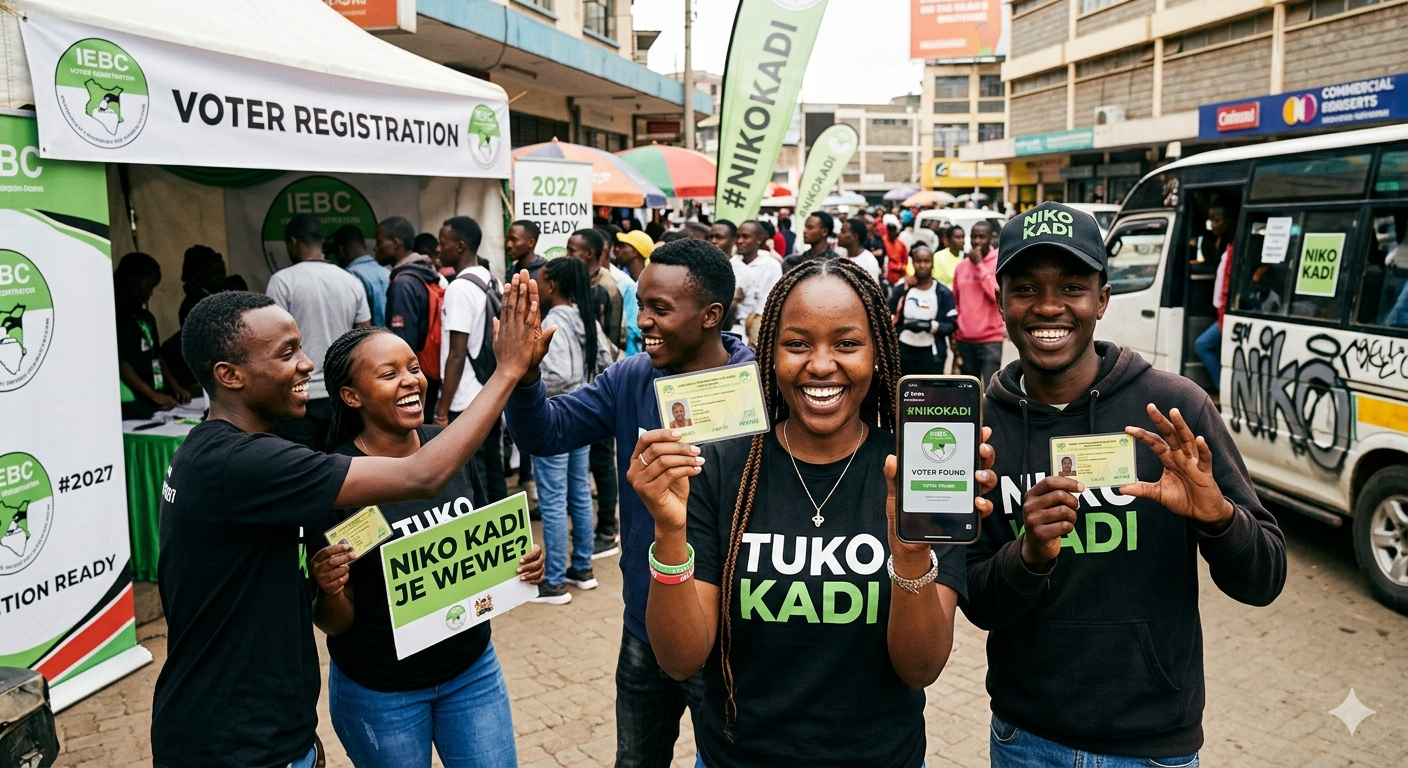
 AI-GENERATED IMAGE
In Kenya, there is always something trending. Sometimes it’s a phrase, a sound, or a viral meme. Other times, it’s a person dominating conversations for a week or two.
This season, what has taken over social media is neither a celebrity scandal nor a catchy jingle; it’s a movement, a slang, and a declaration all rolled into one: “Niko Kadi.”
Unlike past trends, this one has a purpose: it’s driving young people to engage in politics and make their voices count.
The new wave of political engagement is sweeping across the country as Gen Z voters document their journey toward the 2027 general election. On TikTok, X, Instagram, in matatus, university campuses, and even in casual conversations among friends, the phrase is everywhere.
What does “Niko Kadi” mean?
“Niko Kadi” — sometimes “Tuko Kadi” — is pure Sheng, the Swahili-English street talk that has long dominated Kenyan urban culture.
Loosely translated, it means “I have the card” or “I’m registered to vote” (short for Niko na kadi ya kura). When someone drops it, they’re flexing: “I’m ready. I’ve done my part for the 2027 elections.”
But it didn’t start as a political slogan. The phrase comes from the classic Kenyan card game kadi, think Mau-Mau or estate poker nights. When a player is about to smash everyone and win the round, they shout “Niko Kadi!”, meaning “I’ve got the winning cards” or “I’m set.” It’s a confident, swagger-filled exclamation akin to yelling “Uno!” with the flair of someone who knows they’re about to take over.
Somehow, that old-school vibe of “I’m prepared and about to win” caught Gen Z’s imagination and got remixed into a movement.
After the 2024 Finance Bill protests and 2025 protests, young Kenyans had been loud online and on the streets, but realised that tweeting complaints alone wouldn’t spark change. Come 2026, they flipped the script: instead of just criticising, they would register to vote and participate actively in shaping the leadership of 2027.
I hope we’re not just making noise online without being registered voters," one TikTok user warned.
Another added, "There will be no change in our leadership if we don’t register and actually vote. Change happens at the ballot. We might complain online about how things are run, but if we don’t cast our votes, nothing will change."
The message came at the perfect time, just as the Independent Electoral and Boundaries Commission (IEBC) resumed voter registration. Slowly, it caught on, transforming from a cautionary reminder into a full-blown trend.
The campaign started in mid-February 2026 as a grassroots initiative by young activists like Allan Ademba and Willie Oeba. No politician owned it.
Hashtags like #NikoKadi were trending, accompanied by challenges where people posted their voter registration slips or cheekily asked: “Niko Kadi, je wewe?” (I’m registered, what about you?).
The trend has also become a source of hilarity. On TikTok and X, users joke that dating or befriending someone who isn’t registered is now grounds for cutting ties.
“Kama hujachukua kura nakucut off,” Maina posted, meaning: If you haven’t taken your vote, I’m cutting you off.
“Mimi ata bibi yangu asipochukua kura namuacha,” another user added, laughing emojis included.
In a viral clip, a girlfriend asks her boyfriend for salon money, only for him to respond: “Uko kadi?” When she says she’ll register after the salon session, he replies flatly: “No, have voters card first.”
Even morning greetings have been remixed. Social media users now say: “Good morning kwa wale wako kadi pekee yake”, good morning to those who are registered only.
Taking it seriously
The movement isn’t just about laughs. Some Gen Z activists have proposed that county events be held, with a voter card as an entry ticket, demonstrating the seriousness with which they approach civic responsibility.
Others are using their platforms to educate peers on the registration process and how to update details.
Meet-ups and centralised social gatherings are being planned via social media so young voters can head to registration centres together.
“The Niko Kadi campaign is a very good use of the internet and social media!” Mwikali, a social media user, enthused.
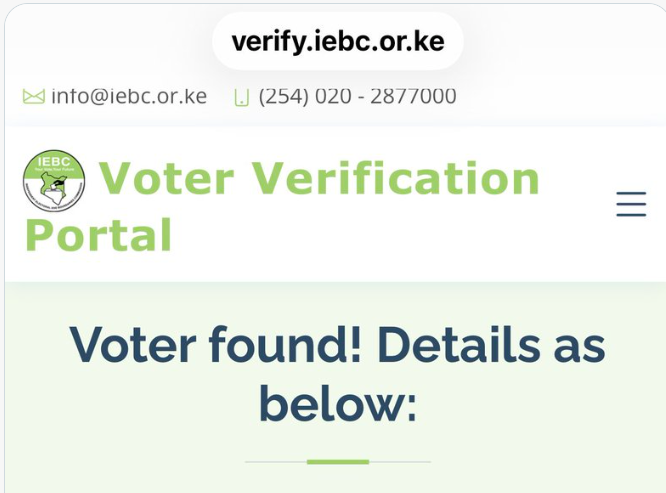
Screenshots from the IEBC voter verification portal, accompanied by the phrase “Voter found! Niko Kadi, je wee?”, are now universal online.
Even some politicians have joined in, posting “wako kadi” in response to the trend. Yet, there is caution. Many Kenyans warn against letting the movement be politicised.
“We hope these politicians will not infiltrate this movement and make it political. Vijana, tukuwe wajanja,” Alex wrote on X, urging young people to keep the campaign grassroots and independent.
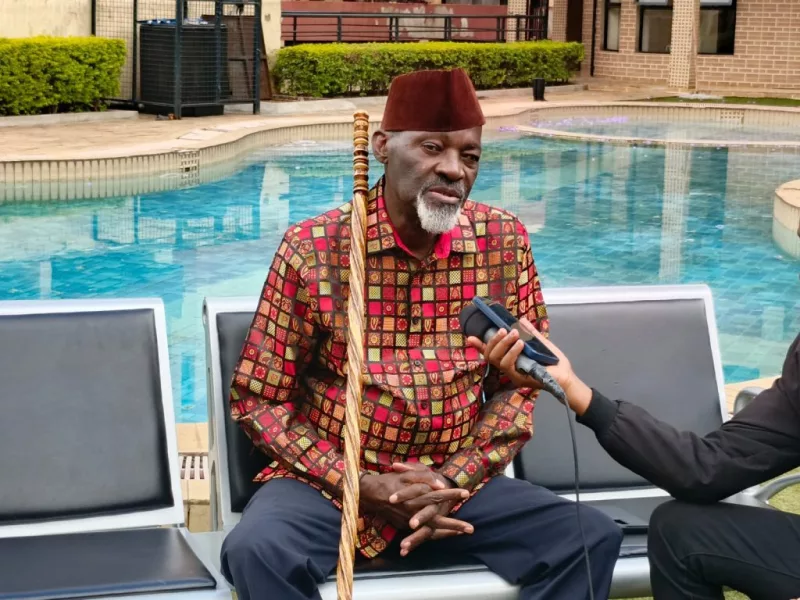
"To the Kenyan political class, musitujaribu, musituskume. Tuko kadi is a movement by the young people and the Gen Zs; we are not affiliated with any politician or political party," Comedian and activist Eric Omondi said.
Challenges
Accessibility of registration centres and voter education remains a challenge. Yet, the determination online shows a generation unwilling to sit on the sidelines.
“In my area, I don’t know where the offices are. How do I change my polling station? How do I update my name now that I’m married? If I voted last time, do I still need to register?” These are just some of the questions Kenyans are asking online.
While some receive guidance from peers who know the process, many feel the IEBC should step up with clear campaigns to clarify these issues.
“IEBC waanze classes sasa. Tunataka kujua kunaenda aje.”
“Ama IEBC waanze kututumia SMS kama Safaricom, wakituchanua.”
Despite these hurdles, young Kenyans are turning civic participation into something fun, visible, and viral. In doing so, they are not only learning and helping each other navigate the process, but also reshaping how their generation thinks about politics.
More than a trend
As the countdown to 2027 continues, “Niko Kadi” is proving that it is far more than a meme or viral joke. It has become a cultural movement, a social experiment, and a bold statement about the power of young Kenyans to shape their future.
By turning voter registration into something visible, relatable, and even fun, Gen Z is rewriting the rules of civic participation, showing that politics doesn’t have to be distant or dull; it can be personal, playful, and powerful.
Each post, video, and hashtag is a declaration: We are present, we are prepared, and we will not stay silent.