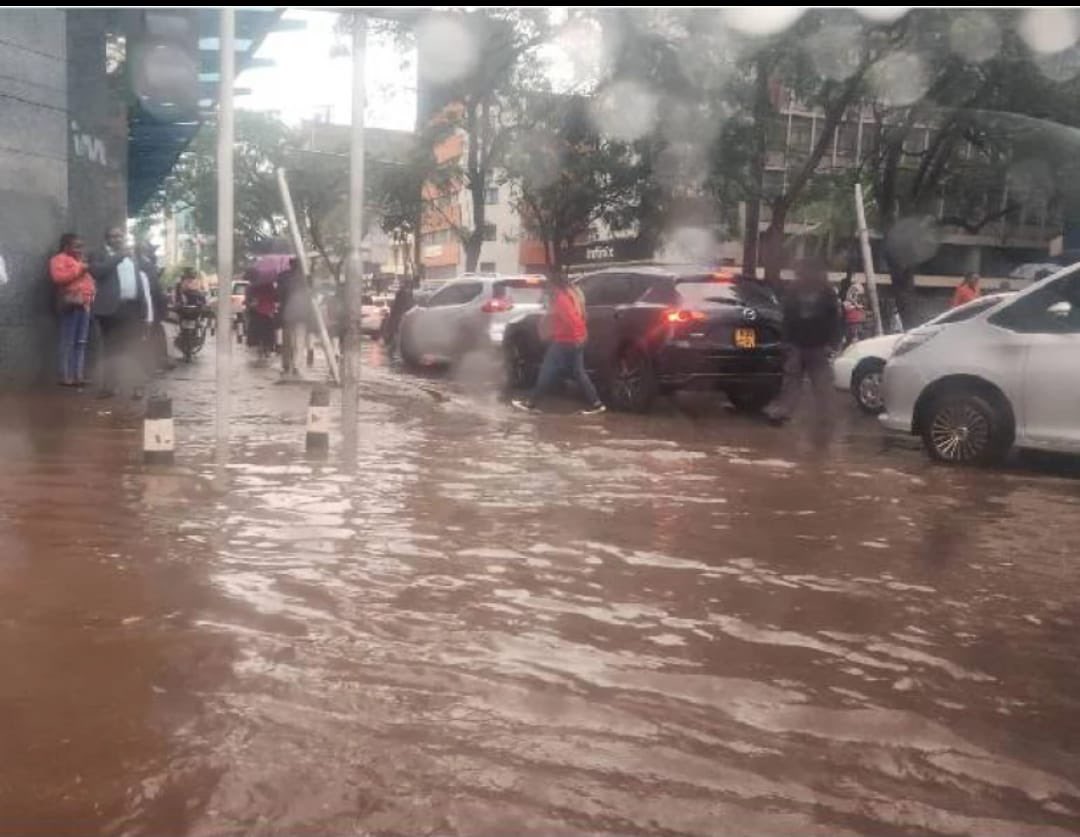
Systemic failures in environmental governance, poor urban planning and weak enforcement of laws are to blame for the devastating flash floods in Nairobi and other parts of the country.
A preliminary report tabled in the Senate by the Lands and Environment Committee established that the floods of March 6 and March 14 left a trail of deaths and destruction. At least 70 people were killed, including over 40 in Nairobi alone with another 50000 people displaced.
Property, livestock, farmland, and critical infrastructure were also destroyed.
The committee, through chairman Mohamed Faki, expressed condolences to affected families but warned that the disaster was not unexpected.
The report states the floods were the result of “decades of accumulated failures” in land use regulation, environmental management and urban planning.
“Kenya has reached an affliction point,” Faki said, noting that the country has experienced major flooding every year since 2023 despite spending an estimated Sh35 billion on mitigation measures.
He criticised what he termed a cycle of reactive spending without long-term reforms, saying the rising death toll and economic losses show that current interventions are ineffective.
The committee now plans to push for legislative and oversight measures to address the crisis.
Faki cited constitutional provisions, including Articles 42 and 69, which guarantee the right to a clean and healthy environment and obligate the state to protect natural resources and address climate change.
He said these legal safeguards are clear, but enforcement has been lacking.
The committee identified degradation of water catchment areas and key water towers as a major driver of flooding.
Damage to these ecosystems has increased the intensity and frequency of floods in both urban and rural areas.
Encroachment on riparian land also emerged as a critical concern.
Existing laws prohibit development within protected riverbank zones, but the committee found widespread violations, particularly in Nairobi, where buildings have been erected along river channels and flood-prone areas.
Such developments, Faki said, reduce the natural capacity of rivers to contain excess water, making floods more severe and predictable.
Efforts to remove illegal structures have often been undermined by court battles, limited capacity and political interference.
The committee pointed to failures in enforcing planning regulations under the Physical and Land Use Planning Act.
Rapid urbanisation has replaced green spaces with concrete, increasing surface runoff and overwhelming drainage systems.
Despite improved own-source revenue, the Nairobi City County Government has not expanded drainage infrastructure in line with the city’s growth, the committee noted.
It also faulted the National Construction Authority and county governments for failing to stop illegal developments in flood-prone areas, citing corruption in approval processes.
Chronic under-investment in drainage systems has compounded the problem.
Much of Nairobi’s drainage infrastructure was built for a much smaller population and is now overwhelmed. The committee noted that only Sh200 million was allocated for flood control nationally in the current financial year—far below what is needed.
Blocked drainage channels, clogged with plastic waste, silt and illegal structures, have further reduced capacity.
The committee said there is no consistent, well-funded maintenance programme for urban drainage systems.
Poor solid waste management has also worsened the situation.
The National Environment Management Authority has flagged widespread dumping of waste in rivers and drainage channels, especially in informal settlements where collection systems are inadequate.
“This creates blockages that cause flooding even during moderate rainfall,” Faki said, linking the waste crisis directly to flood risks.
The committee also raised concerns over excessive groundwater extraction through boreholes, which has lowered water tables and caused land subsidence in parts of Nairobi. These depressions trap water and intensify flooding.
The senators criticised weak disaster preparedness systems.
Although the Kenya Meteorological Department issued early warnings ahead of the heavy rains, there was no effective mechanism to translate forecasts into timely evacuations and community action.
Faki said flooding caused by environmental degradation and poor planning is preventable, adding that the committee will table a comprehensive report with recommendations to break the cycle of recurring disasters.