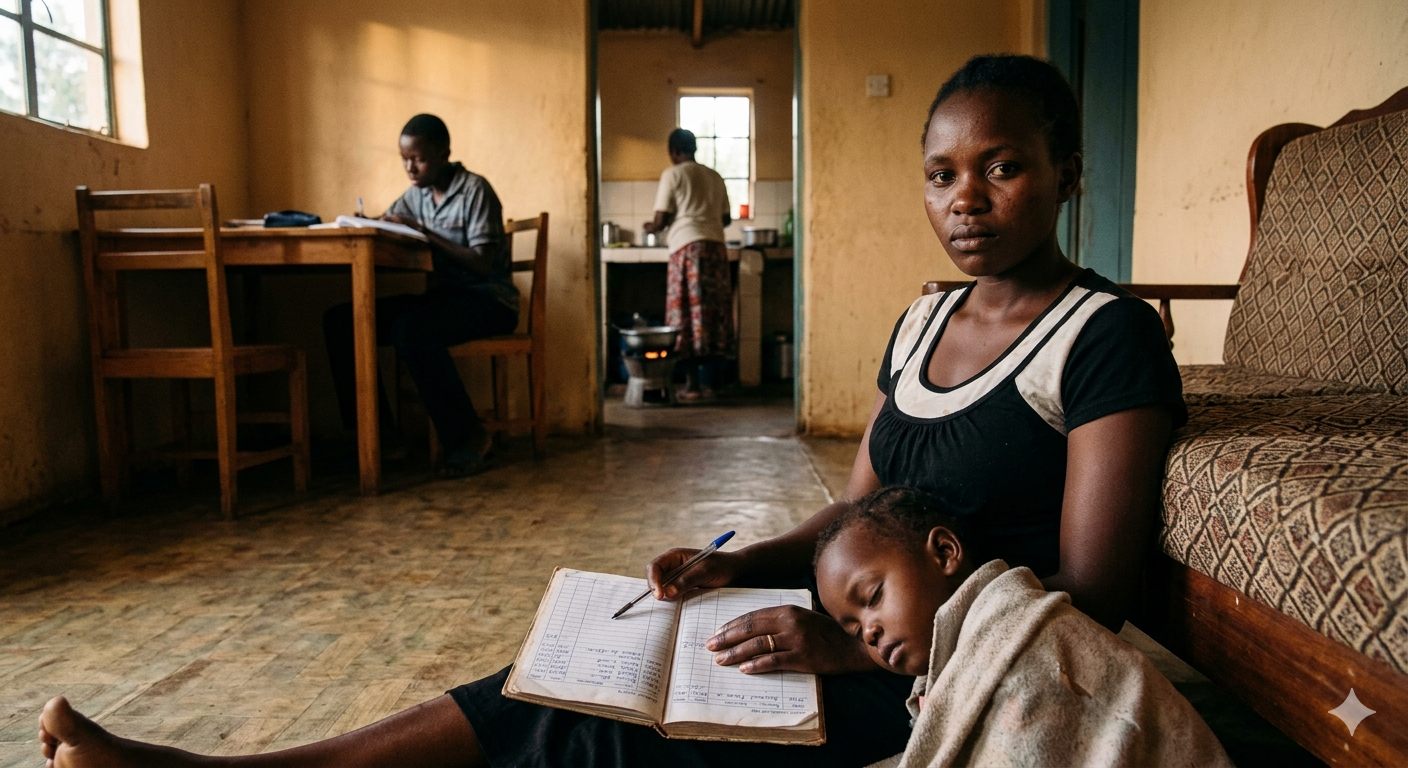
 AI Illustration./AI
Being the first child of a family is a source of pride in most Kenyan families. The older one is supposed to be a role model and mentor younger ones and uphold family values.
They are put under a very heavy burden by parents and other family members who expect them to mature into responsible adults who would pull the family together, and they keep this burden to themselves unless they confess in front of a psychiatrist.
Since childhood, firstborn children develop faster in comparison with others. Although younger siblings can experience the freedom of childhood, the firstborn can be given responsibilities much earlier.
They assist in taking care of younger siblings and setting up the home and are reminded time and again to act well since there are other people observing them.
Being one of the firstborns, myself, I have found out that such a position is not discussed publicly very often, but a lot of firstborn children face such experiences.
It is an unspoken rule that you must be responsible at all times, take the right decisions, and somehow lead the way that younger siblings can follow.
Any success is celebrated since it acts as an inspiration, whereas any failure is even more weighty since it appears that it can affect the success of the ones more late than yourself.
In most families, the first-born daughters are supposed to assist their mothers with such household chores as cooking, cleaning, and looking after their younger siblings. They end up in other houses, becoming the so-called second mother in good jest.
In the case of firstborn sons, the pressure can be expressed in another way. They are well reminded at a tender age that they will be the backbone of the family at some point in life.
Relatives can say a lot, such as you are the eldest, and the others will rely on you, but as the firstborn children get older and reach the workforce, the pressure they might have developed over time may turn into financial responsibility.
Most families in Kenya also tend to view the income of the eldest as something that they can depend on to sustain their family.
The firstborn sometimes has to take on the burden of school fees for younger siblings and medical bills as well as family emergencies.
In other instances, the extended family members might also resort to the eldest when they are in need of financial help, but some cases may see them help the family as a form of obligation because of the love and the solid cultural values.
The Kenyan family is very close-knit, and the family has a way of
making it a collective effort to help each other out of their problems and in
that respect, the pressure of achieving your objectives is usually put on the
firstborns of the family.
Sometimes, the burden of these expectations can be quite overwhelming, as you are always expected to see your siblings do well before you do. Others postpone higher education, business ideas, or even the desire to have their own families due to the sense of responsibility to ensure that other people get their feet off.
No one speaks much about the emotional burden of such a responsibility.Firstborns are expected to be strong at all times. They are perceived as a problem solver in the family, have solutions when something goes wrong.
Due to this very reason, most people are not so vocal about their own plight. In the long run, this silent strain may result in stress and emotional burnout. Psychologists tend to observe that firstborn children tend to make perfectionists.
They are supposed to be the example and therefore may not consider the possibility of failure. The anxiety of failing the family members may compel them to always want to succeed at the cost of their well-being.
Among firstborn daughters, the demands may be even greater. In addition to the financial burden, they are frequently required to keep the family in harmony, reconcile warring factions, and be emotionally accessible to their families whenever they are required to offer support to their extended members.
Even in the aftermath of marriage, the eldest daughter in most Kenyan families has been a special child who still has to deal with families and funnel their energies in other areas as required.
The elder child usually appears as the logical heir of parental authority and the one who is supposed to be the bearer of family unity and stability in the family.Initially, such traditions were supposed to be aimed at enhanced family ties and stability in the household.
The current economic realities have, however, made the burden heavier. An increase in living expenses, scarce employment, and the need to achieve an expected result have seen the burden of firstborns increasingly being placed on a single person, and that as well, even among younger individuals.
It is starting to dawn on many individuals that though family support is necessary it should not be supported to the detriment of individual well-being.
One should not sacrifice his or her dreams because he is the firstborn. Rather, it is supposed to be a symbol of leadership, direction and pride in the family.
Responsibility may also be there but may also be distributed among the siblings such that no one person bears the whole burden.
As an ever-growing number of families start to find this balance, maybe the position of the firstborn will change to be something healthier, a position of leadership and pride instead of silent pressure.
Since firstborns are mostly perceived to be the tough guys in the family, they should also be supported, understood, and given the space to take their own directions in life.