

Tanzanian investors are pouring into Kenya, acquiring significant stakes in established firms and expanding into sectors ranging from construction and energy to technology, mining and media.
The trend underscores Kenya’s position as the region’s commercial hub and highlights the deepening economic interdependence between the two neighbours within the East African Community.
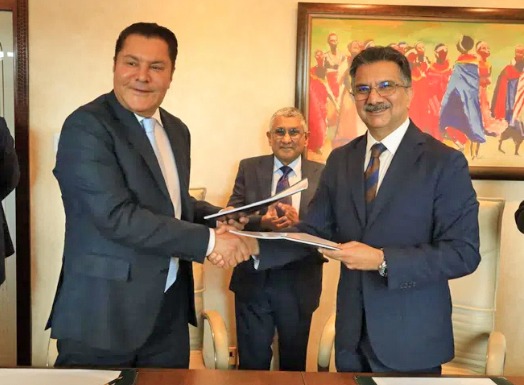
A fortnight ago, Tanzanian tycoon Rostam Azizi — named the country’s first dollar billionaire by Forbes in 2013 — acquired a controlling stake in Nation Media Group, East Africa’s largest media house.
Through his company, Taarifa Limited, Aziz purchased 54 per cent of the business, giving him control over a vast media empire that encompasses numerous newspapers, television channels, radio stations and digital platforms across the region.
The acquisition marks a major shift in regional media ownership and highlights Tanzania’s growing capital footprint in Kenya’s strategic sectors.
Azizi’s latest move is not his first major foray into the Kenyan economy. In 2013, the business magnate launched a multimillion-dollar cooking gas project on Kenya’s coast at a ceremony attended by President William Ruto.
The $126 million (Sh16.2 billion) facility, located on a 30-acre site within the Dongo Kundu Special Economic Zone in Mombasa, will have the capacity to hold up to 30,000 metric tonnes of liquefied petroleum gas upon completion.
At the time, the project was among the largest foreign direct investments (FDI) in Kenya that financial year, when total FDI inflows fell to $728.78 million (Sh94.2 billion) — a 7.94 per cent decline from 2022.
Although the overall stock of foreign liabilities rose in Kenyan shilling terms, it dropped by over $1 billion (12.8 per cent) in dollar terms, largely due to the shilling’s 21 per cent depreciation against the US dollar.
Investment analysts say the influx of Tanzanian capital is driven by diversification strategies and Kenya’s larger, more mature consumer market.
According to freelance investment adviser John Lule, Tanzanian investors are also taking advantage of the regional integration framework provided by the EAC.
“Investors from Tanzania see Kenya as the region’s economic hub, offering better infrastructure and a more vibrant capital market for higher investment returns compared to keeping all assets in Tanzania,” Lule said.
He added that the EAC Common Market allows free movement of capital, goods and people, making it easier for investors to operate across borders.
Data from the Kenya National Bureau of Statistics shows Tanzanian investors have injected $72.45 million into Kenya over the past six years across 19 distinct projects.
The figures place Tanzania ahead of other regional neighbours in direct investment in Kenya, followed by Uganda with $36.9 million (Sh4.8 billion) and Rwanda with $3.7 million (Sh478.4 million).
Tanzanian investments rose significantly last year following a high-profile acquisition in Kenya’s cement sector.
Tanzania’s Amsons Group successfully acquired a controlling stake in Bamburi Cement Plc after a competitive takeover bid valued at over Sh23.6 billion.
The conglomerate, owned by businessman Edha Nahdi, secured 96 per cent of the company’s shares, paving the way for a compulsory buyout of the remaining minority shareholders.
The group has since consolidated its position in Kenya’s cement industry. Its subsidiary, Kalahari Cement, completed a $5.6 million (Sh718.4 million) purchase of a 29 per cent stake in East African Portland Cement Company and bought an additional 27 per cent previously held by the National Social Security Fund.
Combined with a 12.5 per cent stake held by Bamburi Cement under Amsons Kalahari Cement in Blue Triangle Cement, the conglomerate’s total shareholding now stands at 68.7 per cent.
The surge in Tanzanian investment mirrors a longstanding pattern of Kenyan businesses expanding into Tanzania.
Government data shows Kenyan companies have made substantial inroads into the Tanzanian economy, investing in banking, telecommunications, energy, aviation, manufacturing and agriculture.
Major players such as Safaricom (through its affiliate Vodacom Tanzania), Kenya Commercial Bank, Kenya Airways, Equity Bank and East African Breweries Limited have established a strong presence there.
The scale of Kenyan investment in Tanzania has grown sharply, with over 500 Kenyan firms investing approximately $1.7 billion in the neighbouring country.
This has positioned Kenya as the second-largest foreign direct investor in Tanzania, with more than 529 Kenyan companies operating there and creating over 56,000 jobs.
Beyond direct investments, trade ties between the two countries have also strengthened in recent years.
Statistics from the Central Bank of Kenya show Kenya’s exports to Tanzania jumped by 46 per cent to Sh28.66 billion last year, continuing a strong trade run as the two nations work to eliminate non-tariff barriers.
The total value of trade between the pair has approached $100 million (Sh12.93 billion) in recent years.
However, despite this growth, periodic trade disputes continue to strain relations.
Tanzania has repeatedly denied Kenya import permits for poultry and related products such as day-old chicks, hatching eggs and meat.
Recent protectionist levies imposed by Dodoma on eggs, dairy products, meat and confectionery items including biscuits have also raised concerns about possible disruptions to bilateral trade.
In 2023, high-level talks between President William Ruto and Tanzanian President Samia Suluhu resulted in commitments to resolve 14 non-tariff barriers — six from Tanzania and eight from Kenya.
Progress has been slow, with only three issues fully resolved so far. Such persistent frictions underscore the complex interplay between trade policy and investment.
“Even as protectionist measures are implemented intermittently, the underlying economic potential of the Kenyan market continues to attract Tanzanian capital,” regional trade expert Harry Yegon said.
He noted that although political protests following President Suluhu’s re-election briefly dented investor confidence, the situation was quickly stabilised.
For decades, Kenyan firms were seen as the dominant outward investors in East Africa. Now, Tanzanian capital is increasingly flowing in the opposite direction — targeting strategic industries and cementing Dodoma’s position as a rising regional investment powerhouse.
Last year, Tanzania solidified its status as the top foreign direct investment destination in East Africa, with $11 billion (Sh1.4 trillion) in registered projects across more than 900 initiatives, projected to create over 160,000 jobs.
Key investments include manufacturing, mining, energy and infrastructure, reflecting a shift towards industrialisation-focused ventures.
As East African markets become more integrated, analysts say cross-border capital flows between Kenya and Tanzania are likely to deepen, further blurring economic boundaries between the region’s two largest economies.
Kenya’s Cabinet Secretary for Investment, Trade and Industry, Lee Kinyanjui, said the country remains “investor ready”.
“Kenya has been ranked the leading private-sector growth market in Africa — clear evidence of our growing economic prowess, resilience and competitiveness,” Kinyanjui said.
“The stable and predictable business environment is a huge attraction to foreign companies. In addition, the availability of forex and repatriation of profits with ease makes Kenya an attractive investment destination.”
Kenya Investment Authority chairperson Sally Mahihu added that the country’s investment opportunities are broad and sector-diverse.
“We are prioritising leather, textiles and apparel, business process outsourcing (BPO), agro-processing and e-mobility. These are industries with strong potential for export growth, job creation and value addition, and they also align with global demand trends and Kenya’s competitive advantages,” she told the Star.
Meanwhile, Kenya remains a leading hub for private equity in East Africa, hosting more than 56 funds and attracting roughly 60 per cent of regional deals.
Key focus sectors include fintech, healthcare, manufacturing and agribusiness, with a growing interest in SME-focused investments.
Top players include Helios, AfricInvest, Centum and Fanisi Capital, with average deal sizes below $25 million (Sh3.2 billion).
President Ruto’s government is currently pivoting from debt-driven development towards public-private partnerships (PPPs) and the monetisation of state assets.
A cornerstone of this strategy is the newly launched National Infrastructure Fund (NIF), introduced in March 2026, which aims to mobilise Sh5 trillion over the next decade for major development projects.
At the same time, Kenya is courting regional neighbours, including Uganda, to invest in key infrastructure ventures such as the Standard Gauge Railway.







