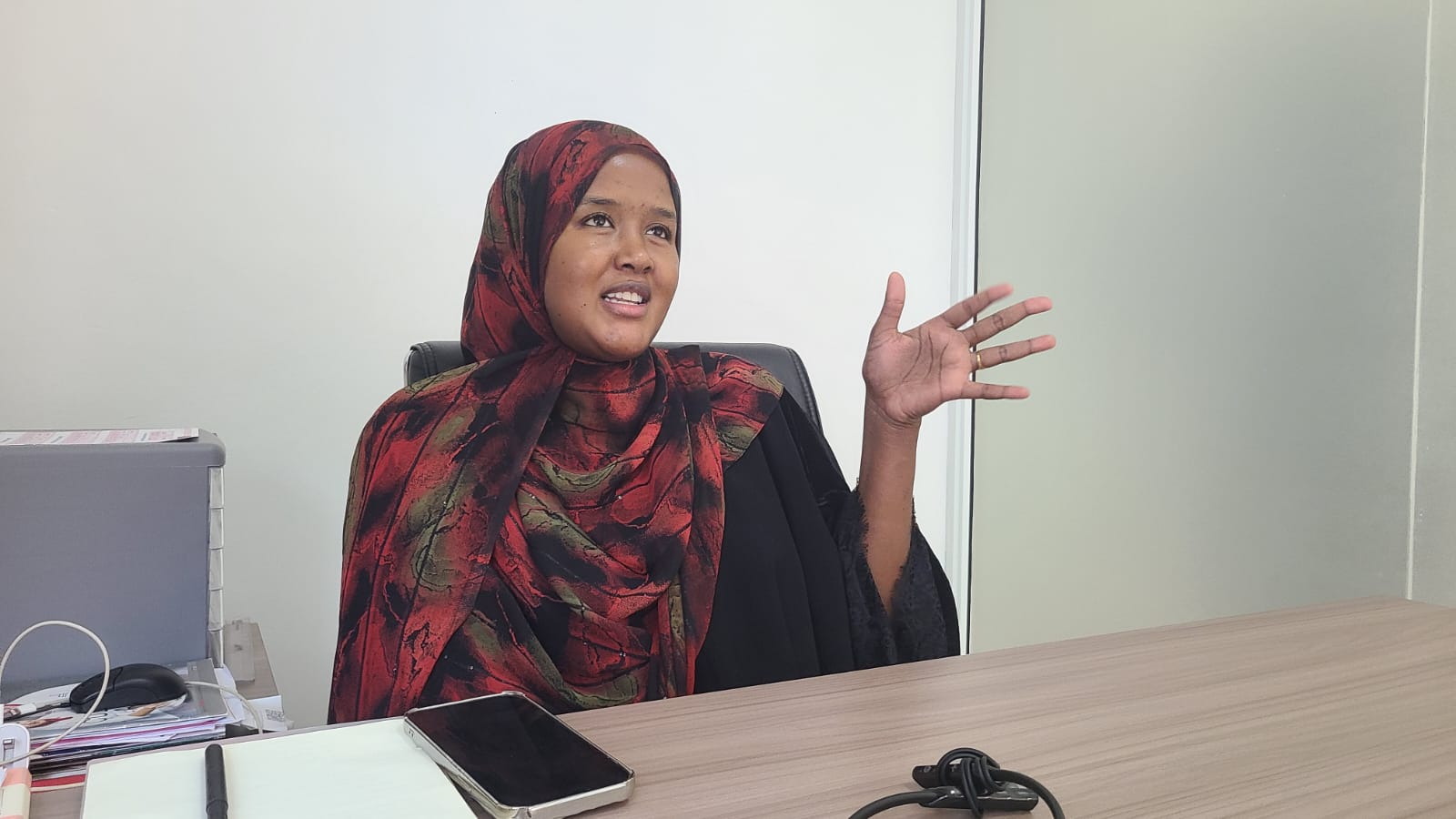
It is a quiet Saturday morning we meet Yasmin Mohamed, along Muthithi road, she is giving directives to her trainer employees on how the day is going to run.
But her story is a culmination of what began with baking cakes from her mother’s kitchen nearly a decade ago, she was simply trying to turn a passion into a side hustle.
Today, that same passion has grown into a hospitality training institute that is shaping the careers of aspiring bakers, chefs and baristas.
At just 29 years old, Yasmin has been the director of Yasmin Cake Hearts for about seven years now, a brand that evolved from an online cake business into a fully-fledged hospitality school offering pastry, culinary and barista training.
“In 2017 while I was still in school, I started selling cakes online,” she recalls. “At the time it was just a business I ran while studying. But the bigger dream was always to turn whatever I was doing into something educational.”
That dream was rooted in her own experience studying culinary arts. While in school, Yasmin felt that something important was missing from hospitality training.
“I kept asking myself why you would go to school to study something and then still need to learn more outside school,” she says. “That’s when I started thinking that we needed better hospitality training platforms.”
For several years, Yasmin built her cake business through social media, particularly Instagram, where she posted photos of her creations and shared baking tips.
She says the cakes gained a loyal following online and customers began associating the brand with quality pastries.
But when the Covid-19 pandemic struck in 2020, something unexpected happened.
“With many people stuck at home and searching for new skills or side hustles, interest in baking exploded. I saw an opportunity to turn the idea of a training platform into reality,” she says.
In 2021, she launched her first online baking classes where she guided them through recipes step by step.
Each module required students to practise at home, take photos of their results and upload them on the course platform.
“We already had a strong following online from the cake business, people trusted the brand because they had tasted the cakes we sold. So when we said we would teach them how to make the same things, they were excited,” she says.
The response was overwhelming. Nearly 100 students enrolled in the online programme, many hoping baking could become a small business they could run from home.
“During Covid people wanted to learn something new, some wanted a hobby, others wanted a way to earn income.”
As students began sharing photos of their pastries online, the programme gained even more traction. Soon, many learners began asking for something more practical.
That demand pushed Yasmin to take the next big step opening a physical training space.
Despite her confidence in the idea, the decision was not without risks. She spoke to her family about her plan to move from an online course to an actual school.
“I told them the response had been very good online and that I wanted to create a physical space where people could learn hands-on,” she says.
Yasmin points out that even before construction was complete, interest in the school was clear.
The first campus, located in South C, Nairobi, was modest. The training room could hold only 18 students at a time, and for the first year Yasmin ran nearly everything herself.
Over two years, the small school trained dozens of students. By the time the institute held its second graduation ceremony, nearly 60 to 100 learners had passed through its programmes.
That success convinced Yasmin’s family that the venture had serious potential. “They told me if this is the path you want to follow, you need to get serious and get accredited,” she says.
Accreditation required a complete transformation of the training space. Inspectors from the Technical and Vocational Education and Training authority evaluated the facility and outlined strict requirements proper classrooms, staff rooms, sanitation facilities and professional workstations.
The school moved into a larger facility designed to support multiple classes simultaneously. Today, the institute can accommodate around 100 students across different programmes.
Training now includes pastry and bakery courses, barista skills and culinary programmes offered in short intensive classes lasting several weeks. The school can run up to three classes at the same time.
“In the next five years I want us to create a hub in the hospitality industry,” she says. “Not only producing students who graduate, but helping them access business opportunities, investment and professional networks.”
Despite running the school, Yasmin has never completely left her first love — baking.
She still takes occasional corporate cake orders when she feels like returning to the kitchen.
“I do it once in a while,” she says. “Baking is still something I enjoy.”
Her entrepreneurial journey also carries a message for young women considering business or leadership roles.
Yasmin credits much of her success to the support she received growing up. Her parents encouraged independence and education, never limiting her ambitions.
“My dad always believed his children should succeed and stand on their own,” she says.
“One of our oldest students was a 71-year-old man, he had done everything in his life and now wanted baking to be part of his retirement plan.”