Across denominations, from traditional mainstream churches to evangelical denominations, clerics took firm positions on governance, corruption and the growing economic frustrations facing young Kenyans.
This signalled the return of the Church of the 1990s that was central to the clamour for multiparty democracy.
Several churches publicly criticised the administration of President William Ruto, demanding accountability and urging the government to address unemployment and rising living costs.
Some congregations went even further to bar politicians from addressing worshippers in several churches.
And in a symbolic rebuke to the tradition of political donations in churches, some clerics, particularly from the Catholic and ACK denominations, rejected contributions and gifts from government officials and political leaders.
For a moment, the church appeared united in asserting its role as a moral watchdog in national politics.
But as the country gradually turns its gaze towards the 2027 General Election, that posture is shifting fast
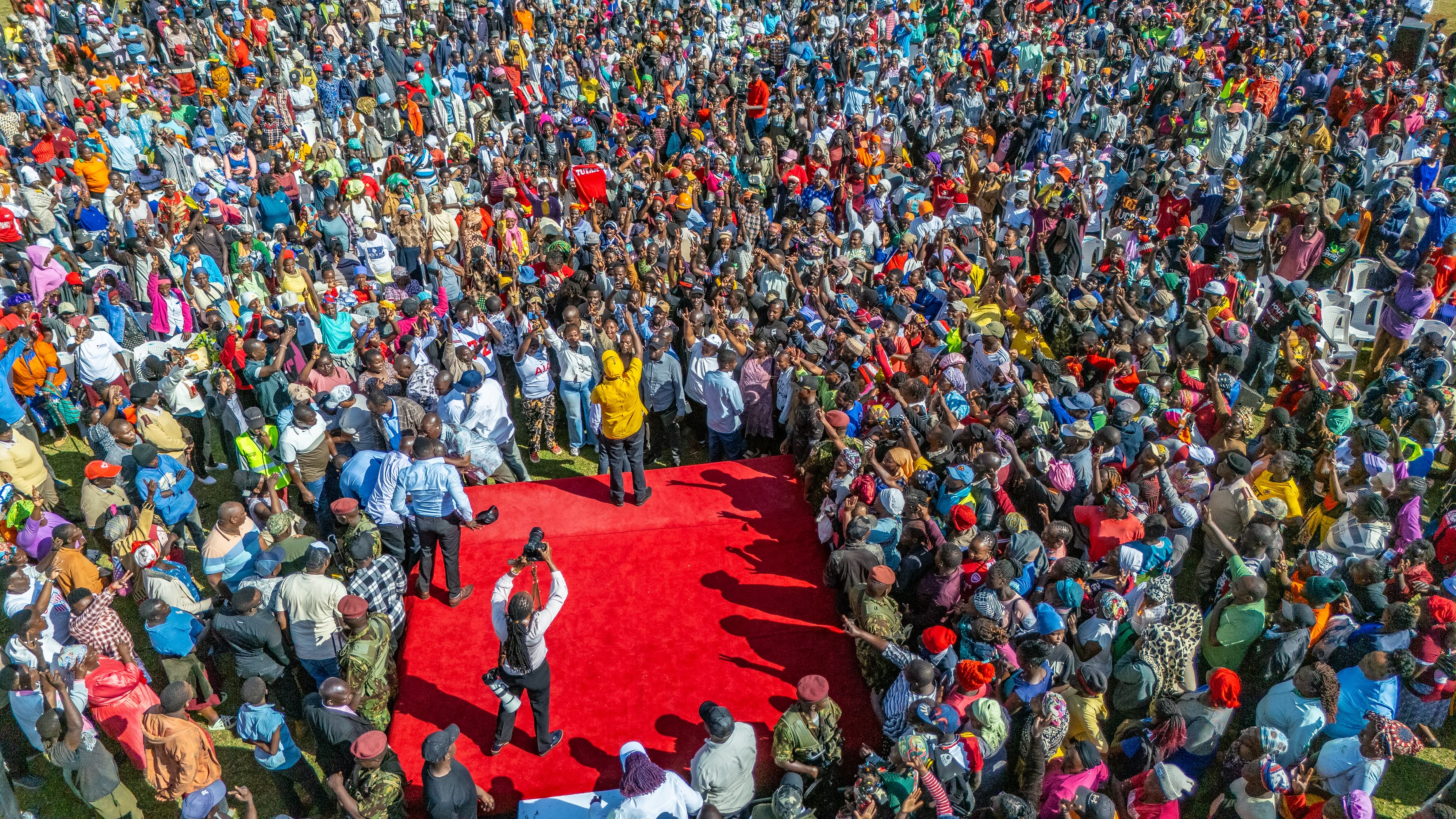
Churches are once again becoming theatres of political mobilisation, with politicians increasingly returning to the pulpit.
They are often accompanied by donations often to “complete the construction of the church of Christ” and high-profile appearances that were once frowned upon during the height of the Gen Z protests.
The shift reflects how early the political realignments for 2027 are beginning to take shape.
Religious institutions have historically been powerful platforms for political messaging in Kenya, given their ability to draw large congregations and influence public opinion across communities.
For instance, the Church was central to Ruto’s win in 2022. They united in the NO vote against the 2010 Constitution referendum, and Ruto cultivated the relationship thereafter.
The Church’s influence is now drawing politicians back to the pews, which is also bringing fresh tensions.
Last Sunday, the United Opposition accused Deputy President Kithure Kindiki of orchestrating the blockade of opposition leaders from attending a church ceremony in Meru county.
Opposition figures, including Kalonzo Musyoka, former Deputy President Rigathi Gachagua and former AG Justin Muturi said they were blocked from accessing Kaaga in Meru to attend the induction ceremony of Bishop Muthuia Mwiti at the Methodist Church of Kenya.
In a strongly worded statement, Kalonzo accused the government of political repression.
“The police, acting under direct instructions from Deputy President Kithure Kindiki, physically blocked our entry,” he said.
“Let me be clear about what this means: This is a deliberate, calculated and unconstitutional act of political repression carried out on a Sunday morning at a house of God against Kenyan citizens exercising their most basic rights.”
The church later issued its own clarification, stating that the opposition leaders had not been invited to the ceremony and that Kindiki was the officially invited guest.
Notably, Ruto hosted leaders from the Methodist Church at State House, Nairobi, on February 20, in a meeting attended by Kindiki.
During the engagement, the President reaffirmed the government’s partnership with the church in serving Kenyans.
The contrasting accounts highlighted how quickly churches can become flashpoints in the escalating political contest.
Historically, religious institutions have played multiple roles in Kenyan politics, at times acting as defenders of democratic values, and at other moments serving as platforms for politicians seeking legitimacy and visibility.
The tensions are also unfolding against a backdrop of attacks on opposition politicians in churches.
In several instances, church gatherings attended by DCP leader Gachagua have been disrupted by groups of rowdy youths, drawing condemnation from across the political divide.
One of the most dramatic incidents occurred during a service at Waitima PCEA Church in Othaya, Nyeri county, where an attack by police and goons saw Gachagua flee on foot using a back route.
Women and children were also teargassed, while vehicles parked outside the church were destroyed. The matter is still under investigation.
There was a similar incident at PCEA Kariobangi North, Nairobi, where chaos erupted during a thanksgiving service attended by Gachagua.
Rival groups of youths clashed outside the church compound, prompting police intervention. Officers fired warning shots and deployed tear gas to disperse the crowds after the confrontation escalated, leaving at least six people injured and temporarily disrupting the service.
Opposition leaders argue that the incidents reflect a broader pattern of intimidation. Nairobi Senator Edwin Sifuna on January 25 said a bishop of a church in Kawangware received threats warning him against hosting politicians affiliated to the Linda Mwananchi camp.
Churches, which are traditionally seen as sanctuaries and a place for reflection, are increasingly being dragged into the high-stakes political battles ahead of 2027.