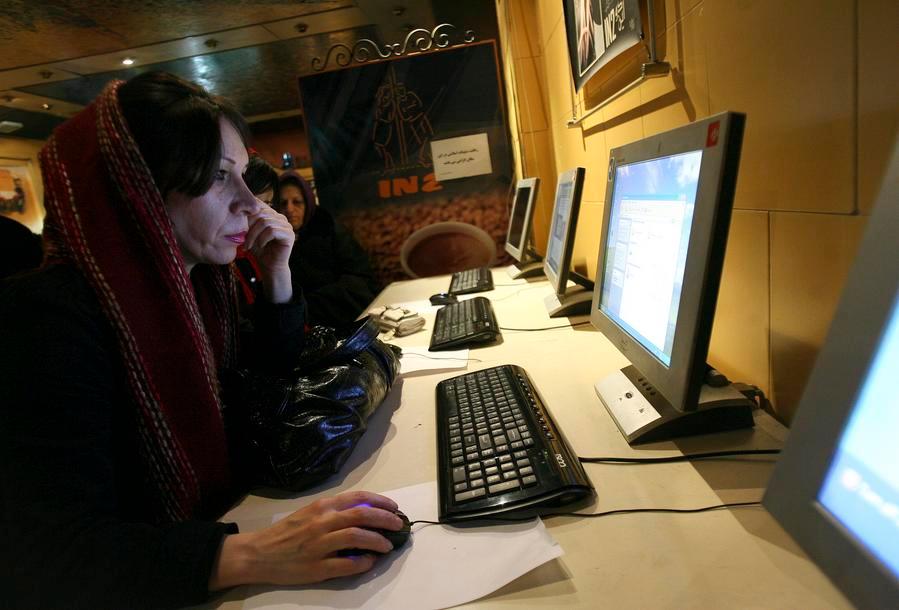
 An Iranian woman works with Internet in an Internet cafe in Tehran, capital of Iran, Jan. 20, 2011. (Xinhua/Ahmad Halabisaz)
Reports, messages, and occasional videos that BBC Persian has received paint a picture of intensifying repression in the country.
People say more and more security checkpoints are being set up, and some of them are being moved under bridges and inside road tunnels, external, after reports of some being targeted from the air.
Many of the check-points are manned by armed Basij members (the hard-line, state-aligned volunteer militia force controlled by the Iranian Revolution Guard Corps), and there are reports of people’s mobile phones being confiscated and checked.
After the judiciary announced that anyone sending pictures or videos of areas targeted by the US and Israel to foreign media, or publishing them on social media, will be prosecuted, fewer people share them with the outside world.
Sixteenth day of internet blackout in Iran
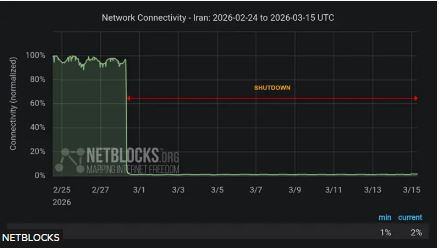
An update from the monitoring service Netblocks shows there has been virtually no connectivity for 16 days.
This makes it difficult for journalists to gain access to people in Iran, but some have been using Starlink devices.
Meanwhile, Israel says it has launched another "wide-scale" wave of strikes on targets in western Iran, as Iran also fires more missiles.