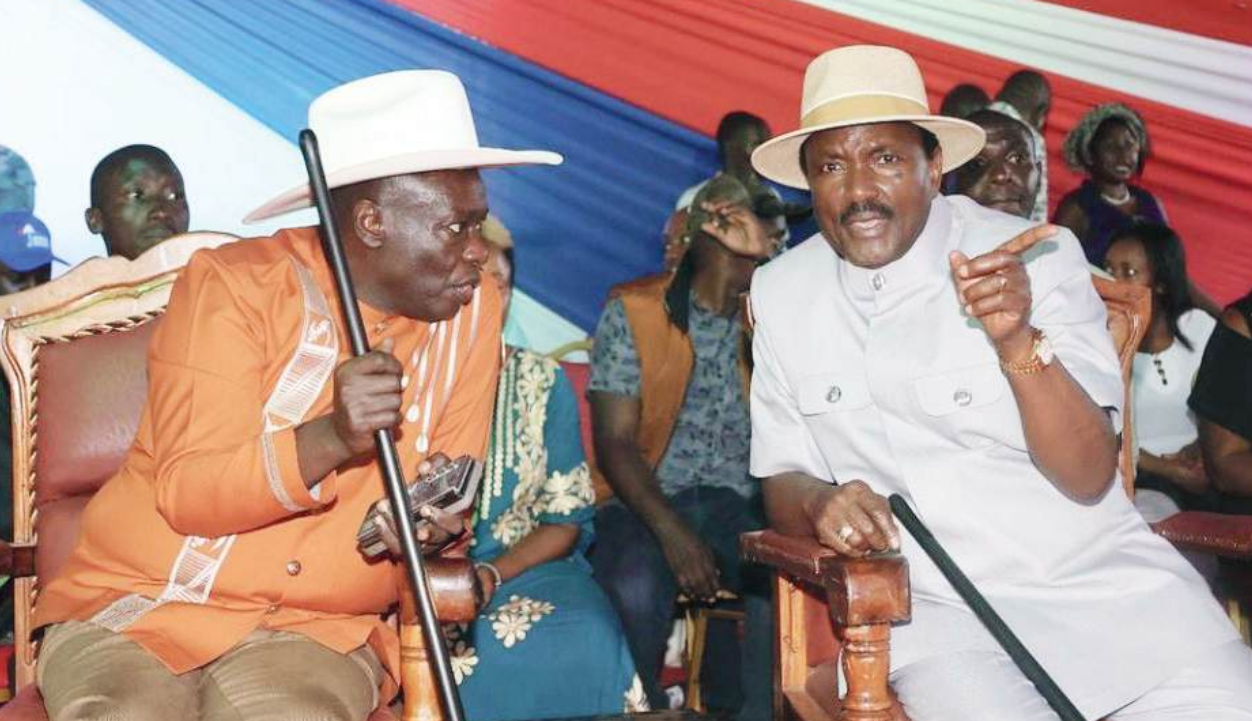
The emerging united opposition is crafting a strategy it hopes will deny President William Ruto a second term by replicating a political formula that defeated the Kanu regime in 2002.
Insiders say the nascent coalition intends to “pull a Kibaki” on the President by forming a mega coalition, isolating Ruto and delaying the announcement of its joint presidential flagbearer until close to the polls.
The strategy mirrors the approach used by the National Rainbow Coalition (Narc) in 2002 when opposition leaders rallied behind Mwai Kibaki just weeks before the polls.
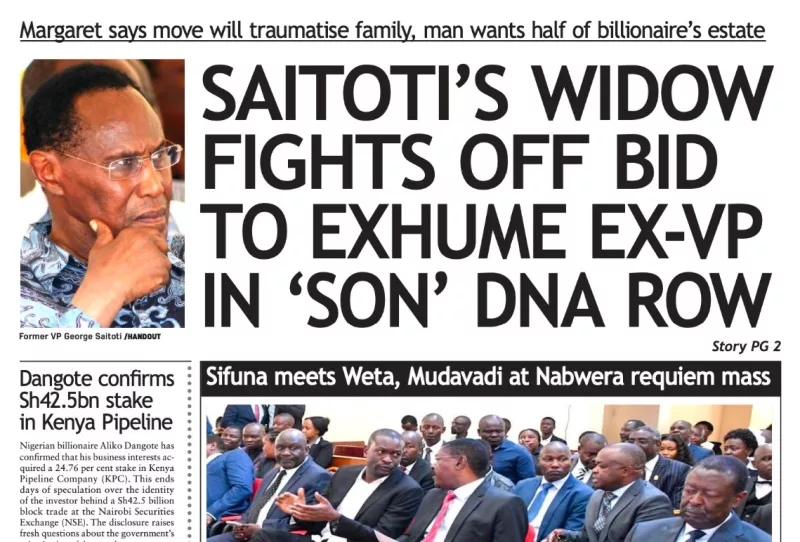
Already, the ODM rebel wing led by Nairobi Senator Edwin Sifuna have signalled they could team up with the Kalonzo Musyoka and Rigathi Gachagua group.
The late unveiling of the opposition candidate then caught the ruling party off guard and ended the 24-year rule of former President Daniel Moi.
Sources say the current opposition hopes a similar tactic will blunt Ruto’s political machinery and deny him enough time to mount a sustained campaign against their candidate.
“The only clear thing is that there will be one flagbearer,” Democracy for Citizens Party (DCP) leader Gachagua said recently.
“In 2002, the opposition announced Mwai Kibaki as the single presidential candidate on October 14, when the election was just weeks away [December 27].”
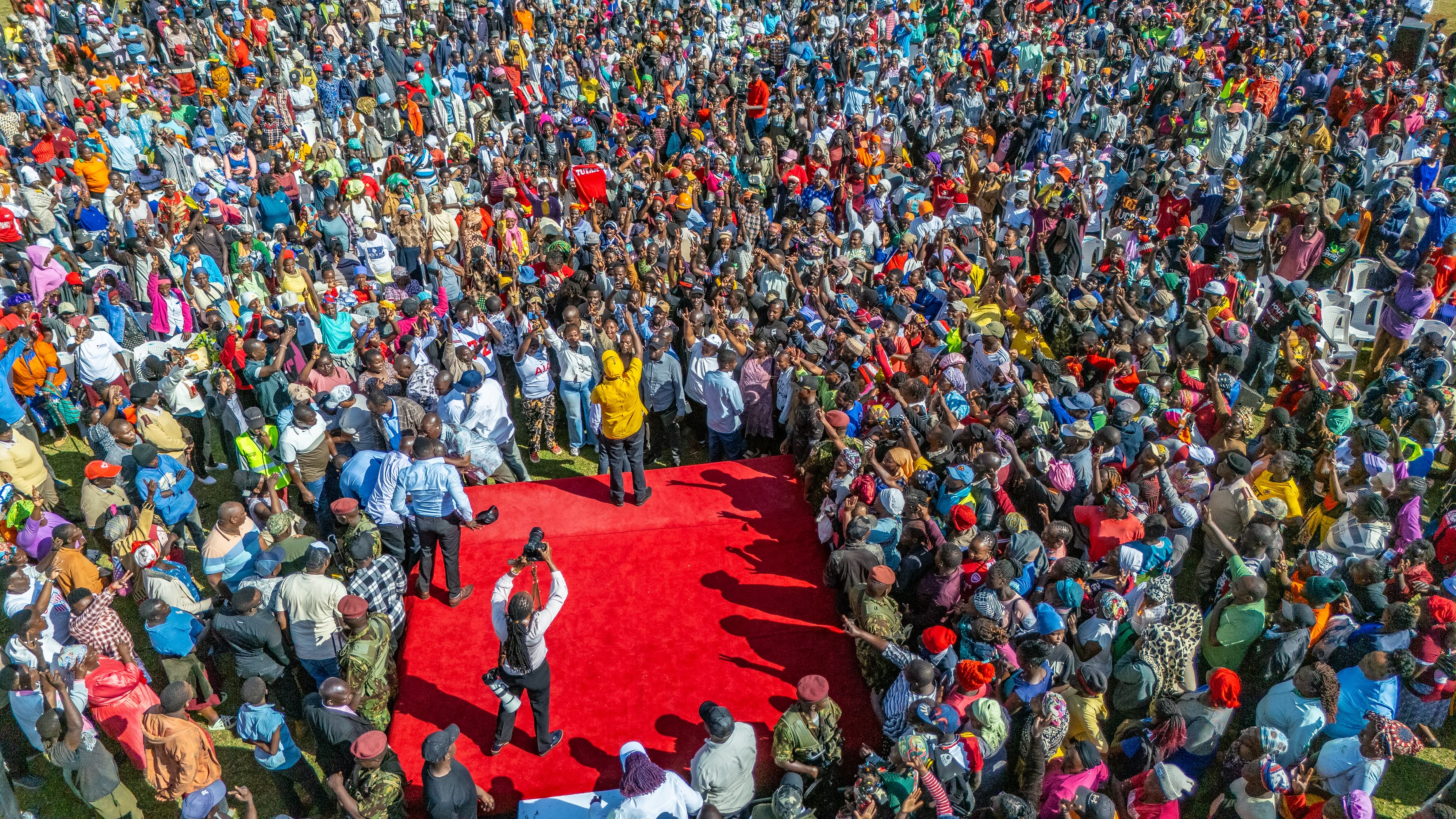
That historic announcement took place at a massive rally at Uhuru Park in Nairobi, where Raila Odinga declared “Kibaki Tosha!”—a statement that sealed the opposition’s unity behind Kibaki.
The move propelled Kibaki to a landslide victory in the December 2002 election, defeating Uhuru Kenyatta, who was then the candidate of the ruling party.
The opposition strategy revolves around building a national alliance that merges disgruntled Mt Kenya voters with opposition strongholds by latching on the divisions in ODM.
The expectation is that a unified Mt Kenya bloc — which delivered a decisive margin in 2022 — could again become the single most influential voting bloc in the country.
Their playbook includes aggressive grassroots mobilisation, joint political rallies and a narrative portraying the current administration as having failed on the economy and cost of living.
High cost of living, grand corruption and angry public led to the collapse of the Kanu rule.
However, opinion is divided on whether the current opposition has the weight, national appeal and mobilisation ability to match Narc.
Political observer Mark Bichachi said the opposition leaders have more to do than just coming together to form a mega coalition.
“They need to remember that Kibaki was no secret and Narc won because Raila gutted Kanu and joined Kibaki. It is not just about coming together, it is also about mobilisation, messaging, branding and visibility,” he said.
Bichachi said while the opposition are still preparing a coalition, the President whom they want to defeat is forming the next coalition and is campaigning in every avenue.
“The delay in naming an opposition flagbearer is nonsensical as it does not bear any fruit other than keeping Kenyans in a guessing game. A late campaign from the opposition is a win for President Ruto,” he said.
University don Prof Herman Manyora cast doubt on the United Opposition’s ability to replicate Narc.
“Tactics of 2002 may not work today, more than 24 years later,” he said.
Charles Munyui held that the political coalition that appeals to and addresses the concerns of Gen Z, will carry the day.
“Raila was good at setting up such outfits but they did not amount to much,” Munyui said.
But, Martin Andati, a political commentator, said the opposition has the potential to form a mammoth coalition, especially if they team up with Team Sifuna.
“Unveiling the candidate late in the day means those who want to leave won't have time to exit the coalition and it ensures the President doesn't unleash all the arsenals on the candidate if he's unveiled early,” he said.
According to opposition insiders, the emerging coalition believes delaying the naming of its candidate will prevent the government from targeting the nominee early and will also create political momentum close to the election.
The opposition is also planning to replicate the broad coalition structure that characterised the 2002 alliance.
At the time, Narc brought together more than a dozen parties and key political heavyweights, including Raila, Kalonzo, Moody Awori, Charity Ngilu and William Ntimama.
Today, at least seven parties have aligned under a similar arrangement as opposition leaders seek to form a formidable political vehicle ahead of next year's polls.
Among the parties are Gachagua’s DCP, Kalonzo’s Wiper party, Eugene Wamalwa’s DAP-Kenya and Martha Karua’s People’s Liberation Party (PLP).
Others are Peter Munya’s Party of National Unity (PNU), Justin Muturi’s Democratic Party and the Jubilee Party associated with former President Uhuru Kenyatta.
Besides, the ODM faction opposed to Ruto’s re-election had hinted at teaming up with the opposition to render the President a one-term head of state.
The faction is led by Sifuna, Siaya Governor James Orengo, Embakasi East MP Babu Owino and Vihiga Senator Godfrey Osotsi.
Sources say the coalition leaders have also agreed to expand their political network and establish multiple campaign coordination centres across Nairobi and other key regions.
The aim, is to counter what they describe as the ruling side’s superior resources and organisational reach.
The timing of announcing the joint presidential candidate had triggered internal debate among opposition principals.
Some leaders initially pushed for an early declaration this year to allow the coalition to build momentum and present itself as a government-in-waiting.
Others strongly opposed the move, warning that early exposure could hand the President a tactical advantage.
“We were hoping to complete this process earlier, but it has been put on hold because the leaders did not agree,” a source involved in the discussions said.
Gatanga MP Edward Muriu confirmed the decision to slow down the process, arguing that patience is now a key part of the opposition’s strategy.
“We still have more than one and a half years before the election. Even the DCP party itself has not been formally launched. There is no hurry; otherwise, we will fall into Ruto’s trap,” he said.
Muriu said the opposition fears an early declaration could expose the candidate to political pressure and state intimidation.
“We have seen what has happened to leaders in churches and other public spaces. What will happen if we unveil our candidate now?” he posed.
The disagreement over timing has also highlighted differences between Kalonzo and Gachagua.
In his end-of-year address on December 30 last year, Kalonzo argued for an early declaration and proposed that the coalition name its presidential candidate by the first quarter of 2026.
According to him, announcing the candidate early would demonstrate unity and seriousness while allowing the opposition to organise itself as an alternative government.
“I make this commitment to you: by the first quarter of 2026, the name of our presidential candidate will be made known to Kenyans. The united opposition is not just a coalition; it is your government-in-waiting,” Kalonzo said.
Gachagua, however, dismissed the proposal and warned that announcing the candidate too early would expose the individual to political attacks and pressure.
Drawing parallels with the 2002 election, the former Deputy President argued the opposition should wait until closer to polling day, just as Kibaki was unveiled barely two months before the vote.
“We will declare our flagbearer a few months before the election so we can face Ruto head-on,” Gachagua said
Kitui Senator Enoch Wambua insisted the delay should not be interpreted as disunity within the opposition camp.
“The naming of the candidate will happen when it is convenient for us. We are within our timeline,” Wambua said.
“One thing we are certain about is that the opposition will field one candidate to challenge Ruto in the next election.”