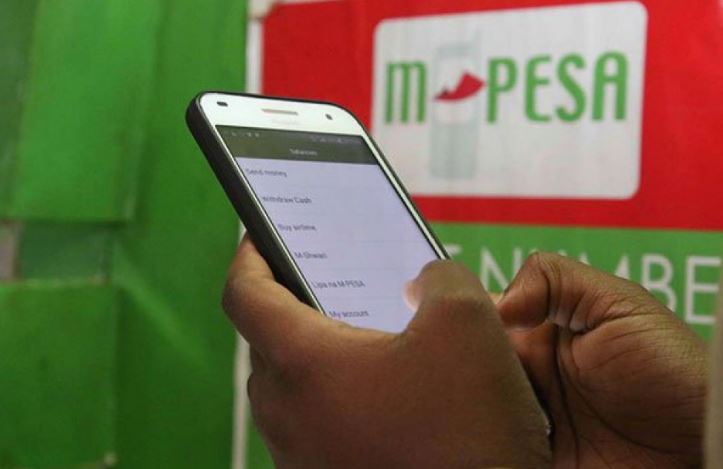
When John Mwangi wants to pay for groceries in Nairobi, he does not reach for cash.
Instead, he opens the M-Pesa app on his phone, types a few numbers, and the payment is done in seconds.
Across Kenya, millions like John rely on M-Pesa every day not just to shop, but to pay bills, send money to family in distant towns, or even run businesses.
How did a simple mobile money service become the backbone of Kenya’s economy?
From idea to revolution
M-Pesa, launched by Safaricom in 2007, began as a solution to make microloans accessible to Kenyans without traditional bank accounts.
At the time, less than 20 per cent of Kenyans had access to formal banking.
The service allowed users to send and receive money using just a mobile phone, a tool that almost everyone had, and within a few years, M-Pesa exploded in popularity.
Today, it is not just a convenience but an essential service for over 50 million Kenyans, making it one of the most widely used mobile financial platforms in the world.
Recently, the mobile money platform reached 40 million monthly active users in Kenya, marking a major milestone as the service celebrated 19 years since its launch on March 6, 2007.
To mark the anniversary, Safaricom CEO Peter Ndegwa said the platform’s evolution reflects the company’s broader mission to empower individuals and businesses through accessible digital financial tools.
“Our goal is to give Kenyans and Africa at large digital financial tools to empower them to be more prosperous. Reaching 40 million monthly active customers in Kenya is a milestone we celebrate as we recommit to enable every Kenyan to transact safely, grow their savings, and build their wealth,” Ndegwa said.
“To us, every Mpesa transaction tells a story of someone building their future.”
Why M-Pesa works so well
Several factors have contributed to M-Pesa's dominance like accessibility since all that is needed is a basic phone, not a smartphone or internet connection.
The other factor is trust because being operated by Safaricom, Kenya’s largest telecommunication company, people trusted the system from the start.
Consequently, its simplicity made it easy, with users being able to deposit, withdraw, and send money in seconds with clear instructions.
“The beauty of Mpesa is its simplicity. I can pay suppliers, receive payments, and even save all from my phone. I don’t even think about carrying cash anymore,” Peter Otieno, a small business owner in Nairobi CBD, said.
Mpesa is not just changing how people handle money but reshaping the Kenyan economy.
According to the government data, the country’s financial inclusion rate has risen to 84.8 per cent of the adult population in 2024, up from 26.7 per cent in 2006, the year before the service launched.
Small businesses, especially in rural areas, have also benefited immensely, with many sellers in local markets now preferring mobile payments, which are faster, safer and easier to track than cash.
Challenges and risks
Despite its success, Mpesa faces challenges.
Fraud remains a significant concern, with scammers targeting unsuspecting users through fake messages and calls.
Additionally, competition from newer mobile money platforms is forcing Safaricom to innovate continually.
Regulatory scrutiny is also growing, as policymakers balance the need for innovation with the protection of consumers, yet M-Pesa's established trust and widespread adoption continue to give it a competitive edge.
Beyond money transfer, M-Pesa's financial ecosystem
M-Pesa has evolved far beyond simple transfers because today, it powers loans, savings, insurance, and even merchant payments.
Platforms like M-Shwari and KCB M-Pesa allow users to access credit without stepping into a bank, making financial services more inclusive than ever.
For rural farmers, this means they can buy seeds, pay workers, and sell produce all through their mobile phones while for urban professionals, it allows seamless online shopping and bill payments.
The true power of M-Pesa, however, lies in its social impact since for many families, sending money home is as simple as sending a text.
Remittances from Nairobi to rural villages have increased household incomes and allowed children to stay in school.
“I send money to my parents in Kisii every month. It used to be stressful travelling to town to deposit cash but now all it takes is seconds,” Mary Makori, a teacher in Nairobi, said.
With digital finance growing rapidly, M-Pesa is set to remain central to Kenya’s economy.
Financial experts believe that Kenya’s mobile money model will continue to inspire other African nations and possibly the world.
The telecommunication company is exploring integration with cryptocurrencies, AI-driven financial advice, and more inclusive digital banking.
As smartphone emergence rises, the opportunities for innovation within mobile money are endless.
What started as a simple solution to a banking problem has transformed into a financial lifeline for millions of Kenyans.
From market stalls to office desks, city centers to remote villages, M-Pesa proves that innovation does not need complexity; it just needs to meet people where they are.
As John Mwangi taps “Send” on his phone, he is part of a revolution that began on a humble mobile device and now powers the Kenyan economy one transaction at a time.