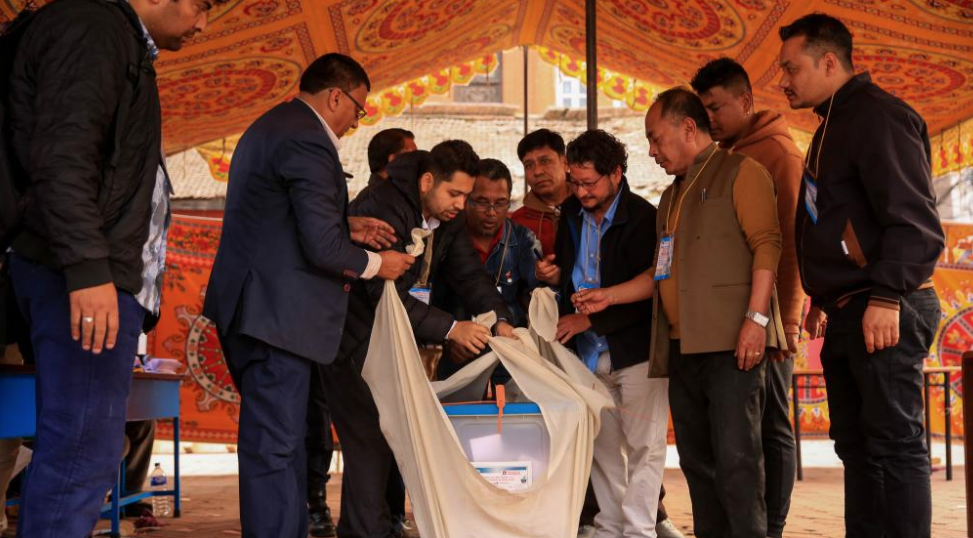
Nepal's historic election has delivered a seismic result.
The four-year-old Rastriya Swatantra Party (RSP), led by rapper-turned-politician Balendra Shah, has achieved a feat many thought impossible under Nepal's dual-election system: a sweeping majority.
The country's political elite have been cast aside, and entrenched power structures shattered. Perhaps the biggest symbol of this was when Shah, or Balen as he is commonly known in Nepal, defeated former prime minister KP Sharma Oli in Jhapa 5, a seat long considered a stronghold for him.
As we've travelled the country, jubilant RSP voters have told us they are tired of decades of what they perceive to be corruption and political paralysis.
"Balen represents hope for a new political culture," Jhapa-5 voter Ispa Sapkota told the BBC.
But the reality is that Nepal is stepping into the political unknown.
A young party with no history of running a government will now lead the country, shouldered with the high expectations of a population eager to see quick results.
Balen, 35, has only three years of political experience as mayor of the capital, Kathmandu.
Yet, the fact that he is a relative newcomer to politics is seen as a strength by many voters.
They feel this signals a break from the failings of Nepal's old guard who have dominated the political scene for decades. A graphic cartoon of Balen and the RSP President Rabi Lamichhane destroying a concrete wall illustrates their manifesto, with the words "We have arrived".
It's not altogether a clean sheet for Balen though.
As mayor he was criticised by rights groups for using the police against street vendors in a heavy-handed manner, as he worked to keep roads clear in the capital and crack down on unlicensed businesses. Shah's campaign did not respond to a BBC request for comment.
Human Rights Watch is one of the groups that raised those concerns and told the BBC it's the type of behaviour they've often observed of new leaders who want to show results quickly.
"We hope as prime minister, there would be a focus on a more rules-based order," says Meenakshi Ganguly of Human Rights Watch's Asia Division.
As for the party, one of its chief promises is to tackle corruption. The RSP has promised to investigate assets of those who've been in power since the 1990s and to nationalise any properties that were acquired illegally.
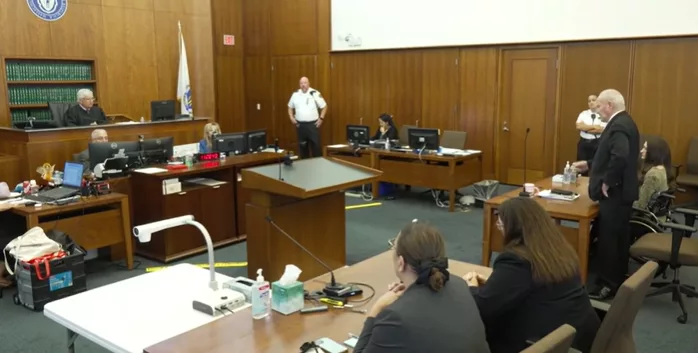
They've also pledged to reform Nepal's judiciary, end the political appointments of judges, and consider live-streaming trials for better transparency.
Constitutional expert Bipin Adhikari is hopeful that Nepal's institutions will help the RSP with its reforms.
"The civil service has been politicised by successive governments, there's been pressure. They'll now have independence, and there's been frustration amongst the civil service for years, they're ready for this change," he says.
One of the RSP's senior leaders and a newly elected MP, Shishir Khanal, says the party already has plans to incentivise "the bureaucracy" to get on side.
"We'll immediately put forward a bill. You'll see soon that it will reorganise how civil servants are paid and promoted, and create positive incentive structures," he says.