
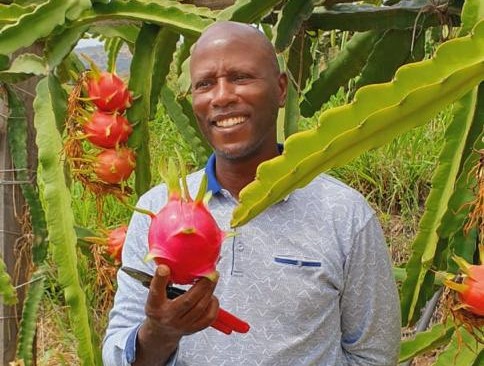
 Anthony Mugambi, dragon fruit farmer.
Dragon fruit farmer Anthony Kinoti Mugambi says patience, persistence, and belief in the potential of a new crop have been the driving forces behind his journey to becoming one of the pioneers of dragon fruit farming in East Africa.
Mugambi, an ICT professional turned farmer, began experimenting with the exotic fruit in 2012 when dragon fruit was virtually unknown in the region.
“Dragon fruit is not just any fruit,” he said. “It belongs to a category of foods known as functional foods. These are foods that have both nutritional and pharmaceutical properties."
According to Mugambi, the fruit is rich in fibre, antioxidants and lycopene, nutrients known for boosting immunity, improving gut health and helping the body fight harmful free radicals linked to chronic diseases.
But beyond its health benefits, he saw the fruit as an economic opportunity, particularly for farmers living in Kenya’s arid and semi-arid areas where traditional crops struggle to survive.
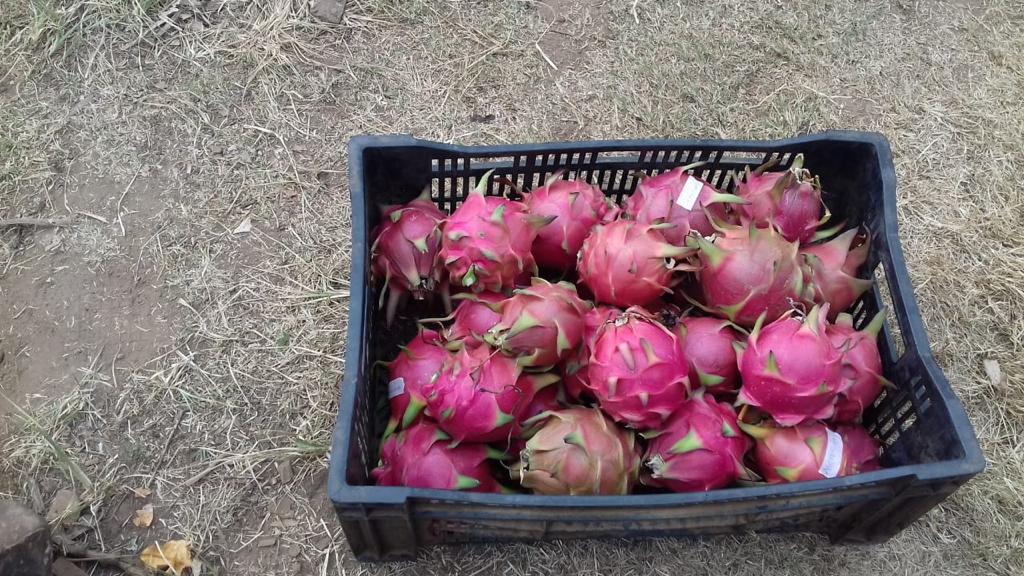 Dragon fruits in a create after harvest.
“It is a super fruit. It is very good for our health and also very good for creating wealth. It grows well in areas where traditionally we were not farming anything,” he said.
Mugambi said that the possibility that dragon fruit could one day become a mainstream crop in Kenya kept him going even when the journey proved difficult.
“The realisation of the possibility was enough to keep hope alive,” he said. “Despite the ups and downs we faced along the way, we stayed patient.” He revealed that at the time he started, there were no local farmers to guide him. “There was nobody to look up to. We were the teacher and the student at the same time,” he explained.
His early attempts were filled with trial and error. Mugambi recalls planting dragon fruit seeds in a small crate and eagerly watching the seedlings sprout. Excited by the progress, he began watering them frequently, only to see them die shortly after.
“I was very excited because the seedlings had sprouted. I kept watering them more and more, but they died,” he recalled. “I was devastated.”
He later realised the mistake. Dragon fruit is a cactus plant that requires very little water. Determined not to give up, he asked a friend in China to bring him a dragon fruit so he could start the process again using better planting methods.
“This time I was a little wiser,” he said. “I became better and better.”
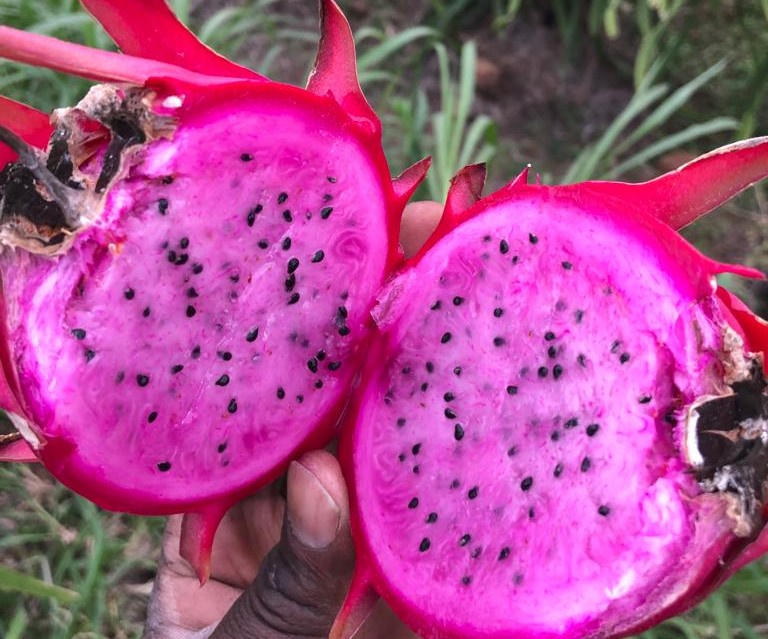 A dragon fruit cut into half.
More than a decade later, the experiment that started in a crate has grown into a large-scale venture. Mugambi says his farm now covers more than 20 acres and has even developed its own unique variety of dragon fruit.
While the fruit continues to gain popularity among health-conscious consumers, Mugambi believes its future in Kenya also lies in empowering rural communities and women in agriculture.
“Anything that involves women actually involves the entire family,” he said. “Once you have women on board, you have the whole family on board.”
He added that women’s participation in farming plays a crucial role in improving household nutrition and economic stability. Looking back on his journey, Mugambi says the biggest lesson he has learned is the importance of persistence and patience.
Mugambi offered a word of caution to young farmers hoping to succeed in agriculture, saying that "success does not come overnight" and they should always work hard.
“You will not become a millionaire tomorrow, or next year, or even in five years. Farming is not a short-term enterprise because there are many uncertainties, climate change, drought, floods," he added
However, he said those who remain committed will eventually reap the rewards.
“Be very hungry for results,” Mugambi advised. “Push for results every day, but be patient with the process.”







