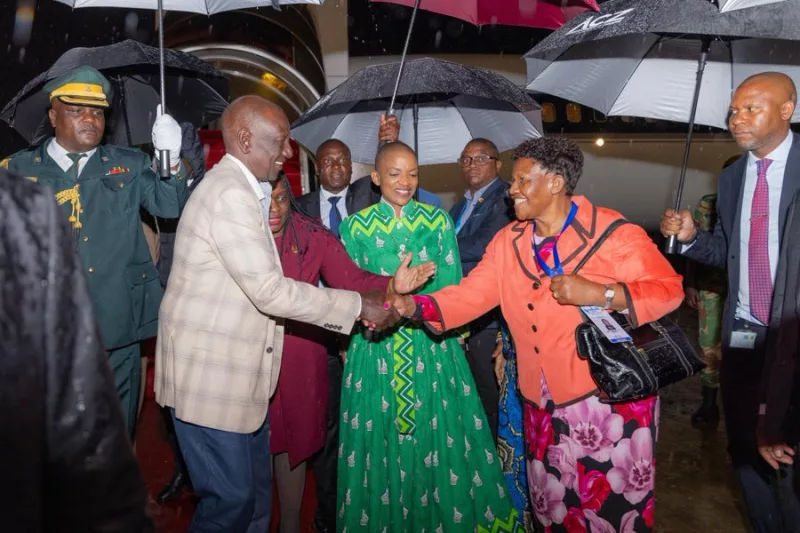
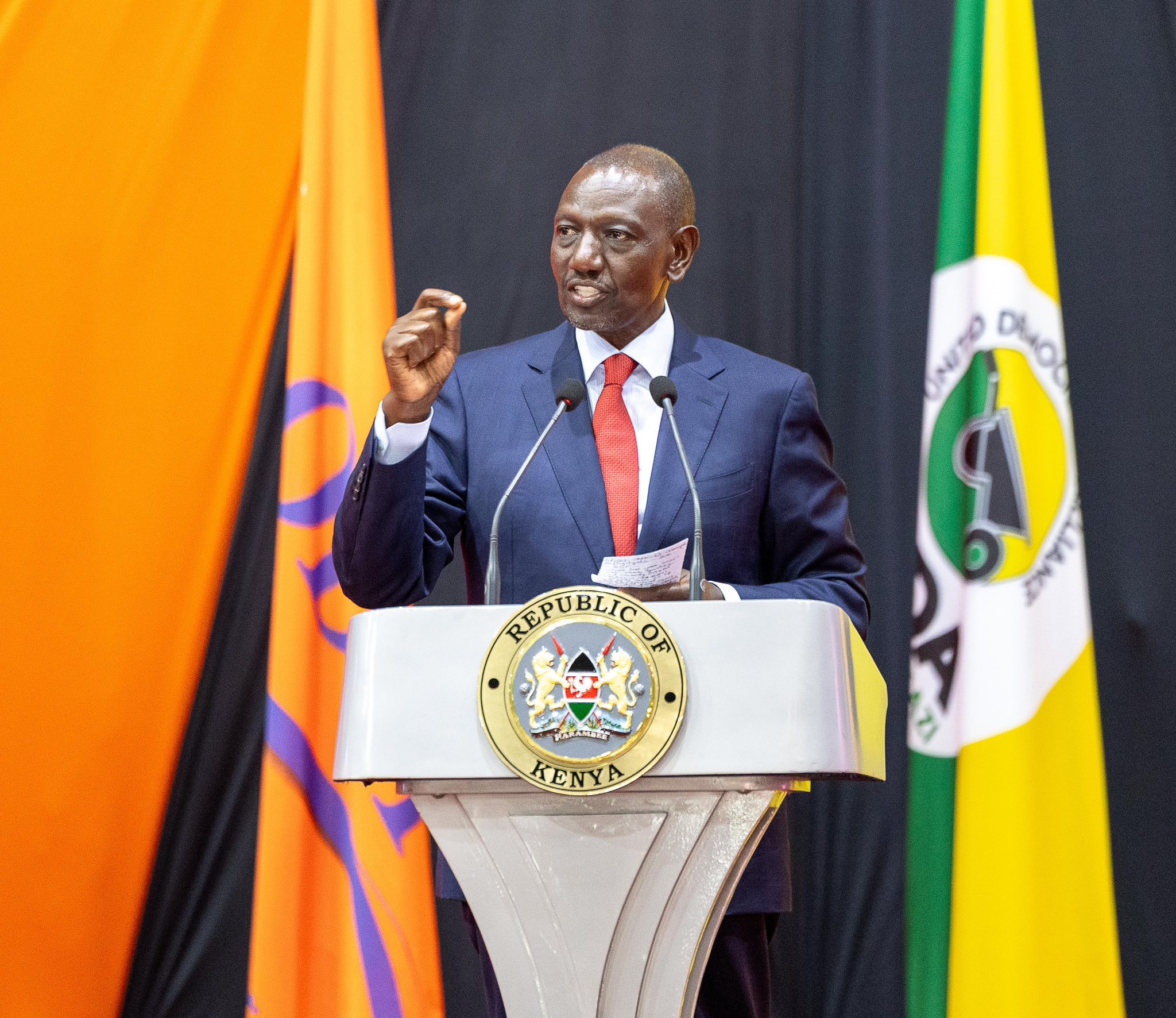
The move, unveiled during a joint parliamentary group meeting at the KICC in Nairobi on Tuesday, signalled a significant step in formalising the cooperation between the two parties under the broad-based government arrangement.
President Ruto said the decision followed consultations with Oburu, the ODM party leader.
He said the technical committee will comprise eight members, with four representatives drawn from each party, and will be tasked with developing a framework to guide future political cooperation.
“As a way of progressing the authority given to us by the organs of the party, I request that this PG endorses the formation of a technical committee to take the process forward,” Ruto said.
The respective party executive directors will serve as joint secretaries.
The joint statement said the committee will develop the shared policy agenda and priorities of the two parties, which will inform the coalition framework to be considered at the end of the year.
“This committee will develop the issues and the priorities that pertain to the public, the two parties and lay the ground for what issues the negotiations committee will discuss,” National Assembly Minority leader Junet Mohamed said.
The initiative follows a series of internal consultations within the ruling coalition and ODM leadership structures in recent months.
The UDA Management Committee approved the start of consultations between Kenya Kwanza and ODM, a decision later ratified by the party’s National Executive Committee and National Governing Council.
He said ODM similarly sanctioned the process through its National Management Committee, the National Executive Committee and other party organs.
“The same was done by the National Management Committee of ODM, the NEC and the other organs of ODM. I propose that this PG endorses what was agreed by these organs as a means of carrying forward the decision.”
The talks are part of coalition manoeuvres ahead of the 2027 elections, with both camps seeking to consolidate the alliance, which is expected to face off with the United Opposition, led by Wiper boss Kalonzo Musyoka and DCP leader Rigathi Gachagua.
However, the initiative has triggered divisions within ODM, with a faction led by Nairobi Senator Edwin Sifuna opposing further cooperation with the ruling coalition beyond 2027.
The Linda Mwananchi faction, which also has Siaya Governor James Orengo, Vihiga Senator Geoffrey Osotsi, Embakasi East MP Babu Owino, Saboti MP Caleb Amisi, Kisii Senator Richard Onyonka and EALA legislator Winnie Odinga, was absent during the PG meeting, which also witnessed the release of the Ten-Point Agenda Implementation Report
Instead, the faction said it will release a parallel report opposing the status of the 10-Point Agenda Agreement.
Senator Sifuna is on record arguing the broad-based government has failed to implement the document and opposing the extension or the working framework with UDA beyond March 7.
The faction has also raised concerns about what it describes as the absence of clear political guarantees for ODM within the proposed arrangement.
Sifuna has queried that if the President hasn’t pushed for the implementation of the 10 points in a deal signed by former party leader Raila Odinga, what are the chances of implementing one signed by Oburu?
ODM leaders, led by Oburu and party chairperson Governor Gladys Wanga (Homa Bay), are pushing for concrete power-sharing concessions in the coalition agreement, including the Deputy President slot.
The negotiations are therefore expected to revolve not only around electoral strategy but also around the distribution of political power within a potential alliance.
While leaders aligned with Oburu, such as CS Opiyo Wandayi (Energy) and John Mbadi (Treasury), argue that cooperation with the government offers ODM an opportunity to gain power to influence national policy, critics the Linda Mwananchi, warn the move could alienate sections of its traditional support base.
The Agnes Zani-led team's verdict on the implementation of the 10-Point Agenda has recorded mixed progress, with several legislative and governance reforms still pending before Parliament, according to a new implementation report released on March 7.
The report by the Committee to Oversee the Implementation of the Ten-Point Agenda and the Nadco report indicate that while some reforms have been achieved, key proposals—particularly constitutional amendments and electoral reforms—are still under consideration.
Among the major milestones highlighted is the reconstitution of the IEBC, whose commissioners were sworn in July 2025.
Parliament has also processed several bills arising from the Nadco process. Out of nine proposed laws, three have been enacted, including amendments affecting the IEBC, statutory instruments and the EACC.
Two other electoral reform bills remain under mediation, while four, including the proposed law establishing the Office of the Leader of the Official Opposition, are under parliamentary consideration.
The report also cites progress in social and economic programmes, including the expansion of healthcare coverage through the Social Health Authority, which it says has increased insured Kenyans to nearly 30 million.
On economic inclusion, the government points to fertiliser subsidies, reduced fuel prices and youth empowerment programmes such as the Nyota initiative and the Hustler Fund as key interventions aimed at lowering the cost of living and expanding economic opportunities.
The committee also highlights increased county allocations as part of efforts to strengthen devolution, with equitable share to counties rising from Sh385 billion in the 2024-25 financial year to Sh415 billion in 2025-26.
However, the committee notes that several legislative, policy and institutional measures remain incomplete and recommends that Parliament fast-track the remaining Nadco bills within 90 days.
INSTANT ANALYSIS
The formation of a joint UDA–ODM technical committee signals a shift from informal cooperation to a possible 2027 electoral coalition. President William Ruto appears keen to consolidate political support early, potentially weakening the emerging opposition bloc. However, sharp divisions within ODM, particularly from the Linda Mwananchi faction, suggest the negotiations could trigger internal party conflict.