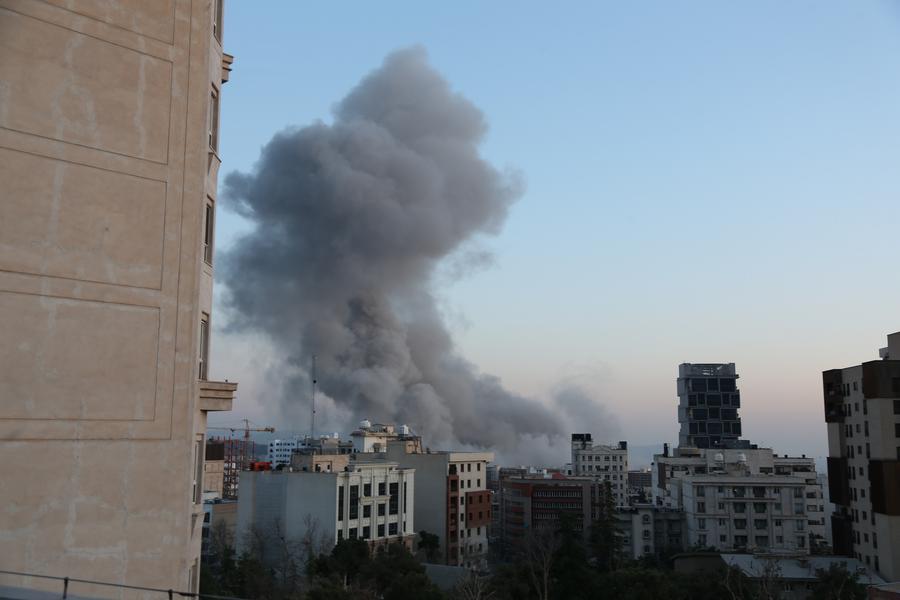
 Smoke after an explosion in Tehran, Iran, on March 6, 2026(Xinhua/Shadati)
The military confrontation between the United States, Israel and Iran has reached its twelfth day, with fighting intensifying on multiple fronts and showing little sign of slowing.
The conflict — which began with coordinated U.S. and Israeli airstrikes on Iranian targets in late February — has seen continued missile exchanges, naval activity near key shipping lanes and defensive operations by Gulf states.
Iranian missile barrages and retaliation
On Wednesday, Iran launched new waves of missiles and drones toward Israeli territory, prompting air‑defence systems to respond and creating ongoing tension along key population centres. Iranian state media described the barrage as among the most intense since the outbreak of hostilities.
US naval action near Hormuz
The US military reported destroying 16 Iranian mine‑laying vessels near the Strait of Hormuz, a crucial maritime passage for global oil shipments. The strikes followed warnings from Washington that any attempt by Iran to disrupt shipping in the strait would escalate the conflict further.
Gulf states intercept attacks
Saudi Arabian defence forces said they intercepted missiles and drones launched by Tehran’s forces, including ballistic threats aimed at military installations in the kingdom.
Other Gulf nations, including Kuwait and the United Arab Emirates, also reported intercepting multiple aerial threats on the same day.
Broader regional impact
The toll of the conflict continues to grow. Tehran has accused the U.S. and Israel of hitting thousands of civilian sites and has cited a rising number of civilian deaths.
Some global markets remain volatile, with concerns about energy supplies and the security of maritime trade through the Gulf region. Meanwhile, leaders in Washington face mounting political pressure, with lawmakers seeking public hearings on the administration’s strategy as U.S. casualties rise.
No ceasefire in sight
Despite international appeals for de‑escalation, Tehran has ruled out ceasefire talks, signalling its intention to continue resisting attacks. Gulf nations directly affected by missile and drone strikes have reinforced their air‑defence postures and coordinated with U.S. forces to mitigate the threat.
As day 12 of the conflict unfolds, the situation remains unpredictable, affecting not only military operations but also regional stability and global energy markets.