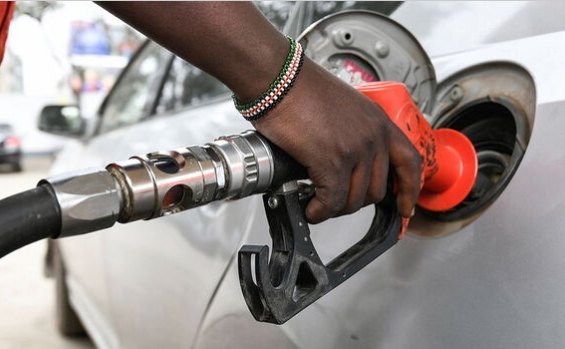
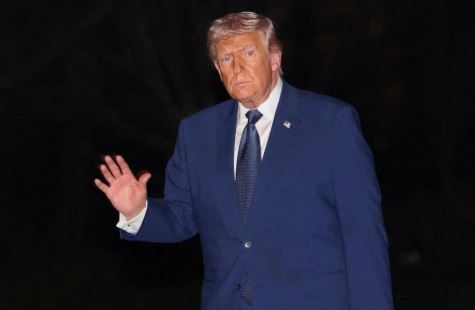
The benchmark oil price has dipped after US President Donald Trump said the war with Iran will end "very soon".
Oil surged past $100 a barrel on Monday - before Trump said the war was "very far ahead of schedule" and "very complete, pretty much" - while adding "we haven't won enough".
His comments led to a fall in the oil price, which is now closer to $90 a barrel - but still well above pre-war levels.
But Trump lacked clarity, even when pushed for detail, says our correspondent Anthony Zurcher - and the president later threatened to hit Iran "twenty times harder" if they blocked the Strait of Hormuz.
Iran has reportedly said it will not allow "one litre of oil" to be exported from the region if US-Israeli attacks continue.
Also on Monday, President Trump spoke to Russia's Vladimir Putin - and later said some oil sanctions could be lifted, without specifying on which countries.
President Trump and his administration have so far offered mixed messages and contradictory explanations on the joint US-Israeli military campaign against Iran.
And Monday - the 10th day of an operation that has rattled allies and shaken markets - typified this confusion around the war's timeline and ultimate goals.
After a tumultuous morning during which US stock market indexes dropped and oil prices surged, the American president began speed-dialing reporters in an apparent effort to soothe nerves.
His comments, however, were lacking in clarity even when he was pushed for more detail.
"I have a plan for everything, okay?" he told a reporter from the New York Post when asked about spiking oil prices. "I have a plan for everything. You'll be very happy."
To CBS News, he said the war "is very complete, pretty much". "We're very far ahead of schedule," he added. You can see a summary of his comments in our previous post.
His telephone spree, at least in an economic sense, had the desired effect. Stock markets rallied, and the price of a barrel of oil – which had reached $120 earlier in the day - dropped below $90.
Just days ago, Trump said that he would not stop the war until Iran's "unconditional surrender".
But after his comments on Monday, it appeared as though an end to a military operation that has roiled the Middle East and led to the near complete shutdown of shipping traffic through the Straits of Hormuz could be in sight.