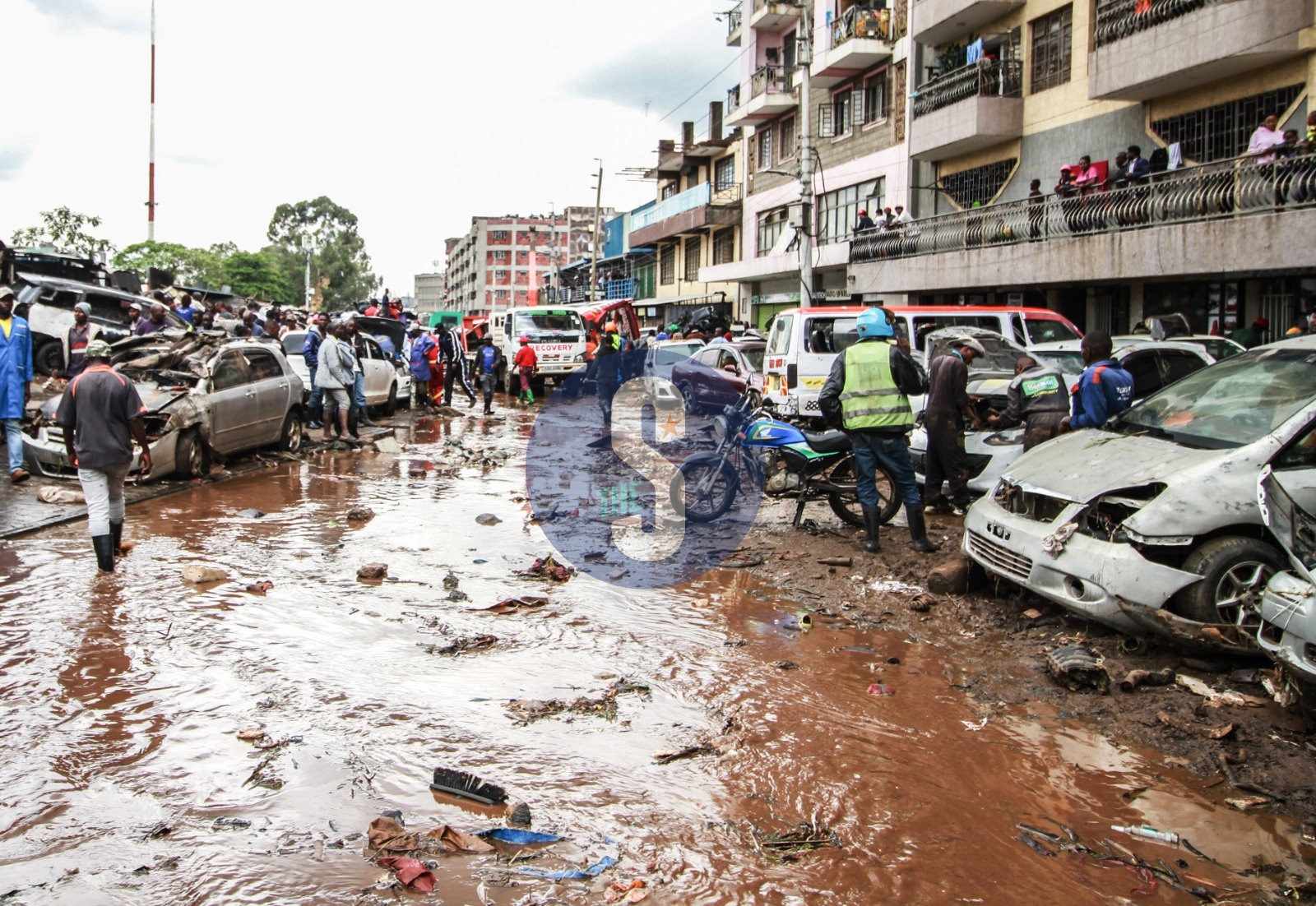
At least 23 people were reported dead, mostly in Nairobi, with victims swept away by fast-moving water or trapped in flooded areas.
These tragedies are often described as acts of nature. But in many cases, the damage is made worse by official neglect. Blocked drainage systems remain one of the main causes of flooding whenever heavy rains fall across Nairobi. Drains clogged with plastic waste, silt and debris cannot carry water away fast enough.
So when storms arrive, the water has nowhere to go. Nairobi always experiences such flooding during rainy seasons, usually with devastating consequences.
Authorities cannot claim they were caught unprepared. The March-April-May season is Kenya’s main rainy period, and meteorologists have already warned that April will bring more rain than what we have seen. There are also early warnings from climate scientists that the El Niño floods may come later this year. In short, the country has been given time to prepare.
The Nairobi City County Government must move quickly to clear blocked drains and repair damaged stormwater systems. Agencies such as the Kenya National Highways Authority, the Kenya Urban Roads Authority and the Kenya Rural Roads Authority must also ensure that drainage along major roads is functioning properly.
Flood disasters are often framed as unavoidable. But the scale of damage depends heavily on preparation.
QUOTE OF THE DAY: “When a just cause reaches its flood-tide...whatever stands in its way must fall before its overwhelming force.” —American women’s suffrage leader and founder of League of Women Voters Carrie Chapman Catt died on March 9, 1947