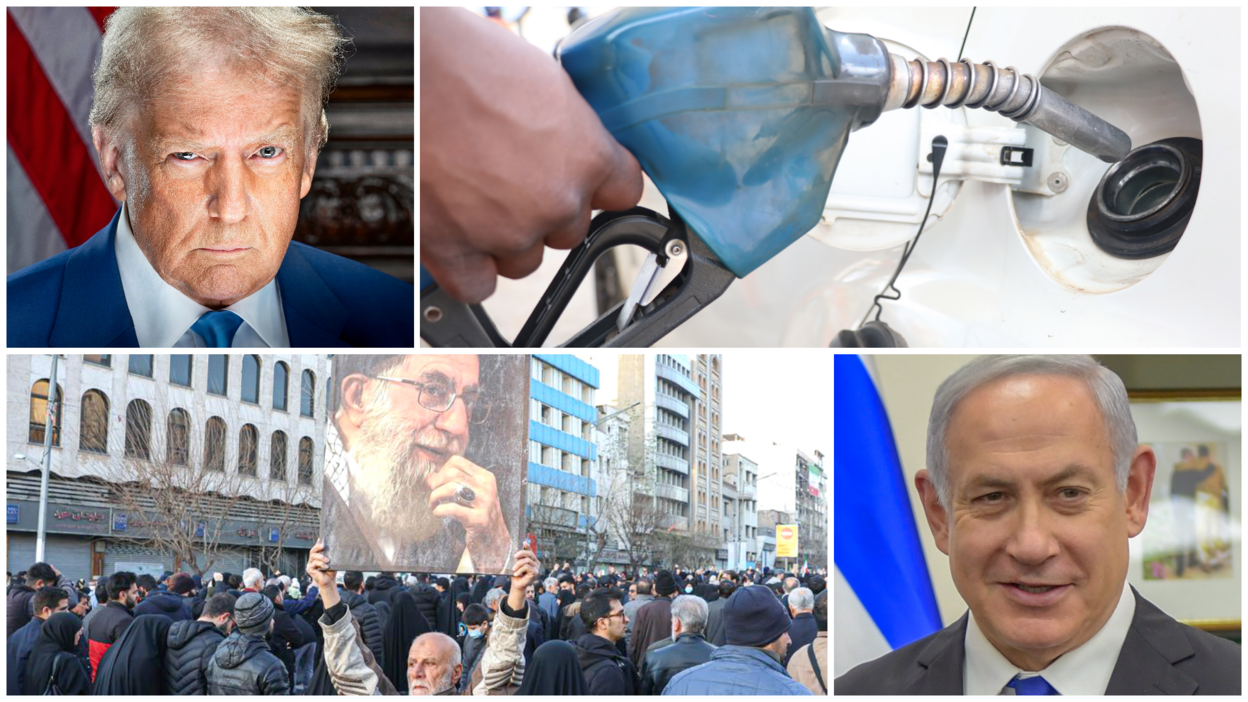
 US-Israel attack on Iran is already affecting Kenya’s trade, maritime and aviation affairs /FILE
The escalation of tensions following coordinated strikes by the US and Israel against Iran isreverberating far beyond the Middle East.
Far away states like Kenya have, despite the distance, been forced to confront difficultdiplomatic and economic choices. While the conflict is unfolding thousands of kilometres away,its implications for Kenya are immediate and complex.
Nairobi is now performing a delicate diplomatic balancing act between its strategic American-Israeli allies and its growing trade relations with the Middle East, even as the crisis continues todisrupt energy markets, export routes and aviation networks.
For a country heavily dependent on imported fuel from the Gulf countries and deeply connected toMiddle Eastern markets, the geopolitical shock could translate into political pressure at home andeconomic strain across key sectors.
Kenya has historically maintained strong diplomatic relations with the US and other Westernallies, particularly on matters of security and regional stability in the Horn of Africa.
At the same time, Nairobi has cultivated relations with countries across the Middle East,including Iran, which remains an important trading partner and diplomatic player in theregion.
Former Iranian President Ebrahim Raisi (now deceased) visited Kenya in July 2023, whenfive MoUs were signed on cooperation in ICT, fisheries, animal health, and livestock products,and investment promotion.
The escalation between Washington-Tel Aviv and Tehran, therefore, places Kenya in asensitive position.Already, there is divided opinion among foreign policy analysts on President William Ruto’sstance on the conflict.
On Monday, President Ruto in a tweet appeared to side with US and Israel, condemningIran’s retaliation through attacks on US installations in the Middle East, without mentioningthe initial US-Israel joint aggression against Tehran.
“Kenya strongly condemns the strikes on the UAE, Qatar, Saudi Arabia, Iraq, Oman, Kuwait,Jordan and Bahrain in the evolving conflict in the Middle East. It is evident that theregionalisation of this conflict poses a grave threat to international peace and security,”Ruto said.
Siding with the US and Israel could strain relations with Iran and parts of the Global South andother areas that view the strikes as a violation of sovereignty. Conversely, appearing sympatheticto Tehran risks undermining Kenya’s strategic partnerships with the US and Israel.
Foreign policy analyst Ahmed Hashi said Kenya needs to take aneutral stance on the conflict.
“If there was ever a time Kenya needs to play the neutral card, this is it,” he said.
“President Ruto has been making wrong choices when it comes to foreign policy. From the verybeginning, [he got it wrong] on the conflict in Russia-Ukraine, relations with the US and China,the UAE and the Sudan.
“We have an epochal break of the international political economy and Kenya has to becareful in its foreign relations amidst the clash of civilisations,” Hashi said.
Africa Policy Institute CEO Prof Peter Kagwanja said that instead of walking a principled paththat condemns war as a tool of diplomacy, Ruto trained his guns on Iran, condemning itsretaliatory missile strikes on US military interests in the Gulf and blaming Tehran for theescalating war in the Middle East.
“It [Kenya] came out as an unprincipled puppet nation,” Kagwanja said.
It is a double standard for the President to condemn the retaliation by Iran and not the pre-emptive attacks by Israel and America.
“You condemn the person who attacked first, and then you can go on and say whether theretaliation is within [acceptable] measures,” Kagwanja added.
Kenya’s broader foreign policy strategy has increasingly emphasised multilateralism andpragmatic diplomacy, which Ruto cited in his Monday post.
“At this defining and perilous moment in global history, longstanding multilateralinstitutions remain indispensable frameworks for the resolution of the current crisis in theMiddle East,” Ruto said.
That approach may now be tested as the Middle East crisisdeepens.
The situation echoes Kenya’s diplomatic positioning during the Russian war against Ukraine, inwhich Nairobi strongly defended the principle of territorial sovereignty and sided with Ukraine.
Another dimension of the diplomatic challenge is security perception. Kenya hosts Westernmilitary cooperation facilities and has historically partnered with the US on counterterrorismoperations in East Africa.
Kagwanja recalls that in April 1980, Kenya signed a defence agreement with the US, whichhas been renewed. The deal allows the US military to use Kenyan sea and air bases in exchangefor economic and military assistance.
This, the foreign policy expert said, could have influenced Ruto’s position.Kenya was also designated as a US non-Nato ally in June 2024, making it the first sub-Saharan African nation to receive this status.
Although there is no immediate threat to Kenya, as Iranian Ambassador to Kenya AliGholampour assured on Monday, analysts said regional tensions can sometimes spill overgeographically through proxy networks or extremist narratives.
Oil prices and inflation risks
Beyond diplomacy, the most immediate concern for Kenya lies in global energy markets.The Middle East remains the world’s most critical oil-producing region, and any escalationinvolving Iran has historically triggered spikes in global crude prices.
There is also the Strait of Hormuz, one of the most strategically important maritimechokepoints in the world, through which roughly a fifth of global oil supplies pass.The Iranian Revolutionary Guard on Wednesday announced closure of the strait, further disrupting global supply, obviously affecting Kenya, the gateway to East Africa region. Beforethe announcement , the strait had virtually been closed with many tankers backed up.
Kenya imports all of its petroleum products, and despite assurances by theEnergy ministry, these disruptions are likely to increase oil prices.
Higher global oil prices would translate directly into increased fuel costs locally. That in turnwould push up transport expenses, electricity generation costs and the price of basiccommodities that require fuel for transportation.
Such shocks often trigger broader inflationary pressure in oil-importing economies such asKenya, squeezing household purchasing power and raising operating costs for businesses, bothalready under strain.
Coming at a time the country is already in 2027 election mood, the Kenya Kwanzagovernment could therefore face renewed political pressure in an already-hurting economy.Kenya has already experienced the political sensitivity of fuel price fluctuations in recentyears, with energy costs feeding into broader debates about the cost of living.
Additionally, former President Uhuru Kenyatta faced a lot of heat over the high cost of living,which was partially blamed on the Russia’s war against Ukraine.
Kagwanja said that further escalation of the Middle East war will deepen Africa’seconomic vulnerabilities.
“Oil price shocks, as ripple-effects of the war, are already wreaking havoc on oil-dependentAfrican economies, fuelling inflation, widening trade deficits, disrupting global supplyroutes, and raising transport, manufacturing, food distribution costs and householdbudgets,” he said.
He said the war is fuelling market turbulence across Africa, compounding the economicinstability of a continent reeling from the aftershocks of the Covid-19 pandemic and therising cost of external borrowing.
Export markets at risk
Another area of vulnerability lies in Kenya’s export sector. The Middle East is a keydestination for Kenyan agricultural exports, particularly tea, horticultural products and meat.Iran itself has been a notable buyer of Kenyan tea — estimated at Sh4.26 billion annually.
Exports were already facing challenges due to a ban over a quality scandal.Kenya and Iran had in August last year formed a joint committee to solve the tea export issue in 60days.
The Middle East war is also expected to affect Kenya’s meat exports to that region, whichtotalled $11.3 million (Sh1.4 billion) in 2024.
Any further deterioration in relations between Tehran and the US-Israeli allies will thereforedisrupt Kenyan exports to the wider Middle East region.
Countries such as the UAE, Saudi Arabia and Qatar are major markets for Kenyanhorticultural produce and livestock products. The region is also a hub for aviation and cargoroutes linking Africa to Asia and Europe.
This will cause a direct hit on Kenya’s fresh produce industry, which ships flowers, vegetablesand fruits to global markets and relies heavily on stable aviation routes through the Middle East.
Aviation already has been severely disrupted.The conflict also has already disrupted maritime trade routes connecting Africa with the rest ofthe world.
Diaspora implications
The Middle East crisis also has implications for Kenya’s diaspora. The Diaspora Affairs Department reports there are about 500,000 Kenyans in the Middle East. Remittances from theseworkers form one of Kenya’s largest sources of foreign exchange, particularly from SaudiArabia.
The Central Bank of Kenya said Kenyans in the Saudi kingdom sent back about $302.1 million(Sh39 billion) in remittances last year, a reduction of 25 per cent from $403.12 million (Sh52billion) recorded in 2024.
The safety of migrant workers in the broader Middle East is also at stake, with evacuationmade difficult due to closure of the airspace and the grounding of most of the aviation industry.