
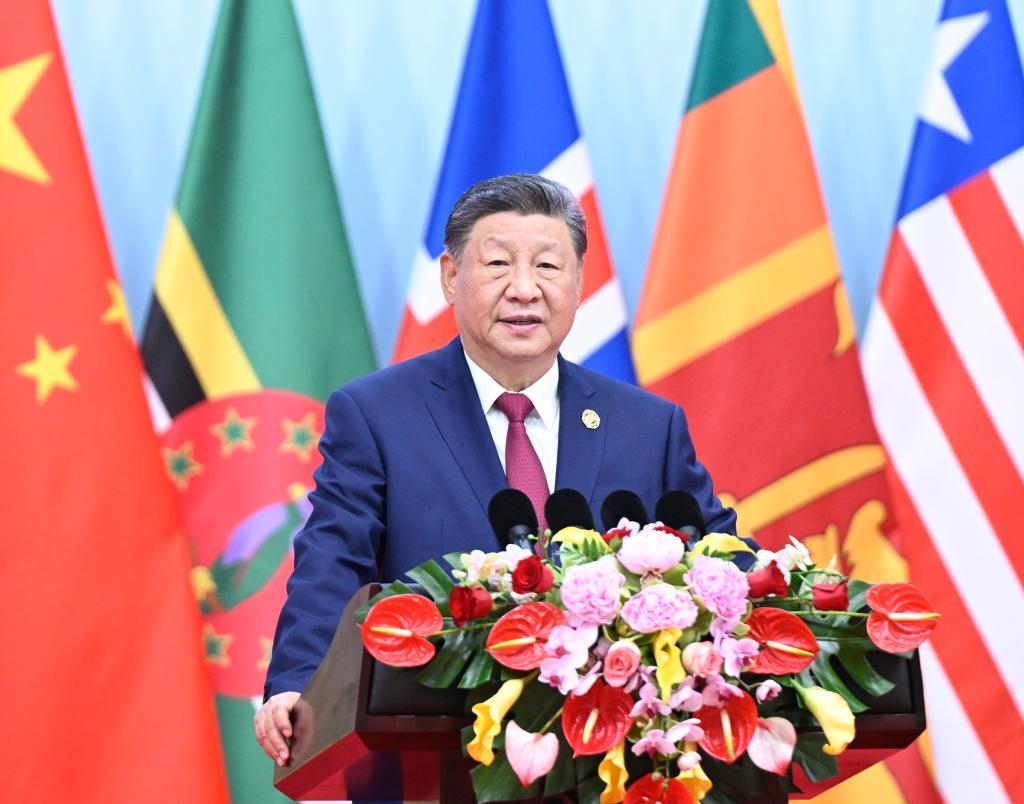
In 2021, President Xi Jinping announced that China had eliminated absolute poverty in rural areas, marking a significant achievement. This declaration not only celebrated past successes but also initiated a new phase called "rural revitalisation." The phase aimed to build on the progress made in reducing poverty and is focused on transforming rural areas.
The revitalisation plan sought to, among other things, enhance agricultural security, modernise farming methods, and ensure steady long-term growth.
Like many important government initiatives in China, the rural revitalisation program is anchored in the annual "No. 1 central document," which is the government's main policy statement each year. The 2025, for instance, document outlines a strategy that emphasises food security, technological advancements, improvements in rural governance, and increased farmer incomes.
Why rural revitalization
China's leaders have long considered agriculture a vital sector and saw untapped potential in rural areas. With a population of over 1.4 billion, ensuring stable food production is crucial, especially amid climate change and global uncertainties.
The focus on modernising agriculture is already showing results. By the end of 2024, over 67 million hectares of high-quality farmland had been developed, and irrigation systems now span 10 million kilometers across the country. Authorities stress that enhancing food security is key to national security.
Drought- and flood-resistant farms reportedly produce about 10% more grain than traditional fields. In 2024, China's grain output exceeded 700 million tonnes for the first time, thanks to expanded high-quality farmland and advanced farming techniques.
However, revitalisation is not just about increasing agricultural production. It also aims to diversify rural economies by developing industries like food processing, tourism, clean energy, and digital commerce.
During my visits to China, particularly in Xinjiang's Turpan region, I observed how this strategy is being put into practice.
In November 2023, I visited Tuyugou, an ancient village in Shanshan County, where residents previously lived in fragile homes with limited access to water and basic services. Through government relocation efforts, families moved into modern houses with schools and hospitals nearby, while the historic village was preserved and turned into a tourist attraction.
Former residents were encouraged to return as entrepreneurs. One local guide shared that she shifted from subsistence farming to a career in tourism, while another villager now earns up to 2,000 yuan daily selling grapes to visitors during peak seasons, an income previously unimaginable from traditional farming alone.
This success story is echoed in places like Lizu Village in Zhejiang Province, where cultural tourism and rural branding have spurred numerous start-ups, generating millions in annual revenue and significantly raising average incomes. Here, rural revitalisation creates a connected environment where agriculture, culture, services, and entrepreneurship thrive together.
Role of Technology
A key aspect of the rural revitalisation effort is the integration of technology. The policy aims to develop "new quality productive forces," particularly using 5G, artificial intelligence, and the Internet of Things.
For example, in Henan Province, smart chili farms utilise real-time soil monitoring to cut water usage by 50%, fertiliser by 30%, and labor costs by 70%. Innovations in seed development have also doubled wheat yields over the past 40 years, with new varieties designed for specific dietary needs.
The government is also focused on reducing post-harvest losses by implementing advanced harvesting machines and digital logistics systems. Companies that upgrade their milling technology report saving hundreds of tonnes of grain every year and moving into higher-value exports like starch and malt syrups.
Environmental restoration is also a priority within the revitalisation plan. In Guizhou Province, a largely mountainous region in China, previously degraded land now supports Sichuan pepper farming, creating thousands of jobs. Ecotourism in areas once designated as impoverished has attracted hundreds of thousands of visitors, generating significant local income while preserving cultural heritage.
Renewable energy projects, such as agricultural photovoltaic stations, allow land to generate both crops and electricity, providing additional income for farmers in challenging environments.
Another crucial element of this program is enhancing human resources. Chongqing's Rural Talent Revitalisation Action Plan aims to bring over 200,000 new professionals to rural areas by 2030. Young workers are livestreaming agricultural products, helping farmers reach customers directly and increasing online sales significantly.
What's more, officials are working to improve land systems, public services, and local governance. The goal is to create "modern living conditions" in rural China by 2035.
Thus, China's rural revitalisation drive is not just a development program; it is a strategic reset following absolute poverty eradication, designed to secure food supplies, reduce regional inequality, and foster innovation in the countryside.
While the program's scale is vast and results may vary across different provinces, the changes are evident in villages where it has been implemented, establishing rural China as a foundation for future growth.
This approach redefines how countries think about poverty transformation, linking food security, technology, environmental restoration, and governance reform into a single, cohesive framework for development.