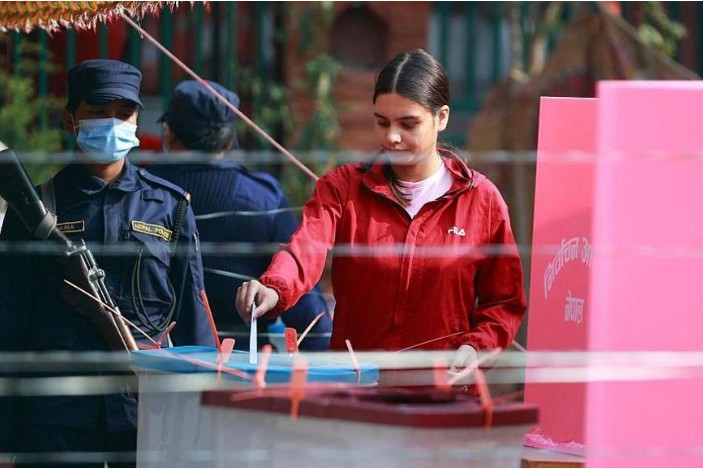
Nepalis are voting in a consequential election that will chart the country's path after last year's youth-led anti-corruption protests toppled the government.
The same issues that sparked last September's protests are at the centre of today's vote - corruption, unemployment, economic stagnation and inequality.
The vote for parliament's 275 seats pits "old guard" parties against challengers advocating for angry, disillusioned young voters hungry for change.
Leading candidates include KP Oli, the prime minister toppled in the protests, and Balen Shah, the ex-rapper mayor taking him on in his constituency.
Nearly 19 million people, including almost a million first-time voters, are registered to take part in the ballot for the House of Representatives.
Nepal's mountainous terrain makes it slow and difficult to transport ballots, which are counted by hand - full results are not expected for days.
As we’ve travelled the country the past week, it’s clear this election matters to many, and especially the younger, Gen Z voters, who made this election happen.
They rose up, overthrew their government and called for change. Counting will begin tonight to determine whether a new generation of politicians will shape their country, or whether veterans are given another chance to lead.
For KP Sharma Oli, this will be a major test. He and his party have insisted the protests were not a referendum on his leadership, and that he is still beloved by the public. He told the BBC he’s confident he will win this election.
The leader of the Nepali Congress, Gagan Thapa, believes younger voters are tired of “unholy alliances” and “poor governance” in previous coalitions, and that the party is listening to Gen Z voters.
While we travelled to all three polling stations the top candidates voted at today, we only managed to speak to two of them. That’s because 35-year-old Balen Shah, again, refused to speak to the press. He stayed true to form, turning up in his signature black sunglasses and storming through a crowd of journalists.
It’s a trend Nepal’s media worry would continue if he took office. Yet, many of the young voters we’ve spoken to believe his youth and energy are exactly what the country needs, and that he represents a new chapter in Nepal’s future.