Somalia has adopted a long-awaited new Constitution after members of the two Houses of the Federal Parliament approved the supreme law in a joint sitting, marking what leaders described as a decisive step toward stability, institutional reform and national unity.
Justice and Constitutional Affairs Minister Hassan Moalim welcomed the passage of the charter, describing it as the culmination of years of negotiation and consultation.
“This Constitution did not come easily. It has taken time, resources and unwavering commitment from all stakeholders to craft a document that reflects the aspirations of the Somali people. Today, we lay the foundation for a just, secure and prosperous Somalia,” Maalim said.
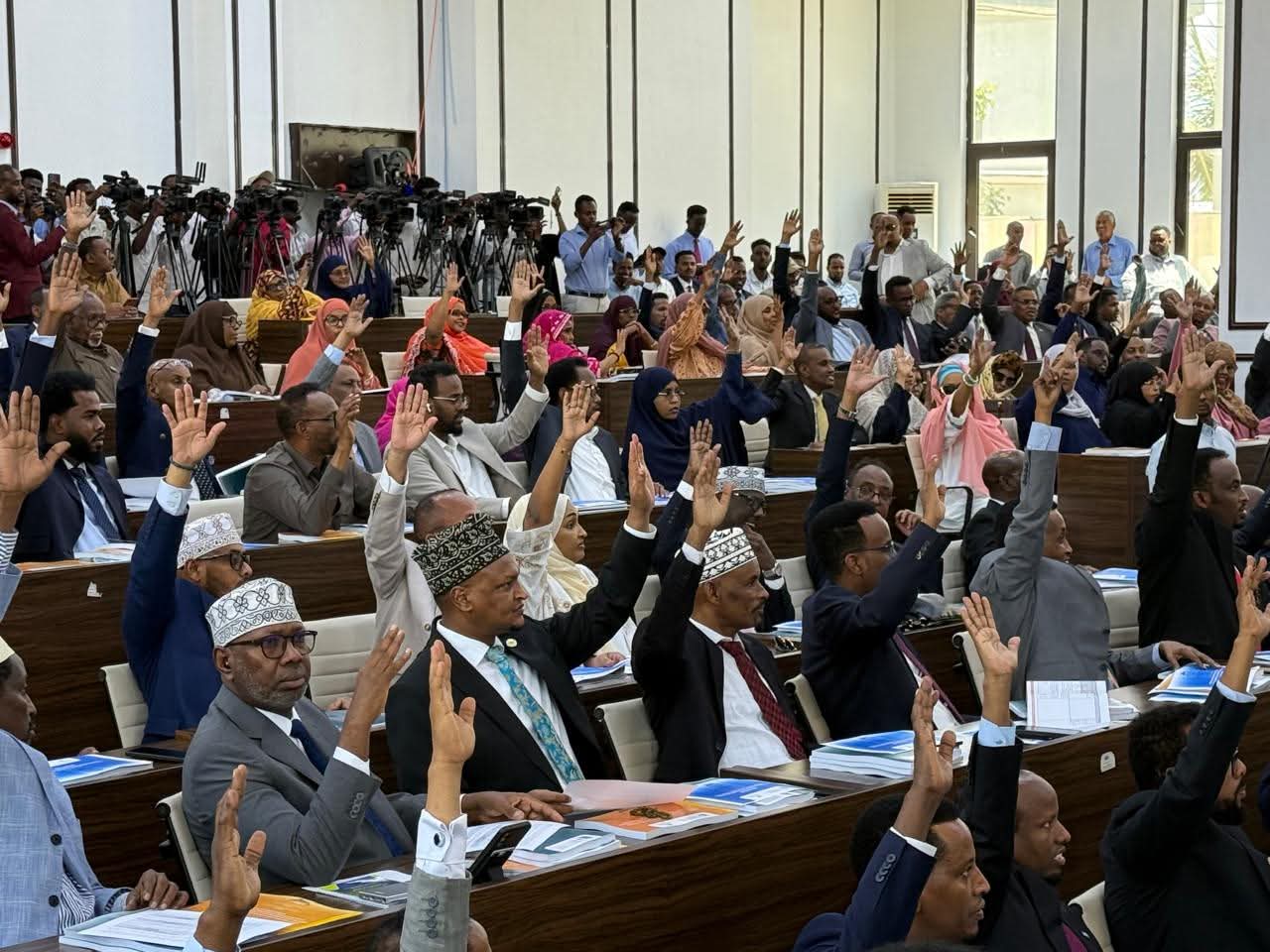
Speaker Sheikh Aden Mohamed Nur, also known as Aden Madobe, told local media that 186 members of the House of the People and 37 Senators from the Upper House voted in favour of the Constitution during Wednesday’s session.
The approval sets the stage for the implementation of a governance framework aimed at strengthening democratic institutions and clarifying federal structures.
The adoption of the charter is seen as a major milestone for the Horn of Africa nation, which has faced decades of political fragmentation, insecurity and protracted conflict.
Leaders say the new legal framework provides a foundation for restoring law and order while reinforcing checks and balances across government.
At the core of the Constitution is a clearly defined separation of powers between the Executive, Legislature and Judiciary.
The document entrenches mechanisms intended to enhance accountability in public service and safeguard against abuse of office.
A more independent judiciary is expected to play a central role in rebuilding public confidence and resolving disputes through lawful channels.
The charter also outlines a structured leadership model. Members of Parliament will be elected directly by citizens, while the President will be elected by Parliament and limited to a maximum of two five-year terms.
The Prime Minister, appointed by the President, may be removed by Parliament, strengthening legislative oversight.
In a bid to promote integrity at the highest levels of government, the President, Prime Minister, the two Speakers of Parliament and the Chief Justice of the Supreme Court are barred from holding dual citizenship.
The President, Prime Minister and Speakers are also required to declare their assets to the Auditor General upon assuming office.
The Constitution further clarifies the relationship between the Federal Government in Mogadishu and regional states, delineating powers and responsibilities to reduce jurisdictional disputes that have historically hampered governance and security coordination.
Policy analyst Zachary Masinde termed the development transformative.
“This is a historic moment for Somalia. A clear constitutional framework offers a genuine opportunity to strengthen institutions and break cycles of instability,” he noted.
With parliamentary approval secured, attention now turns to implementation, as authorities begin translating constitutional provisions into concrete reforms aimed at consolidating peace and strengthening governance nationwide.