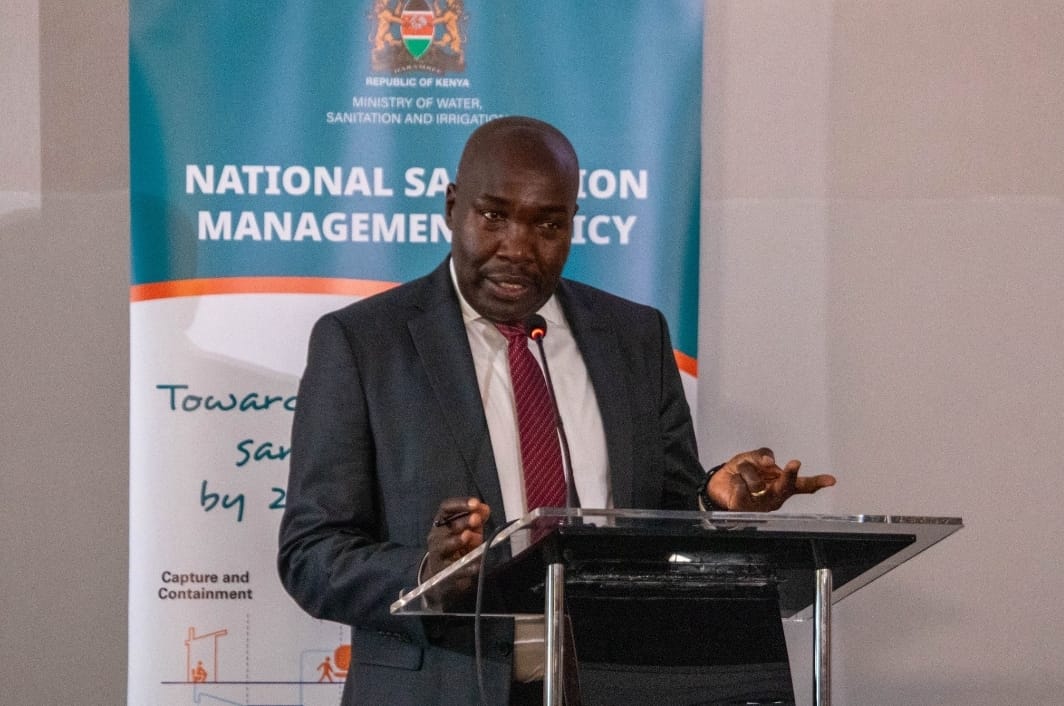
The government has unveiled the NationalSanitationManagementPolicy, marking a decisive step toward making sanitation a constitutionally guaranteed right.
During the launch in Nairobi, PS for Water and Sanitation Julius Korir said the policy represents a shift in how the nation manages human waste.
“By launching this policy, Kenya is not just making a promise—we are activating a national movement to secure health, dignity, and a sustainable future for communities,” he said.
Developed in line with the African Union Sanitation Guidelines (2021), the policy is the first national framework in Africa dedicated solely to sanitation.
It recognises the role of the private sector and all actors along the sanitation services chain—from service providers and technology developers to communities.
The approach leverages technology, research, planning, andinvestment to accelerate safely managed sanitation nationwide.
For decades, sanitation was overshadowed by water supply initiatives. Poor sanitation now costs Kenya an estimated $365 million (Sh47 billion) annually and contributes to stunting in 35% of children and 40% of infant mortality.
The policy adopts a water-basin approach, encouraging counties to plan collaboratively since mismanagement in one area can affect entire regions.
It prioritises marginalised and informal settlements, introducing non-sewered solutions—such as improved pit latrines, septic tanks, and container-based toilets—to complement conventional sewers.
The aim is to achieve universal sanitation by 2030, while decentralising wastewater treatment to reduce costs and promote reuse.
At the launch held at Radisson Blu Hotel, stakeholders including Cabinet Secretaries, MPs, governors, development partners, and civil society organisations attended.
Laikipia Governor Joshua Irungu, chair of the Council of Governors’ Water Committee, emphasised the role of counties in implementing the policy.
“Sanitation is a devolved function. Counties are ready to lead and this policy gives us the tools to move from ideas to action,” he said.
International and local partners welcomed the move. Samburu Wa-Shiko of the Gates Foundation called it a “landmark achievement,” while Joan Kones of the Kenya Water and Sanitation Civil Society Network highlighted civil society’s role in community engagement and accountability.
The policy aims to ensure dignity, protect public health, and promote sustainable economic development, signalling Kenya’s readiness to implement practical and scalable sanitation solutions across the country.