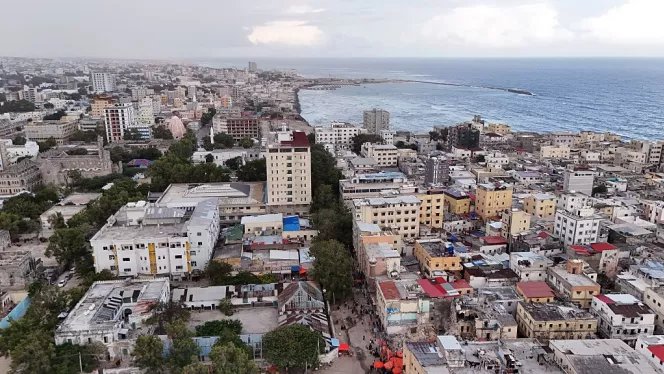
Somalia is facing renewed political uncertainty as tensions mount over constitutional changes, federal relations and allegations of governance failures ahead of key 2026 milestones.
A new analysis titled Somalia on the Brink of Fragmentation warns that the country’s crisis is no longer a routine dispute between the government and opposition.
Instead, it argues, the confrontation is evolving into a struggle over the very structure of the Somali state.
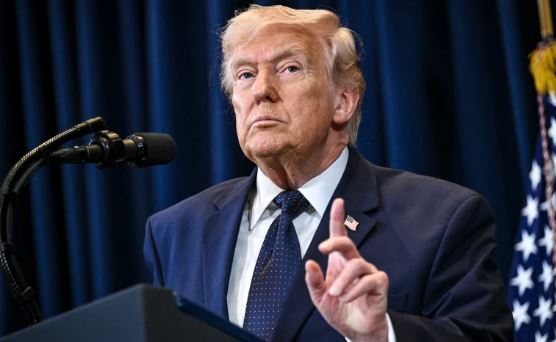
At the center of the storm are policies pursued by President Hassan Sheikh Mohamud over the past two years.
These include constitutional amendments, proposed electoral reforms and the handling of relations with federal member states. Critics say the measures risk destabilizing the fragile federal system.
In March 2024, the Federal Parliament approved constitutional amendments described by the government as necessary to entrench universal suffrage and move away from clan-based power-sharing.
Opposition figures rejected the move, arguing that the changes were passed without broad national consensus and could shift power toward the center at the expense of federal states.
Observers cited in the report caution that Somalia’s existing political arrangement was designed to balance clan interests. Altering it without agreement, they warn, could fuel polarization in a country where institutions remain incomplete and political trust is fragile.
The debate has intensified as the constitutional term approaches its end in 2026. In January this year, parliament witnessed heated confrontations after opposition lawmakers accused the leadership of attempting to push through measures that could allow a two-year extension of its mandate.
The accusation has raised fears of a legitimacy crisis. Opposition groups argue that changing electoral or constitutional rules so close to a transition period undermines confidence in the political process.
Tensions have also flared between Mogadishu and federal member states. In April 2024, Puntland announced it would not recognize the constitutional amendments, describing them as lacking consensus.
Puntland’s president said the state’s position would not shift “until we see a government that respects the constitution and does not serve the interests of a particular group or individuals.”
The statement underscored a widening trust deficit between the federal government and regional administrations.
Federalism in Somalia was designed to prevent a return to centralized rule following the state collapse of the early 1990s.
Analysts warn that when a key federal state questions the legitimacy of national decisions, the unity of the country comes under strain.
Clan dynamics have also resurfaced in the political discourse. In March 2024, former President Sharif Sheikh Ahmed accused the current administration of engaging in “clan politics,” saying that “clan-based policies and defamation undermine the country’s unity and progress.”
Such accusations highlight concerns that political competition is increasingly framed along identity lines rather than policy differences, a development observers say could deepen social divisions.
Governance and accountability issues have further complicated the landscape. In August 2025, the Auditor General said three supreme courts had obstructed financial audits, describing their refusal as “a clear attempt to shield public funds from legal oversight.”
International pressure has also mounted. In January 2026, the United States Department of State announced the suspension of assistance to programs benefiting the federal government over allegations linked to the demolition of a U.S.-funded World Food Programme warehouse and the seizure of food aid.
The department reiterated a “zero-tolerance policy” toward the diversion of life-saving assistance.
Opposition rhetoric has sharpened in recent months. In February 2025, an opposition coalition accused the president of exceeding constitutional limits, warning that his “explicit disregard for the constitutional order could plunge the country into chaos and turmoil.”
The report concludes that Somalia’s crisis stems from a convergence of risks: sweeping constitutional changes without consensus, disputes over term limits, escalating clan-based rhetoric and renewed corruption controversies.
With 2026 approaching, analysts say the handling of these issues will determine whether the country consolidates its federal system or slips into deeper fragmentation.