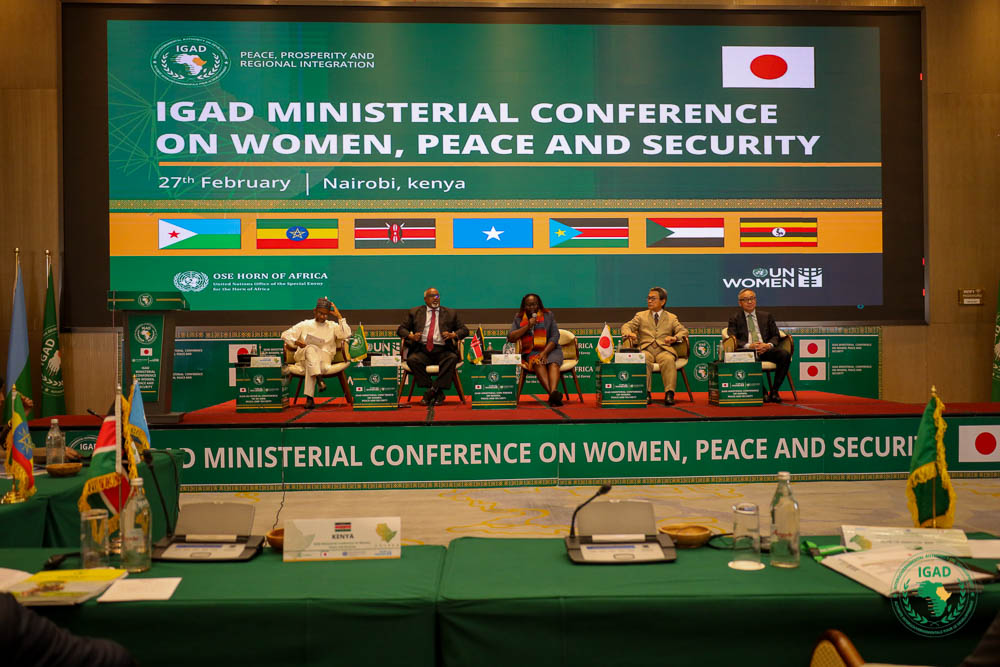
Leaders from across the Horn of Africa have called for urgent and concrete action to increase the participation of women and youth in peacebuilding and mediation, warning that lasting stability in the region cannot be achieved without their meaningful inclusion.
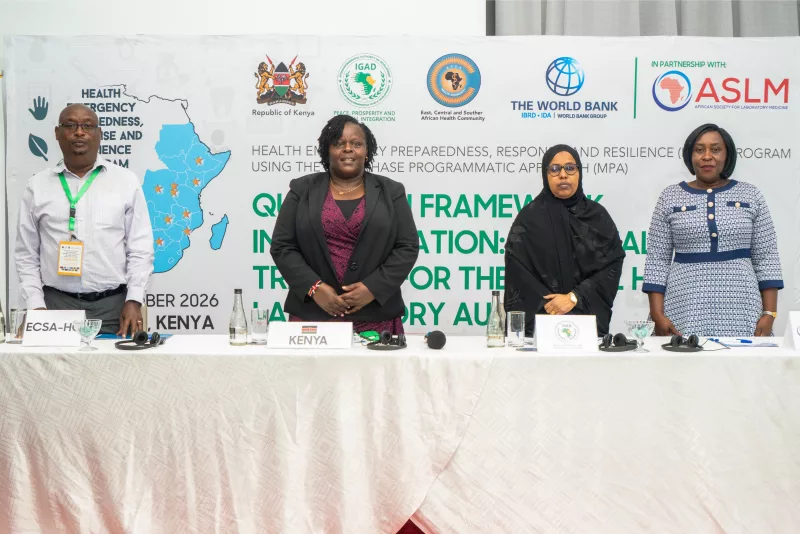
The call was made during the Intergovernmental Authority on Development (IGAD) Ministerial Conference on Women, Peace and Security held in Nairobi from February 25, to February 27, 2026.
Speaking at the conference, IGAD Deputy Executive Secretary Mohamed Ware said the Horn of Africa continues to face persistent conflicts, displacement, political instability and climate-related insecurity, with women and youth bearing the greatest burden.
“None of us need reminding of the pressures facing the Horn of Africa and the wider IGAD region. Conflicts that have persisted for years with no resolution in sight,” Ware said.
The meeting brought together ministers, senior government officials, United Nations representatives, and development partners to strengthen inclusive peacebuilding frameworks across IGAD member states.
Ware noted that despite being disproportionately affected by conflict, women and young people remain underrepresented in formal peace negotiations and mediation efforts.
However, he emphasized their critical role at the community level, where they often help sustain peace in fragile environments.
“They broker local ceasefires at community checkpoints when the formal process has fallen silent. They hold social fabric together when institutions cannot reach far enough,” he said.
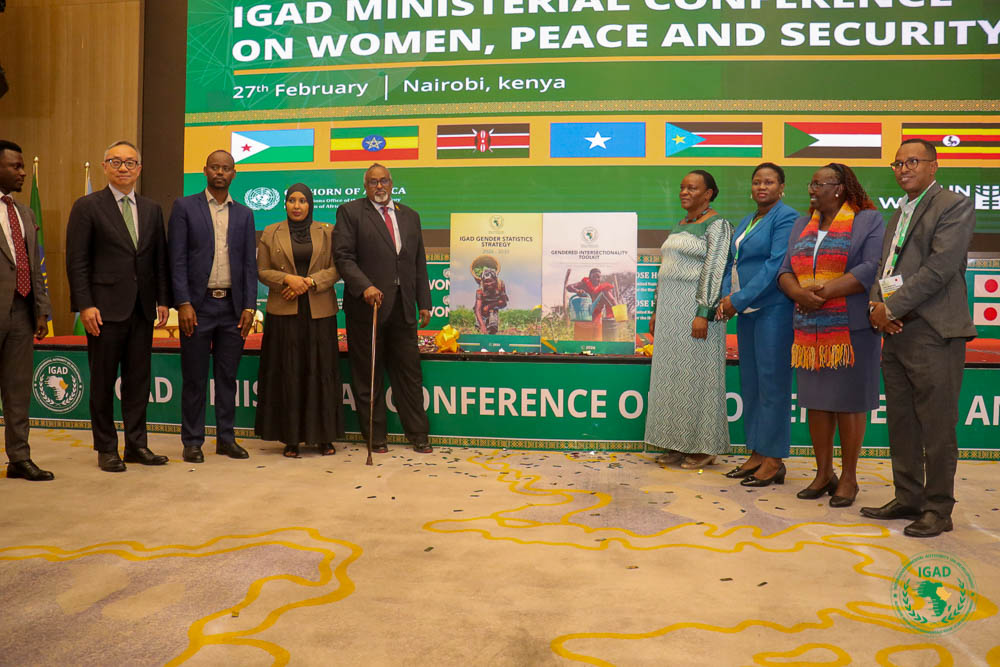
To address these gaps, IGAD unveiled three key instruments designed to strengthen inclusion and evidence-based policymaking.
These include a roadmap for establishing the IGAD Women and Youth Mediation Advisory Board, the IGAD Gender Statistics Strategy for 2026–2030 and the Gendered Intersectionality Toolkit to improve research and policy responses to conflict.
Ware said the Advisory Board will serve as an independent mechanism to ensure women and youth are actively involved in mediation and preventive diplomacy, rather than being sidelined.
“I want to be clear about something: this is not a symbolic body. It is not a gesture toward inclusion. The Advisory Board is designed as an independent mechanism that brings strategic counsel, technical expertise, and hard-won knowledge on inclusive practice directly into IGAD-led mediation,” he said.
Kenya also reaffirmed its commitment to strengthening women’s leadership in peacebuilding efforts across the region.
Cabinet Secretary for Gender, Culture and Children Services Hanna Cheptumo said the initiative reflects growing recognition that inclusive leadership is essential for sustainable peace.
“This initiative reflects our collective recognition that sustainable peace in the IGAD region cannot be achieved without the full, equal and meaningful participation of women at all levels of decision making, right from the very basic at village level all the way to the national level,” Cheptumo said.
She noted that women and girls continue to face disproportionate challenges, including armed conflict, violent extremism, displacement and climate-related insecurity, yet remain underrepresented in peace negotiations.
She described the establishment of the IGAD Women Mediators’ Advisory Board as a historic step toward institutionalising women’s leadership in peace processes.
At the same time, the United Nations warned that humanitarian and security crises across East and the Horn of Africa are worsening, with millions of people displaced and women facing heightened risks of violence and exclusion.
Speaking on behalf of UN Women, Deputy Regional Director Adama Moussa said more than 25 million people in the region have been forcibly displaced, including over 18 million internally displaced persons and six million refugees and asylum seekers.
“These figures are not abstract, they represent lives disrupted, rights violated, and futures constrained,” Moussa said, highlighting the human cost of ongoing conflicts.
He added that women continue to play a critical role as mediators, peacebuilders and humanitarian actors, but their contributions often go unrecognized in formal peace processes.
The conference also marked the launch of the IGAD Gender Statistics Strategy, which aims to strengthen data collection, accountability and policymaking.
Officials said reliable gender data will help governments identify gaps, track progress, and design more effective interventions.
IGAD and its partners called on member states to translate commitments into concrete national action by nominating qualified candidates to the Advisory Board, strengthening gender data systems, and supporting women-led peace initiatives.
The Nairobi conference underscored growing regional and international efforts to promote inclusive governance, recognizing that empowering women and youth is essential to achieving lasting peace, stability and sustainable development in the Horn of Africa.
Present at the conference were the United Nations Special Envoy of the Secretary General for the Horn of Africa, Guang Cong and the Ambassador of Japan to the Republic of Kenya, Hiroshi Matsuura, who both reiterated support for women inclusion in leadership, especially in conflict resolution.