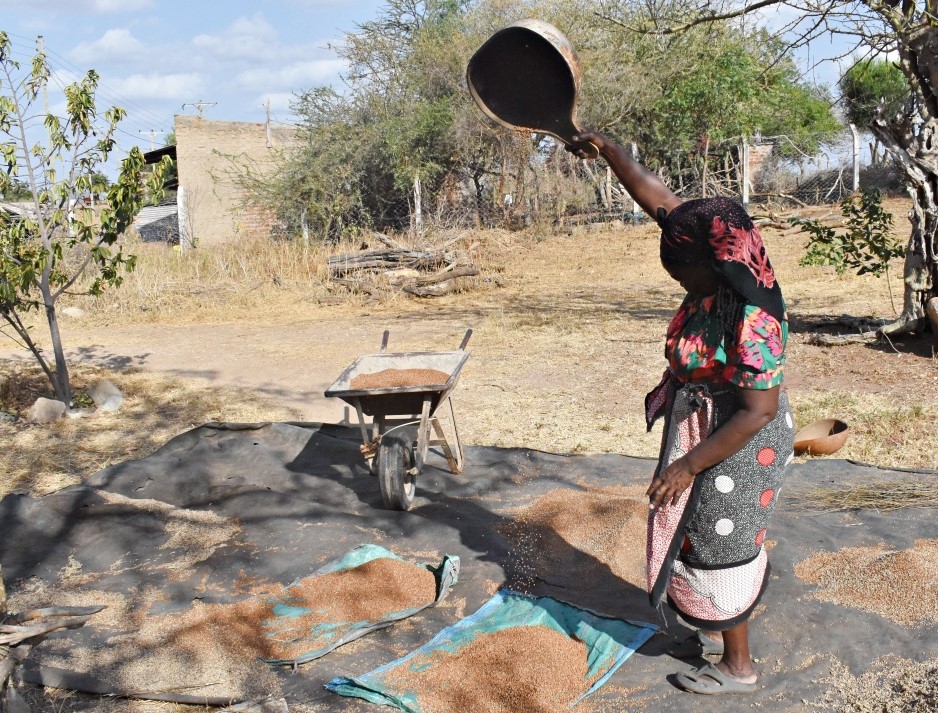
 Rachael Mwiyendi, a farmer in Kyuso area of Kitui county, winnows her sorghum yield after most of it was devoured after infestation by quelea birds./Musembi Nzengu
Farmers in drought-ravaged Kitui county have reason to smile following the early arrival of this year's March-April-May rainfall season, raising hopes of recovery.
Kitui is among the 23 arid and semi-arid counties that have severely been affected by drought and food shortages following the failure of the 2025 October-November-December rains.
A weather forecast released on Tuesday by the county director of meteorological services Daniel Mbithi said most parts of the region had already received rainfall exceeding 20mm.
Mbithi said the rainfall signalled the beginning of the March-April-May rains.
He however cautioned that total rainfall for the season will range from below normal to near normal.
The weatherman, who spoke to journalists in Kitui town, urged farmers to take advantage of the rains and begin planting immediately. He encouraged the cultivation of drought-resistant and fast-maturing crops to enhance yields.
Mbithi warned that rainfall amounts could decline in mid-March, potentially resulting in dry spells that may cause moisture stress for crops.
Even as the Meteorological Department called on residents to maximise the rains for better harvests, a report by the National Drought Management Authority (NDMA) paints a grim picture of the county’s food security situation.
The NDMA report, released on Wednesday shows Kitui is currently in the “stressed” drought phase and is sliding towards the “crisis” stage, with many residents facing significant food stress.
The report says the poor performance of the 2025 October-November-December rains left residents in a precarious situation.
It caused widespread crop failure and inadequate livestock pasture that triggered severe food insecurity across the county.
The report shows Kitui recorded an estimated 95 per cent crop failure due to poor rainfall performance, with maize losses even higher at 97 per cent.
Findings also showed most households have depleted their food reserves and are now relying on markets for sustenance.
Food prices have surged sharply, with maize becoming increasingly unaffordable for many families, the findings show.
The survey also indicates a decline in household food consumption scores, signalling worsening food security.
“There was a decrease in food consumption, with a higher proportion of households registering borderline and poor food consumption scores, and an increased coping strategy index as more households resorted to unusual measures to bridge food gaps during the season,” the report states.
According to the report, the failed October-November-December rains also intensified human-wildlife conflict. It cited the quelea bird infestation that destroyed 1,100 acres of sorghum, millet and green grams.
Elephants also destroyed crops and water infrastructure and forced the closure of schools in Kanziku ward in Kitui South subcounty.
The drought also led to significant livestock losses, with between 20 and 40 per cent of cattle reported dead, while 33 per cent of goats have been affected by vector-borne and transboundary diseases.