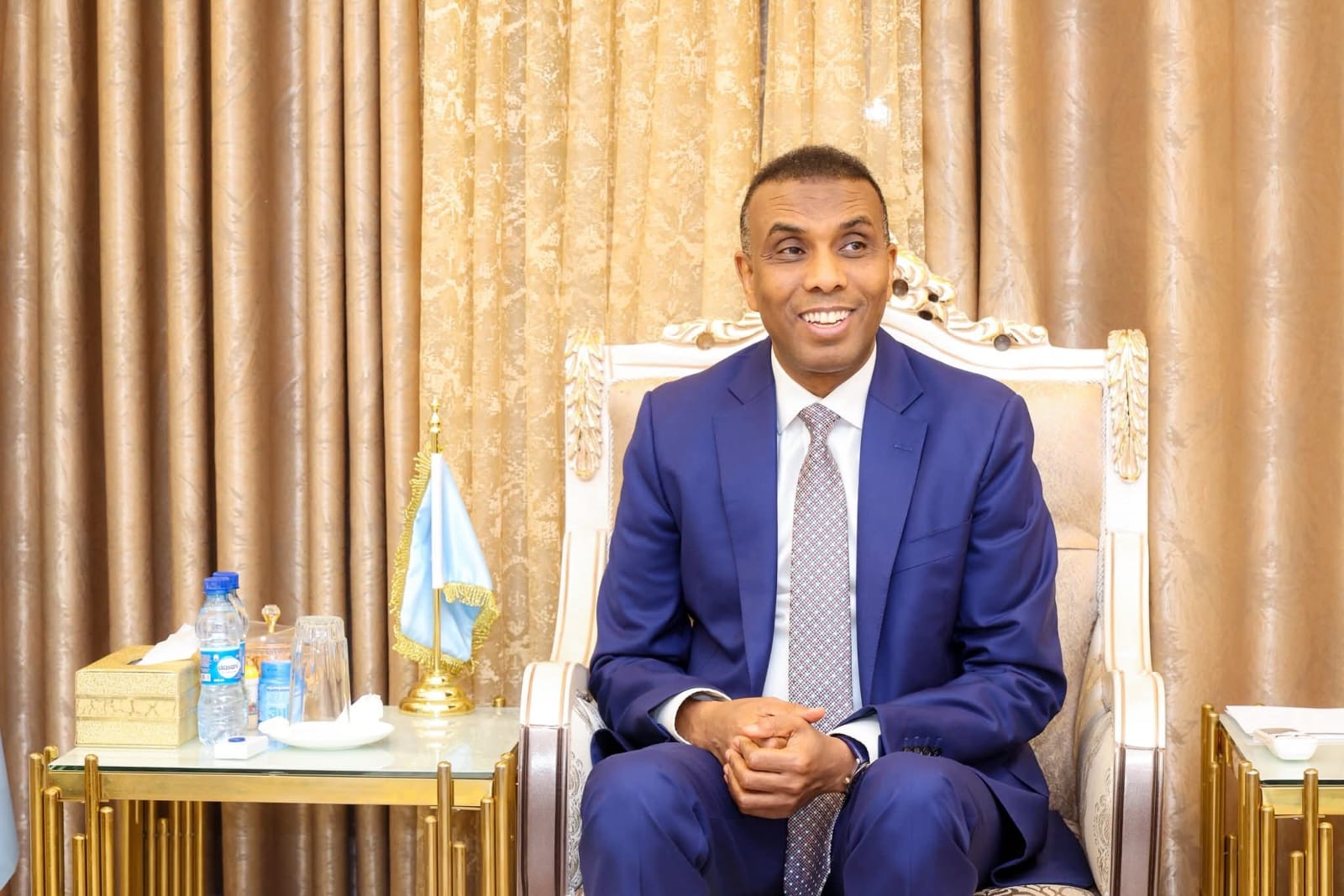
Somalia’s Prime Minister, Hamza Abdi Barre is spearheading an ambitious reform program that is steadily repositioning the country as a more stable and competitive player in the region after decades of conflict and institutional fragility.
Following years marked by insecurity and political volatility, the Horn of Africa nation is showing signs of recovery, with government-led reforms targeting security, governance, and economic revitalisation.
Coordinated security operations have improved stability in several key urban centers, allowing businesses to reopen and communities to rebuild.
At the same time, closer collaboration between federal and state authorities is strengthening administrative coordination and national cohesion, officials say.
The reform agenda has placed significant emphasis on governance. The administration has prioritised public financial management reforms, transparency initiatives, and stronger institutional accountability.
Revenue collection systems are being modernised, while anti-corruption frameworks are being reinforced in a bid to restore public trust and improve fiscal discipline.
These measures, analysts note, are not only boosting domestic confidence but also enhancing Somalia’s credibility with international partners.
Renewed development partnerships and increased foreign interest have followed, reflecting cautious optimism about the country’s direction.
Economic recovery efforts are also gathering pace. Somalia’s strategic position along major maritime routes offers long-term advantages for trade and logistics.
The government has initiated infrastructure upgrades, including port modernization, expansion of telecommunications networks, and improvements in energy access.
Regulatory reforms aimed at streamlining business operations have further stimulated private sector activity, with local entrepreneurs and members of the diaspora playing a central role.
Policy analysts in Mogadishu say Somalia’s regional integration ambitions could prove transformative, particularly within the East African Community (EAC).
Mustafa Abdullah, a policy expert based in the capital, argues that Somalia’s resurgence is entering a strategic phase.
“Somalia is not just stabilizing; it is strategically positioning itself,” Abdullah said.
“Within the next few years, we will see Somalia playing a meaningful role in aviation connectivity, cross-border banking, and fish exports across the East African Community. Our coastline is one of the longest in Africa, our financial sector is digitizing rapidly, and our geographic position makes us a natural aviation hub. The foundations are being laid now.”
Abdullah’s assessment echoes sentiments among reform advocates who view the country’s expanding engagement with regional markets as both symbolic and substantive.
Increased participation in regional trade and institutional frameworks is expected to unlock new investment and economic diversification opportunities.
Despite the positive trajectory, challenges remain.
Security threats persist in some areas, and further institutional consolidation will be required to sustain gains.
However, analysts say the momentum shift is evident, with infrastructure projects advancing and reforms fostering greater predictability.
As Somalia continues its recovery, Barre’s reform-driven leadership is emerging as a central force in the country’s transformation.
From stabilising security to strengthening economic integration, Somalia is seeking to redefine its narrative — moving beyond conflict toward a future shaped by resilience and opportunity.