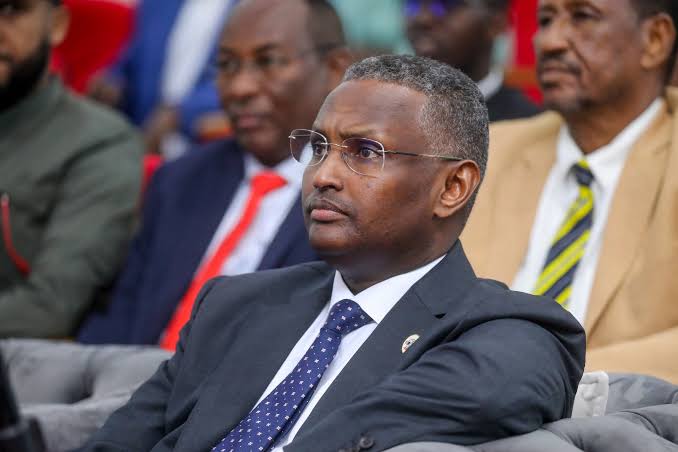
With Somalia’s general elections set for mid-year, security preparedness and political consensus have emerged as defining issues, placing Mahad Salad at the forefront of efforts to stabilise the country ahead of the vote.
Mahad, who heads the National Intelligence and Security Agency (NISA), has in recent weeks combined political outreach with internal security reforms, positioning stability as a prerequisite for credible elections.
His consultations have included opposition leaders from Puntland and Jubbaland, as well as former President Sheikh Sharif Sheikh Ahmed and former Prime Ministers Mohamed Hussein Roble and Hassan Ali Khaire.
The talks have focused on minimising disputes over the electoral framework and preventing political tensions from spilling over into security crises.
Analysts argue that the dual track of dialogue and security reform reflects lessons learned from previous election cycles, where political disagreements often heightened instability. Somali policy expert Muhammad Hamad said the stakes are high not only politically but economically.
“Somalia’s economic growth and development are directly linked to national cohesion,” Hamad said.
“Without political consensus and collaboration among leaders, efforts to attract investment and improve governance will continue to face serious setbacks.”
At the same time, NISA has rolled out modernisation measures aimed at enhancing intelligence gathering, improving urban surveillance, and strengthening coordination with other security agencies.
Officials say expanded surveillance systems and early warning mechanisms are designed to disrupt extremist plots and secure key infrastructure in Mogadishu and beyond.
Security sources indicate that safeguarding transport routes and commercial hubs is a priority as the election period approaches, given the potential for militant groups to exploit political uncertainty.
The implications extend beyond Somalia’s borders. Regional observers note that greater stability in Mogadishu reduces cross-border threats and supports trade and humanitarian operations in neighboring countries, particularly Kenya.
Improved cooperation between Somali and Kenyan security agencies has, according to regional analysts, contributed to fewer al-Shabaab-linked incidents in border areas and more predictable conditions for cross-border projects.
While Somalia continues to face structural and political challenges, observers say the current approach signals an effort to integrate security planning with political engagement.
“Consensus-building is not optional at this stage; it is essential for safeguarding both security and economic recovery,” Hamad added.
As the electoral calendar advances, attention remains on whether sustained reforms within the security sector, combined with continued political dialogue, can deliver a peaceful and orderly transition.