BY VICTOR AMADALA AND MARTIN MWITA
WHEN Joseph Mwaniki received an SMS alert from his bank last week, he read it twice to be sure.
He was informed that his loan would be repriced under a new framework and that his interest rate would drop slightly from March.
“This was the second time I was receiving a similar message. Even a small reduction matters. It means I can restock faster and maybe avoid borrowing from suppliers,” said the 42-year-old hardware shop owner in Lower Kabete.
Peter Otieno, on the other hand, walked into his bank branch along Jogoo Road thinking about the monetary policy being implemented by the Central Bank of Kenya (CBK).
Otieno is a small trader running a garage and spare parts shop at Shauri Moyo. He wanted to find out whether his loan repayment would finally come down.
“I have been hearing on the news that rates have fallen many times,” he said. “This time, the bank told me my interest would reduce slightly from next month. It is not big, but at least it is something.”
For the two, like millions of Kenyan households and business owners, the promise of cheaper loans has been long-awaited.
After ten consecutive benchmark rate cuts, CBK has taken its most decisive steps yet to lower the cost of credit and improve how monetary policy decisions reach ordinary borrowers.
But as banks begin repricing loans and aligning them to a new risk-based pricing model, a bigger question remains: is cheaper money finally reaching homes, shops, factories and farms, or is the relief still uneven?
Following CBK’s decision on February 10, 2026, to cut the Central Bank Rate (CBR) by 25 basis points to 8.75 per cent, from nine per cent, Kenya’s largest lenders have moved quickly to update lending rates.
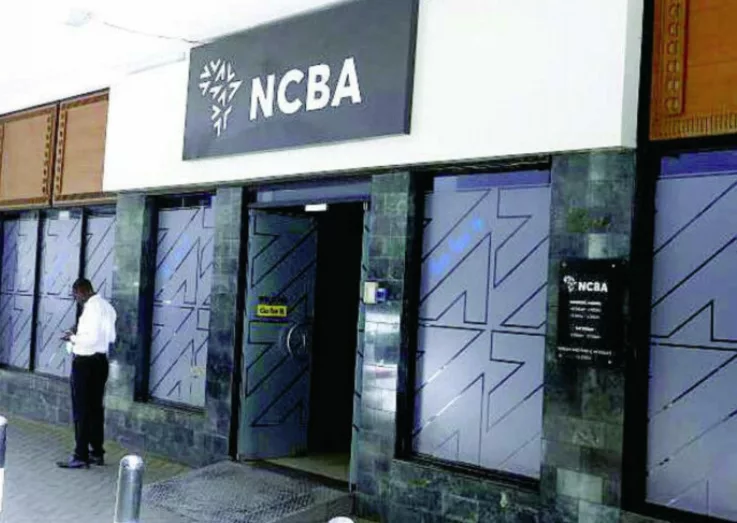
For instance, KCB, Equity, NCBA and Family banks have issued customer notices detailing how both new and existing loans will be migrated to a common pricing framework.
The exercise, expected to be completed by the end of this week, affects millions of borrowers across mortgages, personal loans and business credit.
Under the risk-based pricing model introduced on December 1, 2025, all new Kenya shilling variable-rate loans are anchored on the CBR.
Banks then add a premium that reflects the borrower’s risk profile based on income, repayment history and collateral, replacing the opaque internal reference rates that had long drawn criticism for being slow to adjust when policy rates fall.
For borrowers, the change offers clarity. For banks, it enforces discipline. For CBK, it is the missing link in ensuring that policy decisions are felt beyond boardrooms and balance sheets.
The latest rate cut by the Monetary Policy Committee (MPC) caps one of the most aggressive easing cycles in Kenya’s recent history. The decision reflects growing confidence that inflation is under control and that the economy needs support through cheaper credit rather than tighter money.
Inflation eased to 4.4 per cent in January 2026, below the midpoint of CBK’s target range, helped by lower food and energy prices and a stable exchange rate. Global inflation has also moderated, giving central banks room to ease cautiously.
“Growth in commercial banks’ lending to the private sector continued to improve and stood at 6.4 per cent in January 2026 compared to 5.9 per cent in December 2025 and -2.9 per cent in January 2025,” CBK Governor Kamau Thugge said.
He noted that growth in credit to key sectors of the economy, particularly building and construction, trade, and consumer durables, remained strong in January 2026, reflecting improved demand for credit in line with the declining lending interest rates.
Average commercial banks’ lending rates stood at 14.8 per cent in January 2026, down from 15 per cent in October 2025 and 17.2 per cent in November 2024.
The easing cycle is designed to revive private-sector credit, stimulate investment, and cushion households still grappling with high living costs after years of economic shocks.
For households, the impact has been tangible but modest. Mortgage holders and personal loan customers are beginning to see small reductions in monthly repayments.
“I save about Sh2, 000 a month now,” said a Nairobi-based civil servant servicing a mortgage. “It doesn’t change everything, but it helps with school fees.”
Naphtali Kimotho, a furniture dealer in Kikuyu Town, echoed his sentiments.
“It is a relief, however small. The new arrangement will see me pay Sh7,600 less two loans I service every month. It is enough to pay my employee for a week,’’ he said.
For businesses, especially in construction, trade, and manufacturing, cheaper credit has offered breathing space.
Private sector credit growth rebounded to 6.4 per cent in January 2026, from contraction a year earlier, signalling renewed demand for loans.
Lower borrowing costs have encouraged firms to refinance expensive debt, revive working capital lines and cautiously restart investment plans that had been shelved during the high-rate period.
“We can plan again,” said Bhimji Shah Harshil, a manufacturing executive in Nairobi’s Industrial Area. “The rate is still high, but at least it is predictable.”
Economic data backs this optimism. The country’s economy expanded 4.9 per cent in the third quarter of 2025, supported by a rebound in industry and resilience in services. Growth is projected to rise to 5.5 per cent in 2026 as monetary conditions ease further.
But the gains have not been evenly shared. While large corporates with strong balance sheets have been quick to benefit, small and medium-sized enterprises (SMEs) continue to struggle.
Despite lower policy rates, many SMEs still face double-digit lending rates, driven by perceived risk, weak cash flows, and stricter credit assessments. For them, the “true” cost of credit remains high, often compounded by fees, insurance charges, and collateral requirements that discourage borrowing.
“On paper, rates are down. In reality, the bank still sees me as risky,” said Meshack Dawit, an Ethiopian running a phones and accessories shop at Beba Beba Trade Centre along Tom Mboya Street, Nairobi.
From the banking sector’s perspective, the easing cycle has delivered mixed outcomes.
On the one hand, the loan default rate has declined steadily from 17.6 per cent in August 2025 to 15.5 per cent in January 2026, as borrowers benefit from lower debt-servicing costs and improved cash flows.
Yet consumer demand remains subdued. Many households are cautious, weighed down by stagnant incomes, job insecurity and the cumulative impact of past high interest rates.
Fixed-rate loans, which do not immediately respond to policy changes, have also slowed the transmission of relief.
On the other side of the ledger, savers have emerged as quiet losers. Deposit rates have fallen faster than lending rates, eroding returns on savings accounts and fixed deposits.
According to CBK, banks are paying between seven and eight per cent on deposits, the ninth straight monthly drop and the tenth time below double digits, tracking CBK's 10 consecutive cuts since August 2024.
Banking analyst Clyde Ambani says that as rates fall and pricing becomes more transparent, banks are under pressure to compete more aggressively for quality borrowers.
“Many lenders have responded by cutting deposit rates, investing more in government securities and focusing on lower-risk corporate lending, strategies that protect profitability but limit credit expansion to households and SMEs,’’ he told the Star.
“Risk-based pricing means safer borrowers benefit faster while informal and higher-risk customers remain largely locked out.”
Despite progress, credit in Kenya remains expensive by regional standards. Even at 14.8 per cent, lending rates are high for households and small enterprises with weaker credit profiles.
Although the regulator moved to tighten the policy framework by narrowing the interest rate corridor around the CBR and aligning overnight interbank rates (steps aimed at sharpening transmission across the financial system), policymakers say that monetary policy alone cannot fix access to credit.
A top executive of a Tier 1 bank who asked for anonymity told the Star that the easing cycle has exposed long-standing structural challenges including a weak credit information, informality, limited collateral, and slow judicial processes.
“These factors inflate risk premiums and blunt the impact of lower policy rates. Without parallel reforms such as improved credit scoring, faster dispute resolution and deeper capital markets, cheaper money will struggle to fully reach the real economy.”
The winners after ten rate cuts remain clearly established firms, creditworthy borrowers, and banks with healthier loan books.
The losers include savers and micro-enterprises still waiting for affordable credit to transform their prospects.
For Mwaniki in Lower Kabete, the changes are real but restrained.
“It is not a miracle,” he said, standing between shelves of cement and nails. “But at least now, I feel the pressure easing.”
Although the Kenya Bankers Association (KBA) has supported CBK's effort to cut the benchmark rate, it recently asked the regulator to maintain it at nine per cent.
In a statement, KBA said keeping the rate steady will allow previous cuts to fully transmit, support declining lending rates, and ensure a smooth transition to the risk-based pricing framework.