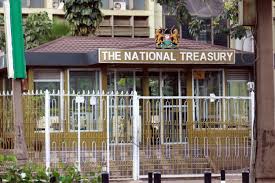
Details have emerged of serious flaws in the database used by the National Treasury to process pension payrolls.
The details point to possible losses of billions of shillings in taxpayers’ money.
A new audit has revealed that the system used to manage pensions and gratuities is riddled with incomplete records and invalid identification details.
In addition, long-outstanding balances running into billions of shillings further undermine the system’s credibility, Auditor General Nancy Gathungu says.
The Auditor General raised concerns about the integrity of pensioners’ data, noting that several records were either incomplete or inconsistent.
She made the findings in her report on the Consolidated Fund Services – Pensions and Gratuities for the year ended June 30, 2025, tabled in Parliament.
The audit found that 4,843 pensioners had invalid or missing tax PIN numbers, while 40,140 had invalid identification card numbers captured in the system.
A further 4,847 pensioners had dates of birth identical to their enrolment or end-of-service dates, raising questions about the accuracy of personal data.
Auditors also flagged 2,912 deceased principal pensioners recorded as “DUMMY”, meaning the system did not reflect their proper identification details.
In another anomaly, 2,386 cases showed pensioners’ names identical to their dependants’ names.
Most strikingly, the audit revealed 73,153 instances where the death date field was left blank. The enrolment data also contained seven records with either incomplete or future dates of enrolment.
Due to these inconsistencies, Gathungu concluded that “the credibility and integrity of data from the pensioners’ database used to process pensions payroll could not be confirmed”.
The report warns that unless the database is cleaned up, reconciliations completed and internal controls strengthened, the system will continue exposing public funds to risk.
Beyond data inconsistencies, the audit pointed to direct breaches of pension regulations. Nine widows were paid pension benefits beyond the legally stipulated five-year period, receiving a total of Sh2.09 million above their entitlement.
“Although management indicated that the payments had been ceased and recovery of overpaid amounts initiated, no evidence to that effect was provided for review,” Gathungu said.
At the same time, 17 pensioners had not received their lump sum and arrears 12 months after retirement, with Sh31.09 million still outstanding.
This was despite legal requirements that such payments be settled within 90 days. “This indicates a systemic failure in the timely disbursement of pensioners’ benefits.”
The weaknesses extend beyond data errors. The audit also questioned billions of shillings reported in the department’s financial statements.
As of 30 June 2025, the department reported cash and cash equivalents of Sh7.94 billion. However, auditors noted long-outstanding reconciliation issues, including Sh15.6 million reflected as payments in the bank but not recorded in the cash book since 2008.
A further Sh14.89 million related to fraudulent payments that had been investigated and classified as a loss had not been written off by the end of the financial year.
“In the circumstances, the accuracy and completeness of the cash and cash equivalents balance of Sh7,948,758,378 could not be confirmed,” the Auditor General said.
The audit also highlighted a massive and growing accounts payable balance. The department reported Sh12.98 billion in payables, mainly relating to returned pensions — payments that failed and were re-credited.
This figure has risen sharply over the past three years.
In the 2022–23 financial year, the balance stood at Sh6.71 billion. It increased to Sh7.10 billion in 2023–24, before jumping to nearly Sh13 billion in 2024–25 — an 82 per cent rise within a year.
Of the Sh12.98 billion reported, auditors found that Sh8.89 billion lacked proper supporting details. The names and pension numbers were indicated merely as “various”.
“In the circumstances, the accuracy and completeness of the accounts payable balance of Sh12,985,397,296 could not be confirmed,” the report states.
The ageing analysis of the debts further deepened concern. About Sh4.17 billion has been outstanding for more than five years.
Another Sh1.83 billion has been pending for between four and five years, while Sh1.09 billion is between one and three years old.
The report warns that some of the re-credited funds were not available in bank accounts to pay returned pensions should beneficiaries come forward to claim them.
The Auditor General also highlighted operational weaknesses, including a severe staffing shortage. Against an approved establishment of 482 technical officers, only 160 were in post, leaving a gap of 322 officers.
The report states that this shortage undermines the department’s ability to verify records, reconcile accounts and maintain accurate data — especially in a system that processed more than Sh223 billion in payments during the year.