Kenya has set a target to double annual milk production from 5.2 billion litres to 10 billion litres within the next two to three years, Agriculture Cabinet Secretary Mutahi Kagwe has said.
Kagwe said the government was also positioning the country to become a net exporter of meat.
"Today is not just about commissioning a factory. It's about transforming Kenya’s livestock economy," Kagwe said.
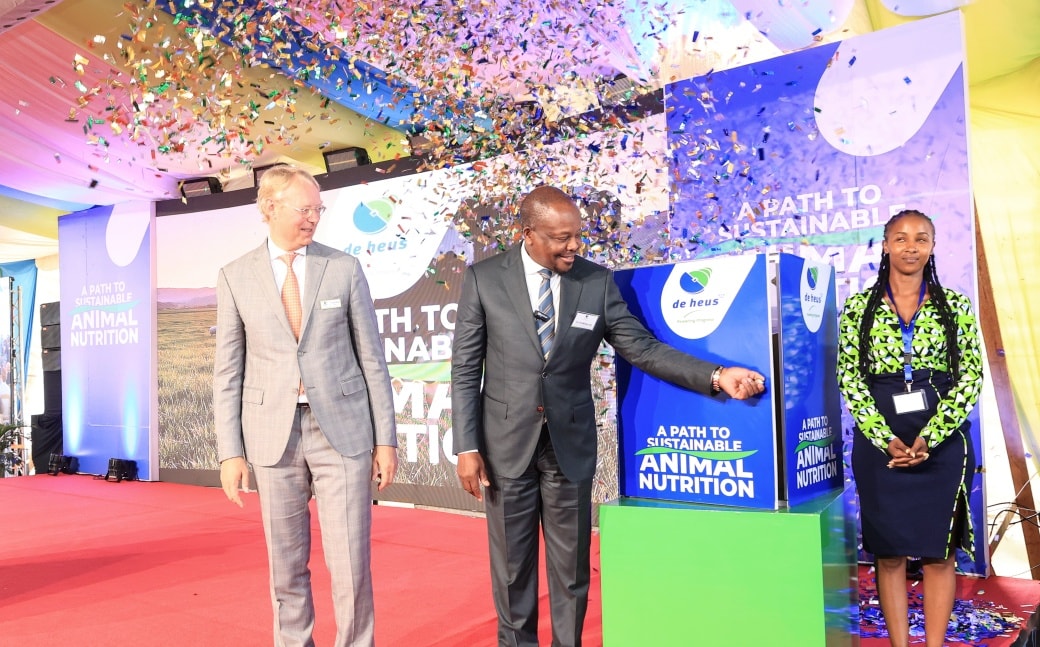
He spoke on Wednesday when he presided over the commissioning of a Sh3 billion De Heus animal feed manufacturing plant in Athi River, Machakos County.
Kagwe said the country would not achieve the production target by merely increasing the number of cows.
"We will achieve it by increasing productivity per cow. The future of Kenya’s dairy and meat sector lies in efficiency, nutrition, genetics, animal health, and, most critically, quality feed," Kagwe said.
The CS said that was why the investment by De Heus Animal Nutrition was strategic. He commended the company for choosing Kenya and expressed appreciation to the Government and people of the Netherlands for their continued partnership in agricultural innovation and trade.
"As we expand milk production, we must also expand value addition. There is growing international demand for milk powder, including in countries such as Algeria. To meet such markets, we must produce consistent, high-quality milk suitable for processing and export," he said.
Kagwe said export markets demand standards. He noted that increasing demand for live animals in regional and international markets depends on one key factor — animal health.
He said animal health depends heavily on feed quality, adding that the quality of Kenya’s exports will rely on the quality of animal feed.
"We are therefore strengthening enforcement and will implement a feed quality index to protect our farmers. Over-diluted feed and substandard formulations designed to maximise profits at the expense of productivity will not be tolerated," Kagwe said.
The CS said farmers must get value for their money.
Under the Land Commercialisation Initiative (LCI), Kagwe said the government was unlocking government land for structured commercial production of yellow maize and soya beans, which are key raw materials in feed manufacturing.
He said large-scale leasing frameworks were being developed, while small-scale farmers would be integrated through structured contract farming models.
Kagwe said feed security must be localised, asserting that Kenya must reduce dependence on imports of key feed ingredients.
He said the country would no longer rely solely on rain-fed agriculture.
With the construction of 50 dams across the country, he said, the government was expanding irrigation to ensure consistent year-round production.
"Climate variability can no longer dictate our agricultural performance. Beyond production, we are also planning structured feed reserves for drought situations to cushion farmers, stabilise prices, and prevent livestock losses during dry seasons," Kagwe said.
He said modern feed formulation, based on science and research, improves milk yield, enhances butterfat and protein levels, strengthens immunity, improves fertility, and increases daily weight gain in beef animals.
"That is how we double milk production — not by increasing herd size indiscriminately, but by increasing output per animal. We are also moving toward quality-based milk pricing. Farmers delivering higher butterfat, higher protein, and better hygiene standards must be rewarded accordingly. Volume alone will not define success — quality will," Kagwe said.
The CS said facilities such as the Athi River plant create jobs, stimulate demand for raw materials, empower youth in agribusiness, strengthen rural economies, and build investor confidence in Kenya.
Kagwe said the plant represents investment, technology transfer, reform, and confidence in the country, adding that Kenya is open for responsible investment.
He said the government was strengthening regulation, enforcing standards, commercialising land, expanding irrigation, and modernising agriculture.
"On behalf of the Government of Kenya, I congratulate De Heus on this important milestone. May this facility strengthen feed quality. May it increase productivity per animal. May it support export competitiveness. And may it contribute to a modern, resilient, and profitable livestock sector for our nation," Kagwe said.
Co De Heus, Chairman of the Board at De Heus, said the factory has a laboratory capable of detecting not only aflatoxin but other microtoxins to ensure that only safe raw materials are used for animal and human safety.
"Only best suppliers are allowed to supply raw materials. We don’t want to let our customers down, but trust our good quality all the time," he said.