Experts who advise
MPs on economy and budget matters have raised serious questions about the true
health of the Kenyan shilling.
In a new report, the Parliamentary Budget Office warns that the shilling’s resilience may be masking deeper structural problems in the economy.
While the currency appears to be unusually stable against thedollar, the report suggests the calm could be an artificial "mirage" created by the Central Bank of Kenya.
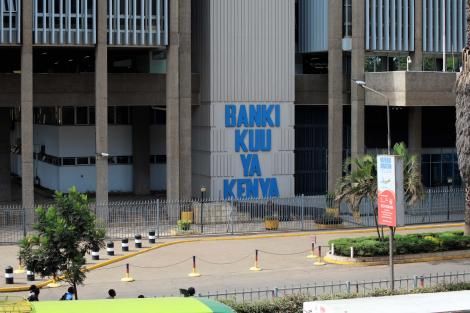
“This unusual stability, compared to normal emerging-market volatility, points to tight exchange rate management or active liquidity smoothing by the Central Bank,” the report tabled in Parliament reads.
Experts argue that situation is potentially hiding deeper economic cracks.
“While the stability supports predictable USD-denominated debt servicing, the lack of natural volatility may mask underlying foreign exchange imbalances,” the Martin Masinde-led PBO said.
The Kenya shilling has been trading at an average of Sh129 against thedollar from June 2024 to December 2025. It has been within the range since February 2024, when President William Ruto's administration issued a $1.5 billion (193.8 billion) Eurobond.
PBO has cast doubt on the flat curve, particularly given that the shilling is “simultaneously weakening against other major currencies.”
While the shilling seems to be playing at the same rate against the dollar, it was quietly losing value against the British pound and the Euro.
The shilling has experienced depreciation against the pound, starting at Sh164.5 in June 2024 and rising to Sh175.2 in June 2025.
The experts say that the shilling remained 5.5 per cent weaker than its December 2024 level.
“This trend signals higher costs for UK-linked trade, including imports of machinery, pharmaceuticals, education payments, and travel services,” the report reads.
The Kenya shilling also weakened against the Euro during the review period, moving from Sh135.6 to Sh139.4, a 12 per cent depreciation.
“This consistent weakening implies that Euro-denominated payments such as imports from the Eurozone or development finance obligations could become costlier,” PBO said.
In simple terms, the PBO is suggesting that the CBK could be actively managing the currency, possibly by using foreign reserves or implementing administrative measures, to keep it from fluctuating.
For an ordinary citizen, a stable dollar means predictable prices for some imported goods.
However, the PBO warns that the unusual calm may be too good to be true.
The report cautions that the CBK intervention "may mask underlying foreign exchange imbalances."
Even so, the budget options for FY 2026-27 report paints a picture of an economy with positive signs, lower inflation and a narrowing current account deficit.
The central argument is that if the economy were truly vibrant, the shilling should be gaining or losing value against all currencies based on market forces, not just one.
Instead, the report suggests that the focus on maintaining a stable dollar rate, which is vital for repaying the country's significant US dollar-denominated debt, has created a mirage of stability.
Why is it a big deal? An artificially managed exchange rate can be a risky strategy.
It can drain the country's foreign reserves, which are needed to pay for imports and protect against future shocks.
It can also make Kenyan exports more expensive for trading partners using Euros or pounds, hurting local industries.
Most importantly, if the CBK is ever unable to continue the ‘liquidity smoothing’, the shilling could face a sudden drop, undoing the stability the intervention was meant to preserve.
Nairobi-based economist Johnson Nderi, however, painted a different picture, saying that “it could be the dollar that is losing value”.
“Price stability is a serious issue. Picture a scenario where Americans are also printing to handle inflationary pressure, as China and Japan acquire additional capacity to fund spending,” he said.
The PBO does not explicitly accuse the CBK of lying, but the evidence presented points to a managed reality. The strong shilling narrative against the dollar is only one part of the picture.
Experts say that unless reforms are accelerated, particularly in boosting manufacturing, supporting small businesses and improving public finance discipline, danger looms.
They warn that any sudden strengthening of the dollar or rise in global interest rates could quickly reverse current gains, forcing the Central Bank back into defensive mode.
INSTANT ANALYSIS:
By pointing out the unusual nature of the stability and highlighting the simultaneous weakening against other major currencies, the report suggests that the true value of the Kenyan shilling may be under significant pressure. For now, the dollar looks strong, but the PBO warns that it may be a costly illusion.