
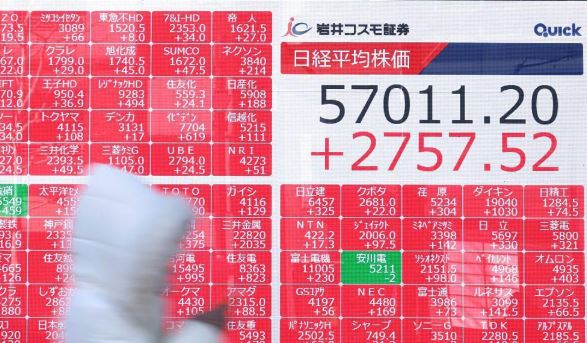
Japanese stocks have jumped to a record high as media outlets call PM Sanae Takaichi's landslide election win a "historic victory".
The coalition between the ruling Liberal Democratic Party (LDP) and the Japan Innovation Party has won 352 seats in the 465-member lower house.
Gains on the Nikkei 225 index hit the 57,000 mark briefly before easing slightly - analysts say it is due to the LDP's victory giving Japan a "high degree of political stability".
Takaichi had called for the snap election to secure a mandate after she made history by being elected Japan's first female PM by lawmakers last October.
The projected win marks a turnaround for the fortunes of the LDP, which lost its parliamentary majority under Takaichi's predecessors.
The election took place as the people of Japan face rising living costs and sluggish economic growth.
Win gives Japan's economy a "high degree" of stability
The Liberal Democratic Party's victory gives Japan a "high degree of political stability", says Mizuho Securities analyst Shoki Omori in explaining the market reaction on Monday morning.
The win would give Prime Minister Sanae Takaichi's party full legislative control and pave the way for more decisive policy-making, reducing the risks of political constraints, he says.
Takaichi is known for her pro-business policies and has pledged to ease taxes and boost spending to drive the Japanese economy.
The markets are now focused on how effectively and quickly the government will be in implementing its policy goals, Omori tells the BBC.
But the LDP’s victory also puts pressure on Tokyo to show how it plans to pay for these new policies and whether they can hold up over time - issues that investors will be watching closely, Omori says.
Other markets in Asia also moved higher this morning.
South Korea's Kospi index rose by more than 4%, while Hong Kong's Hang Seng gained upwards of 1.5%.
The moves in Asia come after a rise in US stocks on Friday, with technology stocks, in particular, rising.
Investor confidence has possibly improved as many expect Washington to ease its monetary policy, such as with more rate cuts if President Donald Trump’s preferred candidate becomes the new Fed chair, says analyst Yuka Marosek.
One analyst, business lecturer Ulrike Schaede, believes Asian stock markets could have gained in part due to a belief that the region will benefit if Japan - one of Asia's largest economies - is stronger.
Analyst have said that the Liberal Democratic Party's landslide victory gives its political stability and the power for the government to implement Prime Minister Sanae Takaichi's pro-business policies without major constraints.
"Those who believe that the new government will increase consumption and the strength of the Japanese economy may foresee trickle-down effects in Asia," says Schaede, adding that it is still too early to jump to that conclusion for now.