Somalia’s National Human Rights Commission (NHRC) is facing heightened scrutiny following the election of Maryan Qasim Ahmed as its new chairperson, with renewed debate emerging over the institution’s independence, inclusivity and role in the country’s democratic development.
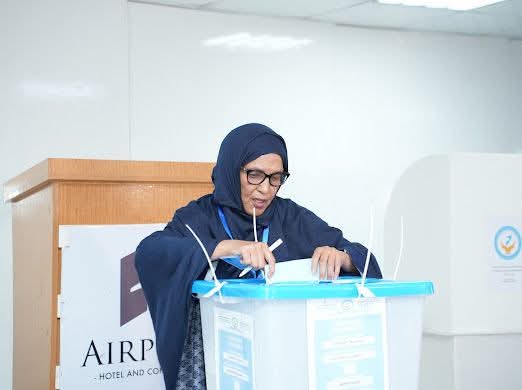
Qasim, a Somali-Dutch national based in the United Kingdom, was elected through a competitive process that attracted attention from civil society organisations, regional observers and international partners.
Her appointment comes at a time when expectations are high for strengthened governance and accountability as Somalia continues efforts to rebuild key public institutions.
“Our society is deeply rooted in faith, and these values can guide us towards justice, dignity and respect for all,” Qasim said.
“At the same time, the Commission I now lead belongs to every Somali citizen, regardless of background, belief or status.”
Her remarks have generated mixed reactions. While some welcomed the emphasis on cultural identity, others noted that national human rights institutions are expected to operate firmly within constitutional mandates and international standards.
Civil society representatives stressed that the credibility of the NHRC will ultimately depend on its actions.
“There is a willingness to give the new leadership space,” said one observer. “What matters most is adherence to the Constitution, the law and international human rights principles.”
Somalia’s membership in the East African Community has also heightened expectations. Regional analysts note that EAC states are bound by commitments to non-discrimination, freedom of belief and respect for fundamental rights.
A strong and independent NHRC, they argue, is essential for Somalia’s regional standing and international confidence.
Questions have also been raised about aspects of the selection process, with unverified allegations of political pressure and conflicts of interest circulating in some quarters.
Speaking from Nairobi, human rights activist Majid Hassan said the moment calls for a shift towards professionalism across Somalia’s human rights sector.
“It is time for Somalia’s human rights groups to be professional if they are to enjoy the trust of citizens, government and partners from outside,” he said.
“Professionalism, independence and credibility are what attract cooperation, funding and respect.”
Hassan added that strong institutions are also vital for economic recovery.
“Investors and development partners look at the strength of governance and respect for rights. Human rights are not separate from development — they are part of it.”
Qasim has pledged to work with all stakeholders to strengthen the Commission.
“Our success will be measured by how well we protect rights, listen to citizens and work transparently with partners at home and abroad,” she said.