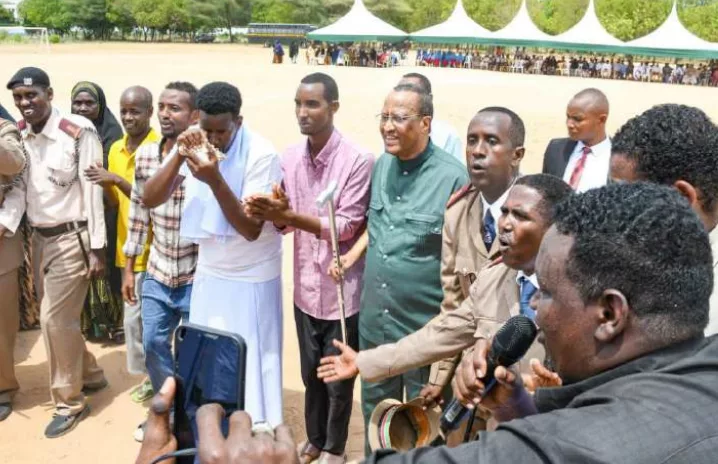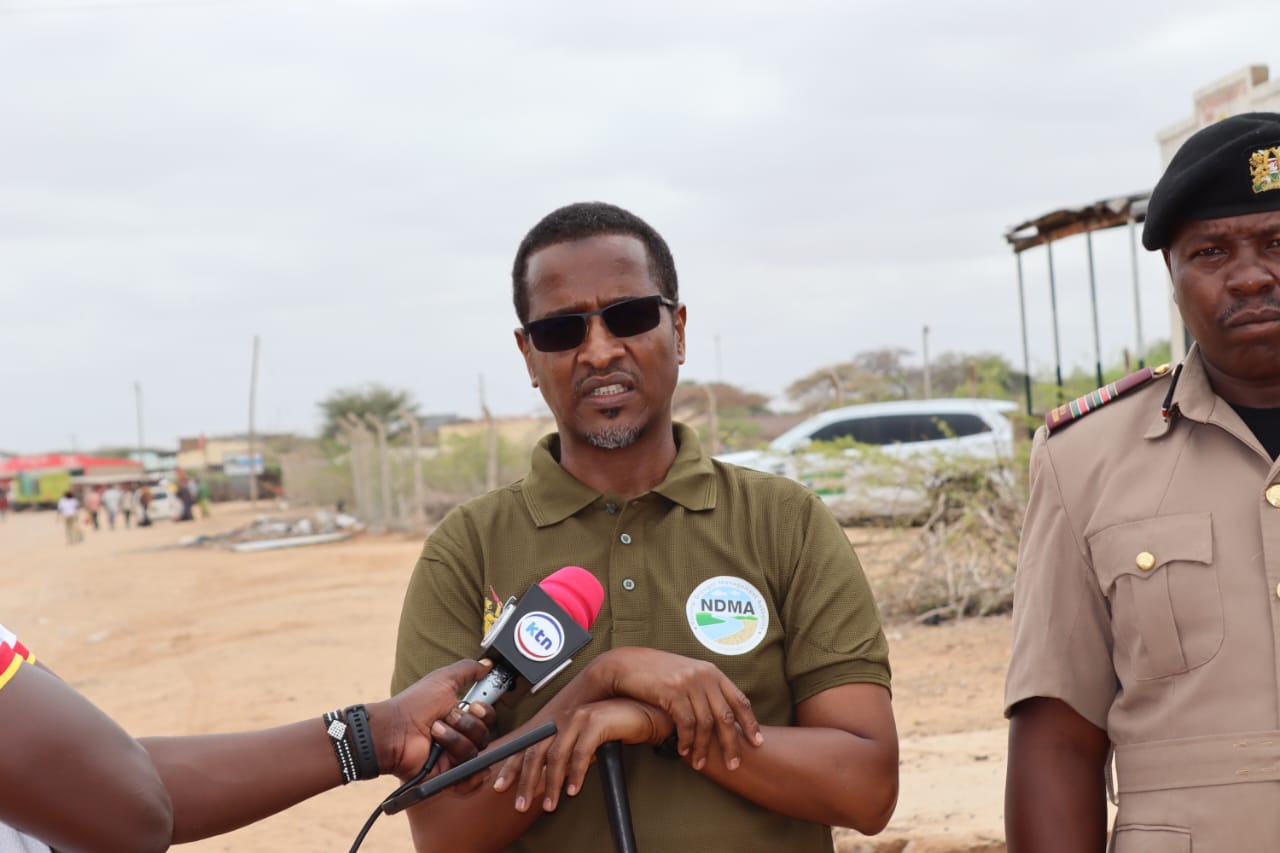
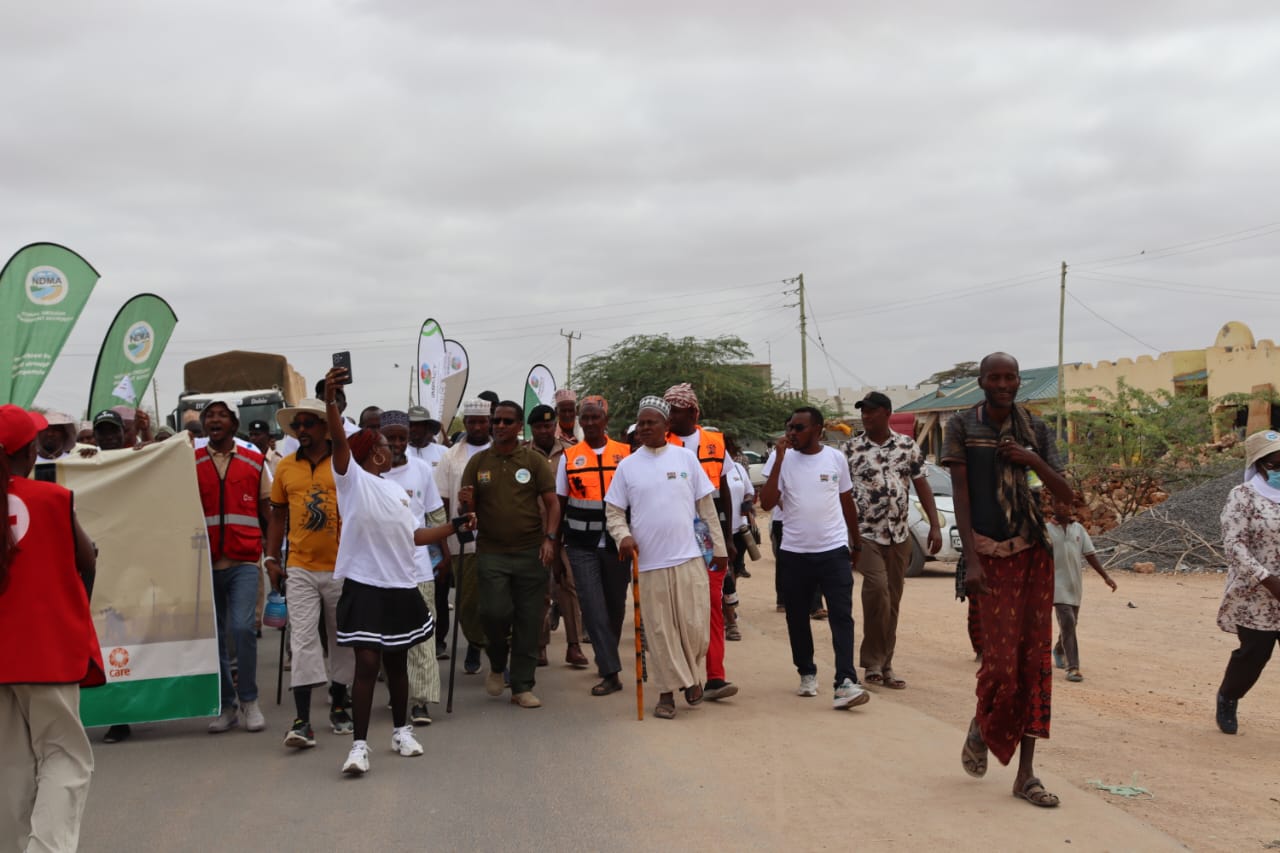
 NDMA chief executive officer Hared Adan [C] joins residents of
Modogashe town in a peace caravan /STEPHEN ASTARIKO
NDMA chief executive officer Hared Adan [C] joins residents of
Modogashe town in a peace caravan /STEPHEN ASTARIKO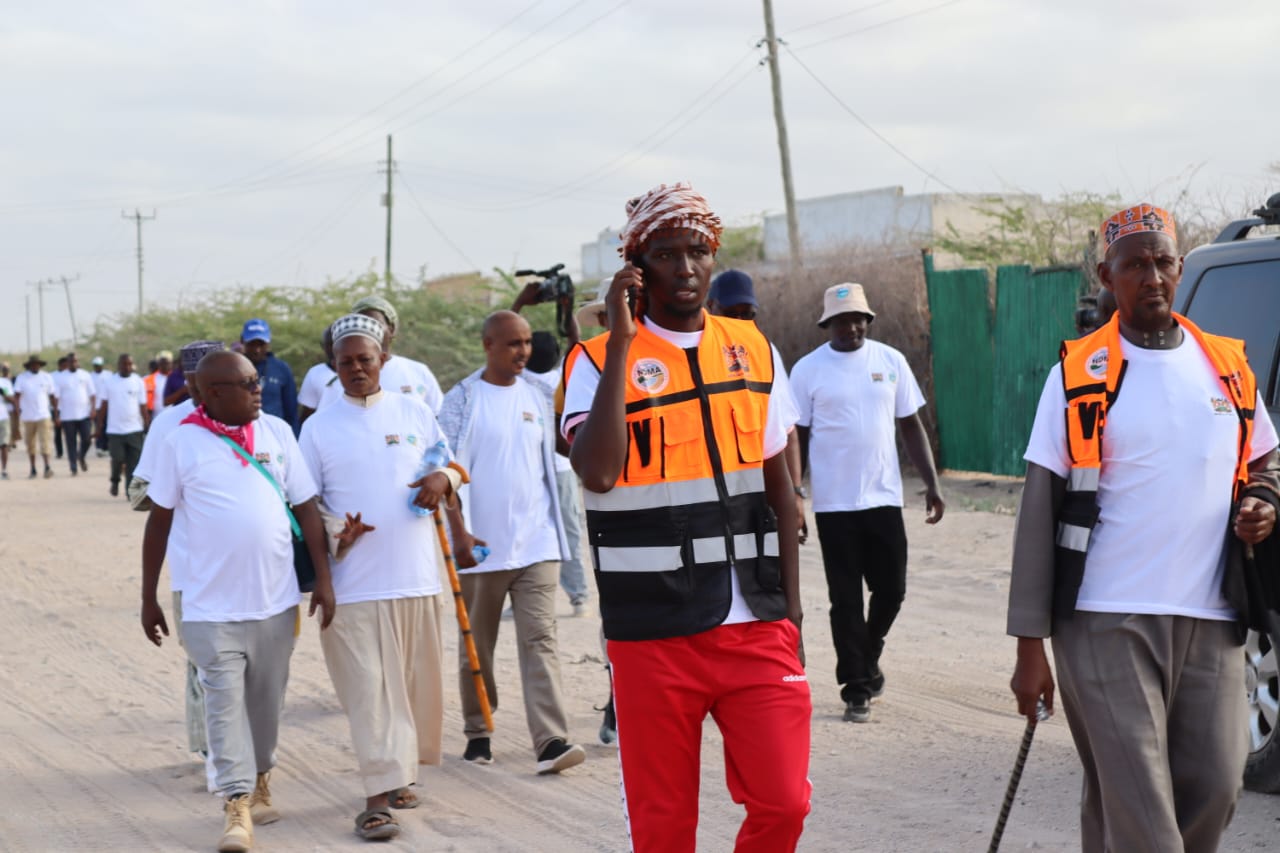 Peace actors participate in the peace caravan in Modogashe town /STEPHEN ASTARIKO
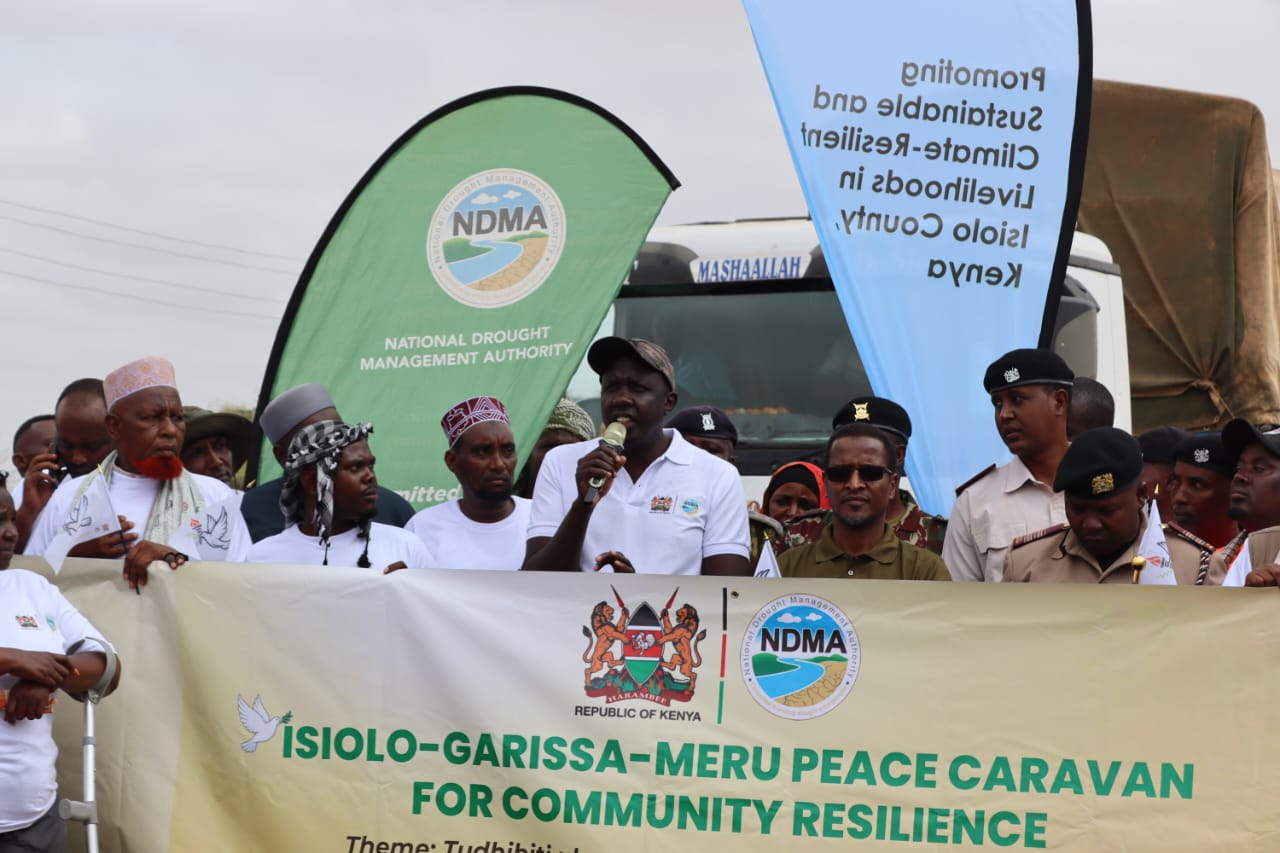 Peace actors participate in the peace caravan in Modogashe town /STEPHEN ASTARIKO
The National Drought Management Authority on Monday launched a peace caravan along the borders of Garissa, Isiolo and Meru counties in an effort to reduce community tensions heightened by the ongoing drought.
The ravaging drought has forced pastoralist families to move farther and farther from their traditional grazing areas in search of survival.
As herds converge on the few remaining water points and grazing fields, competition intensifies. Communities that once coexisted peacefully begin to view one another with suspicion.
The Garissa–Isiolo border has in recent years experienced recurrent violent clashes, largely driven by competition over water and pasture, resulting in loss of lives and destruction of property.
Access paths are blocked, wells are guarded and grazing lands are claimed as exclusive territory. In many instances, these tensions have erupted into violent confrontations, especially where pastoralists cross into neighbouring counties in search of pasture and water.
Such clashes, especially between the Somalis and Boranas from Garissa and Isiolo have often been deadly.
NDMA chief executive officer Hared Adan said the initiative seeks to foster peaceful coexistence among pastoral communities by encouraging negotiated grazing arrangements and the responsible use of scarce water and pasture resources as drought conditions continue to worsen.
He spoke during the flag-off ceremony in Modogashe town.
The caravan brings together a wide range of stakeholders, including community elders, youth and women leaders, peace and grazing committees, representatives from county and national governments, as well as civil society organisations and development partners.
“This peace caravan is designed to reinforce community-based conflict prevention mechanisms and help build resilience during periods of environmental stress,” Adan said.
Activities planned during the four-day exercise include peace walks, community dialogue forums on drought and resource sharing, and sports events aimed at strengthening unity.
Adan encouraged residents to make use of existing community-led dispute resolution structures to address emerging challenges before they escalate into violence.
He also urged community elders to actively engage young people and collaborate with security agencies to promptly address any security concerns.
According to Adan, the caravan is meant to remind communities that drought is a shared challenge and sustainable solutions lie within their own social structures.
He said by walking, eating and engaging together, participants are given an opportunity to openly discuss challenges and rebuild trust.
Adan further acknowledged the support provided by the county governments of Garissa, Isiolo and Meru in facilitating the initiative.
Lagdera deputy county commissioner Solomon Ruto said persistent insecurity has for a long time stalled development and discouraged potential investors, denying residents vital economic opportunities.
He explained that conflicts in the region are largely driven by competition for water and pasture, as pastoralist communities are forced to migrate in search of resources during drought seasons.
Ruto said although the area has historically suffered repeated clashes that disrupted development projects and business activities, sustained peace efforts have helped restore relative calm over the past two years.
He expressed optimism that the peace caravan would build on the progress already made and further stabilise the region, enabling communities to coexist peacefully and create an environment conducive to development and investment.