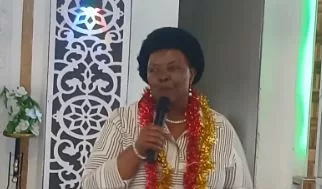
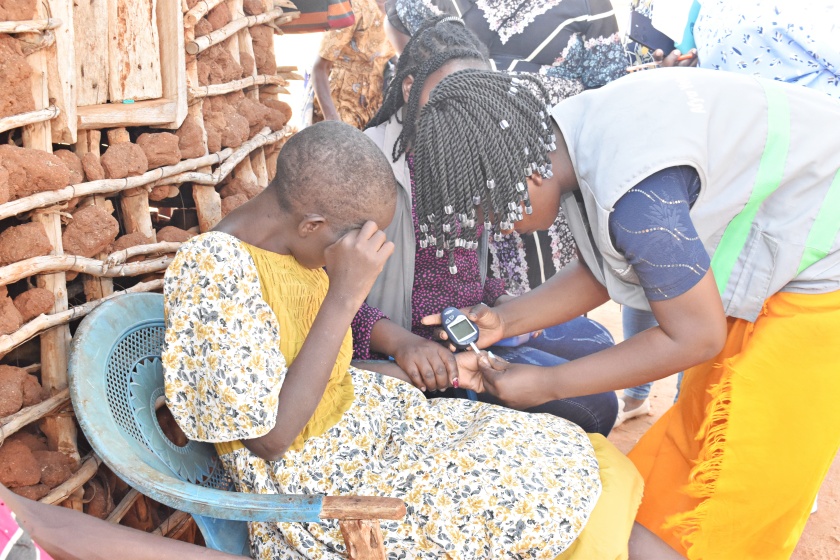
 CHP Telesia Mueni checks the blood sugar level of Ruth Musangi at Kitala village in Ukasi last Thursday / Musembi Nzengu
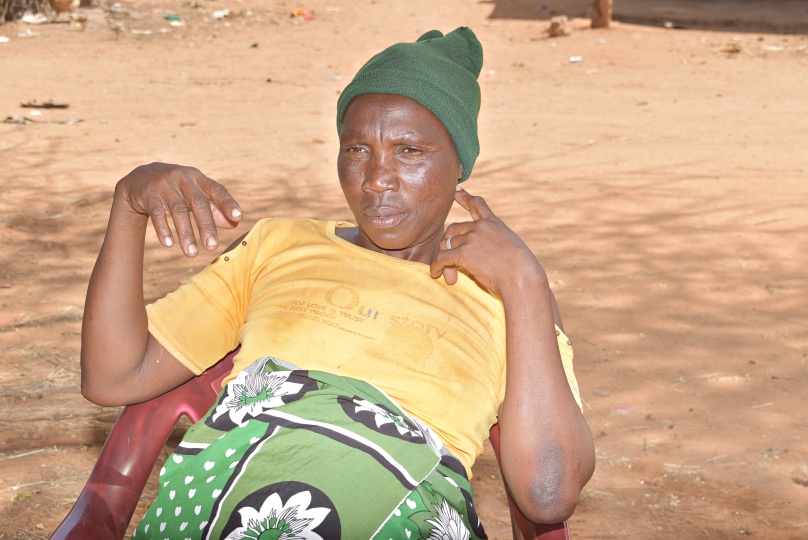 Mother of seven Kambua Musee speaks to journalists at Kathungu market
last Thursday / Musembi Nzengu
Mother of seven Kambua Musee speaks to journalists at Kathungu market
last Thursday / Musembi Nzengu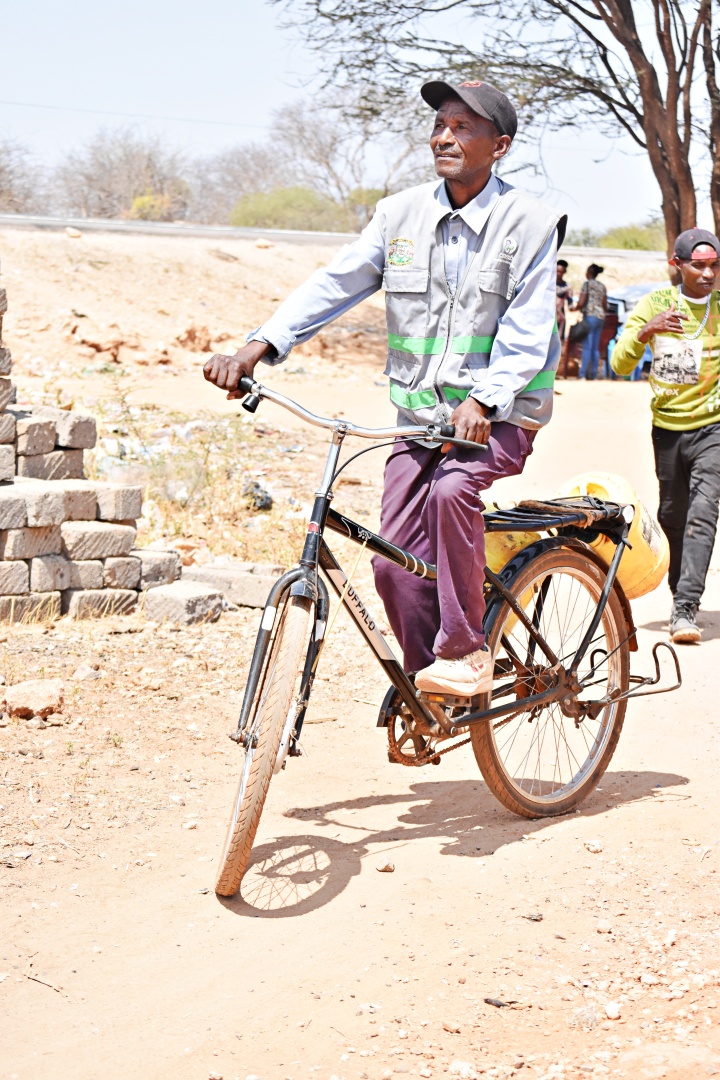 Jotham Mwinzi on his bicycle at Kathungu market in Ukasi ward, Mwingi Central subcounty, Kitui on Thursday / MusembI Nzengu
In many rural communities across Kenya, a bicycle is simply a means of mobility, an affordable way to move from one place to another with speed and ease.
In Kitui county, it is common to spot day scholars cycling to and from secondary school.
In most households, bicycles are also used to run short errands to the market, transport family provisions or deliver urgent messages between homes.
But in the remote villages of Kathungu, Sosoma and Kitala in the peripheral Nguni ward of Mwingi Central subcounty, the bicycle has taken on a far more profound meaning: a lifeline.
In these villages, bicycles are revered as life-saving tools that enable essential healthcare services.
They have helped to save countless lives among residents who would otherwise struggle to access medical care.
Two Community Health Promoters (CHPs) rely entirely on bicycles to respond swiftly to health emergencies, conduct routine household visits, and ensure timely referrals to health facilities.
Their mobility has often made the difference between life and death.
Although engaged by the Kitui county government under a quasi pro bono arrangement, the two are among hundreds of CHPs equipped with bicycles by the Centre for Medical Mobilisation Board, an NGO supporting healthcare outreach in hard-to-reach areas.
The bikes donation was sourced by CMMB through a collaboration with World Bicycle Relief (WBR), which gave out the bicycles.
“Jotham Mwinzi is the only Community Health Promoter in our village,” Kathungu resident Kambua Musee said.
"He is always on call, day and night, and arrives promptly on his bicycle whenever his services are needed."
The 39-year-old mother of seven said Mwinzi actively seeks out pregnant women, visiting their homes regularly to encourage antenatal clinic attendance at Ukasi Health Centre to prevent pregnancy-related complications.
“No matter how far he has to travel, Mwinzi ensures expectant mothers are supported throughout their entire pregnancy,” she said.
Kambua credited him with saving the lives of many mothers and unborn children by ensuring timely access to professional medical care. Whenever illness strikes, she added, Mwinzi quickly organises emergency responses and referrals.
“He is a darling and a hero to many mothers. He makes sure no one loses their life while trying to bring forth life,” she said.
She recalled a recent measles outbreak in which five of her children fell seriously ill.
“Mwinzi appeared out of nowhere on his bicycle,” she said.
"After assessing the situation, he organised for them to be rushed to Ukasi Health Centre, where they were admitted and later recovered."
In neighbouring Kitala village, another CHP, Telesia Mueni, has also demonstrated the life-saving power of mobility.
During routine household visits, Mueni rescued a newborn delivered at home whose mother was suffering from postpartum psychosis and had refused to breastfeed.
Mueni organised medical care for the infant, ensured he received all required vaccinations and placed him in the care of a relative until the mother recovers.
“It has been nine months since the child was born,” the child’s caretaker Wayua Munyoki said.
"With the CHP’s support, he has received all his vaccinations and is doing well."
Speaking at Kathungu market, Mwinzi said he is responsible for 130 households, an assignment he once struggled to manage on foot.
“When I used to walk, I could only visit about 20 households in three months. With a bicycle, I can now cover all 130 within the same period,” he said.
A programme coordinator at the Centre for Medical Mobilisation Board, Theresia Mukethe, said the organisation, in partnership with the Kitui county government, has distributed 1,580 all-terrain bicycles to CHPs across the county.
“The goal is to improve mobility, reduce emergency response times and enhance healthcare outreach in remote villages,” she said.
She described bicycles as a cost-effective, sustainable solution that expands access to healthcare while reducing outreach costs.
“With bicycles, CHPs can cover larger areas, improve community health surveillance and bring essential services directly to vulnerable populations,” Mukethe said.